
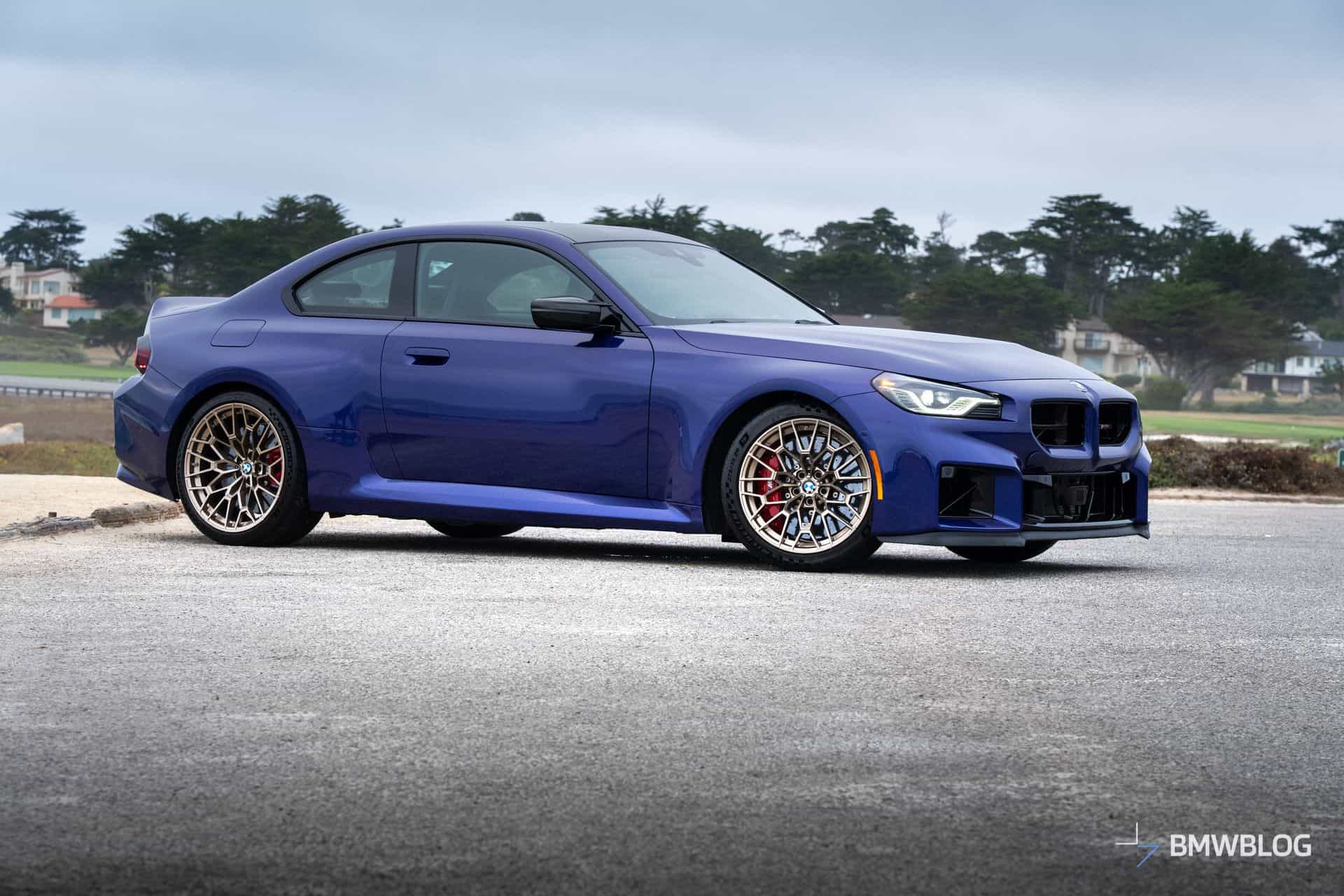


BMW built the last G87 M2 CS on July 29, 2026, closing the books at 2,882 cars. That is 21 percent more than the 2,381 F87 M2 CS produced in the previous generation, according to production data published by MDataWorks.
The United States claimed the largest single-country allocation at 770 units. Germany followed with 386, the UK took 105, and Canada got 103. The remaining 1,518 cars scattered across every other market on the planet.
Here is where it gets interesting. Of the 770 American cars, 407 were finished in Velvet Blue. That is 53 percent of the entire US allocation, in a color that costs $3,000 extra as a BMW Individual option.
The other three choices, Black Sapphire, Brooklyn Grey, and Portimao Blue, are free. American buyers collectively spent roughly $1.2 million just on paint.
Germany looked at the same order sheet and went the other direction. Black Sapphire led there at 170 of 386 cars, a 44 percent take rate. Velvet Blue dropped to third place with just 80 units, or about 21 percent. The only thing both markets agreed on was that Portimao Blue finished last.
The option spending did not stop at color. Carbon ceramic brakes, an $8,500 line item, appeared on 330 of the 770 US cars, a 43 percent take rate worth close to $2.8 million by itself. Germany’s take rate was 31 percent.
Active Cruise Control tells an even cleaner story. All 770 American cars have it, every single one, which almost certainly means it was standard equipment on US-spec cars rather than 770 people independently checking the same box. In Germany, 105 buyers went without.
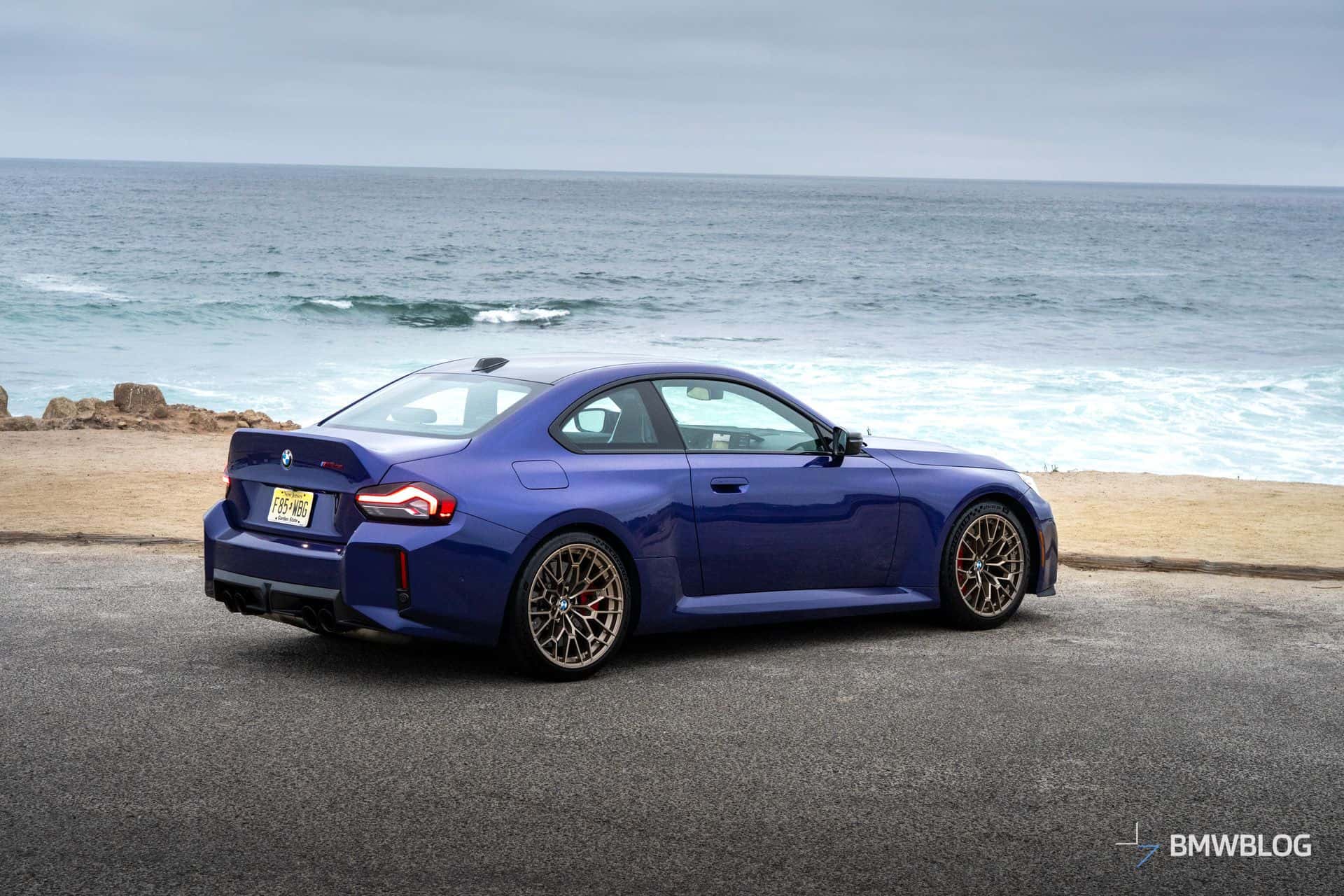
The F87 M2 CS had a flatter color spread. Misano Blue led globally at 38 percent, well short of the regional dominance Velvet Blue achieved in the States. Hockenheim Silver pulled 27 percent of F87 orders, and the G87 has no equivalent silver. Brooklyn Grey is the closest neutral tone on the new car, and it managed only 13.6 percent in the US.
And then there is the F87 outlier. One car, exactly one, left the factory in Birch Green, a color that does not appear on the standard F87 palette. It is the rarest specification of either generation by a margin of 272 units.
The G87 M2 CS runs a 523 hp version of the S58 twin-turbo inline-six, 50 hp over the standard M2. Engineers cut 97 pounds through a carbon roof, CFRP ducktail trunk lid, and carbon bucket seats, landing at 3,770 pounds. It does 0-60 in 3.7 seconds and tops out at an electronically limited 188 mph.
BMW priced it at $98,600 plus $1,175 destination, clearly working to keep the sticker south of six figures. Against the M3 CS at $118,700 and the M4 CS at $123,500, the smallest CS looks like the relative bargain of the family.
The one thing BMW could not give buyers was a clutch pedal. The F87 M2 CS offered a six-speed manual. The G87 does not.
The eight-speed Steptronic is faster by every measurable standard, and nobody disputes that. But a CS badge has always meant the most engaging version of a car, and stripping the third pedal from the short-wheelbase, rear-drive M car is the decision that still draws the sharpest criticism.
Some F87 M2 CS owners walked away from this generation for exactly that reason. The 2,882 who stayed decided 523 hp, rear-wheel drive, and a sub-six-figure price was enough. More than half the Americans among them paid a $3,000 premium to make sure nobody would confuse their car for a base M2 in traffic.
Share this Story