
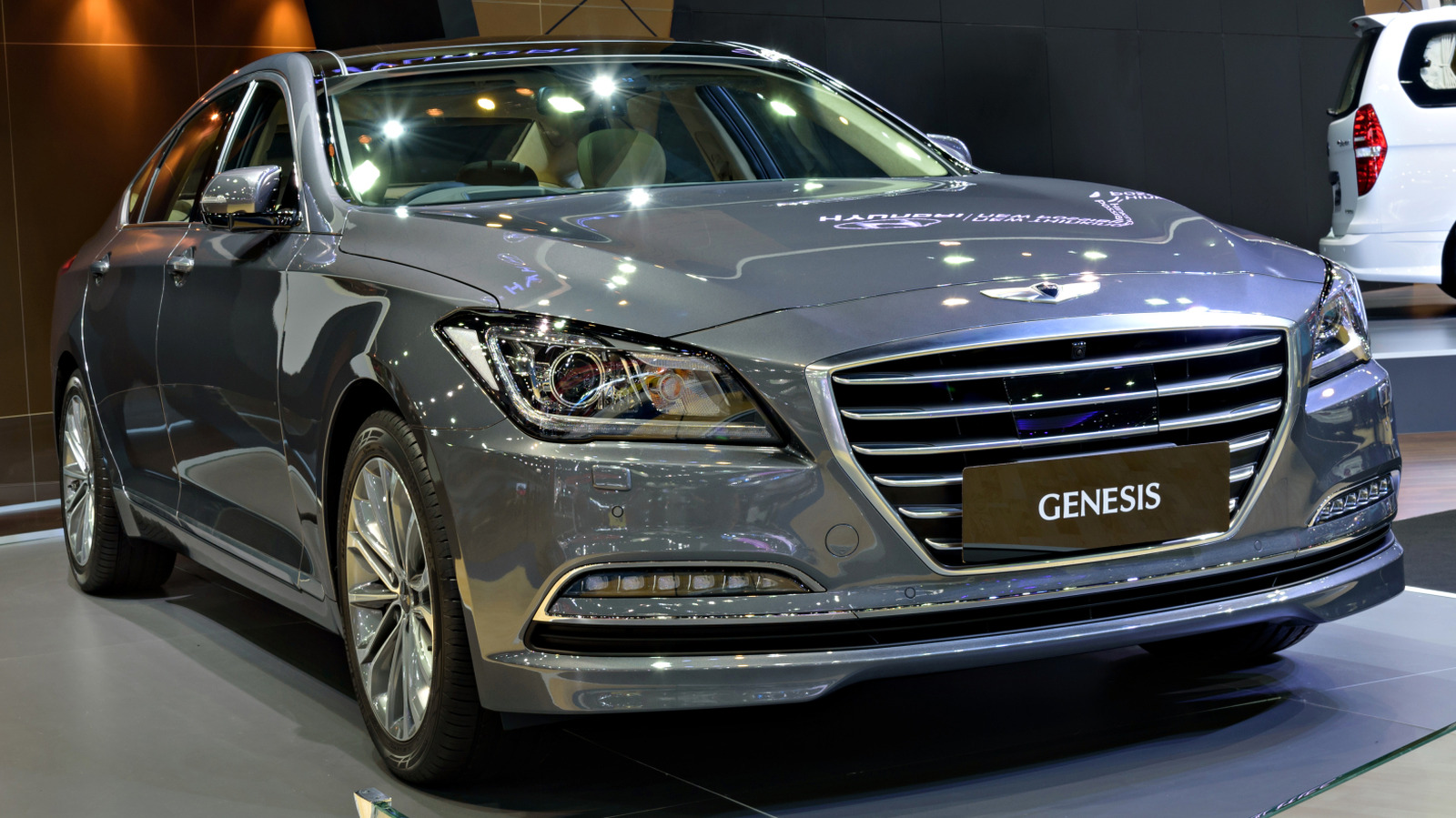


A power seat switch. That’s the component now forcing nearly 95,000 Genesis sedan owners to park their cars outside and away from structures until a fix arrives.
Hyundai has issued a recall covering 54,644 Hyundai Genesis sedans from 2015 and 2016 and 39,978 Genesis G80s from 2017 through 2020. The problem sits in the forward/back and height-adjustment switch on non-memory front power seats. If the switch internals get displaced by some kind of external impact, the motor can stay engaged indefinitely, running even after the driver walks away.
The automaker says prolonged operation can overheat the motor and, in some cases, start a fire. Whether the car is parked or moving.
Park outside. Stay away from buildings. That’s the interim guidance from Genesis, language typically reserved for battery fires or fuel system failures. Here it applies to something most drivers never think about twice.
The recall, filed under NHTSA campaign 26V664, covers both driver-side and passenger-side switch assemblies. Hyundai hasn’t clarified what kind of impact is enough to trigger the misalignment, which leaves owners in an awkward spot. Is a kicked seat base sufficient? A heavy bag tossed against the controls? Nobody knows yet.
What Hyundai does offer is a couple of warning signs. A burning smell coming from the seat area is the obvious one. Less obvious, and easier to shrug off, is the seat controls simply stopping.
Most people would chalk that up to a busted switch and move on. In this case, dead controls could mean the motor already burned itself out or is on its way there. Anyone with a non-memory equipped car in the affected range who notices either symptom should get to a dealer.
Vehicles with memory seats are not part of this recall. The distinction matters because it narrows the affected population to lower-trim models, the ones less likely to still be covered by any factory warranty. Hyundai says the eventual repair will be free regardless of warranty status.
That repair, though, doesn’t exist yet. Hyundai is still developing the remedy, which means the “park outside” advisory is the only protection owners currently have. No timeline has been given for when parts or a fix will be ready.
It’s a strange recall in a landscape dominated by software glitches, battery thermal events, and sensor malfunctions. A mechanical switch jamming and cooking a seat motor feels almost quaint. But a fire is a fire, and one that can ignite while a car sits unattended in a garage at 2 a.m. is no less dangerous because the cause is low-tech.
Owners can verify whether their specific vehicle is affected by running their VIN through NHTSA’s recall lookup tool. Given the size of the recall and the fact that these cars range from eight to eleven years old, many have likely changed hands multiple times. Reaching every current owner will be its own challenge, and the clock is ticking without a fix in the pipeline.


Share this Story