
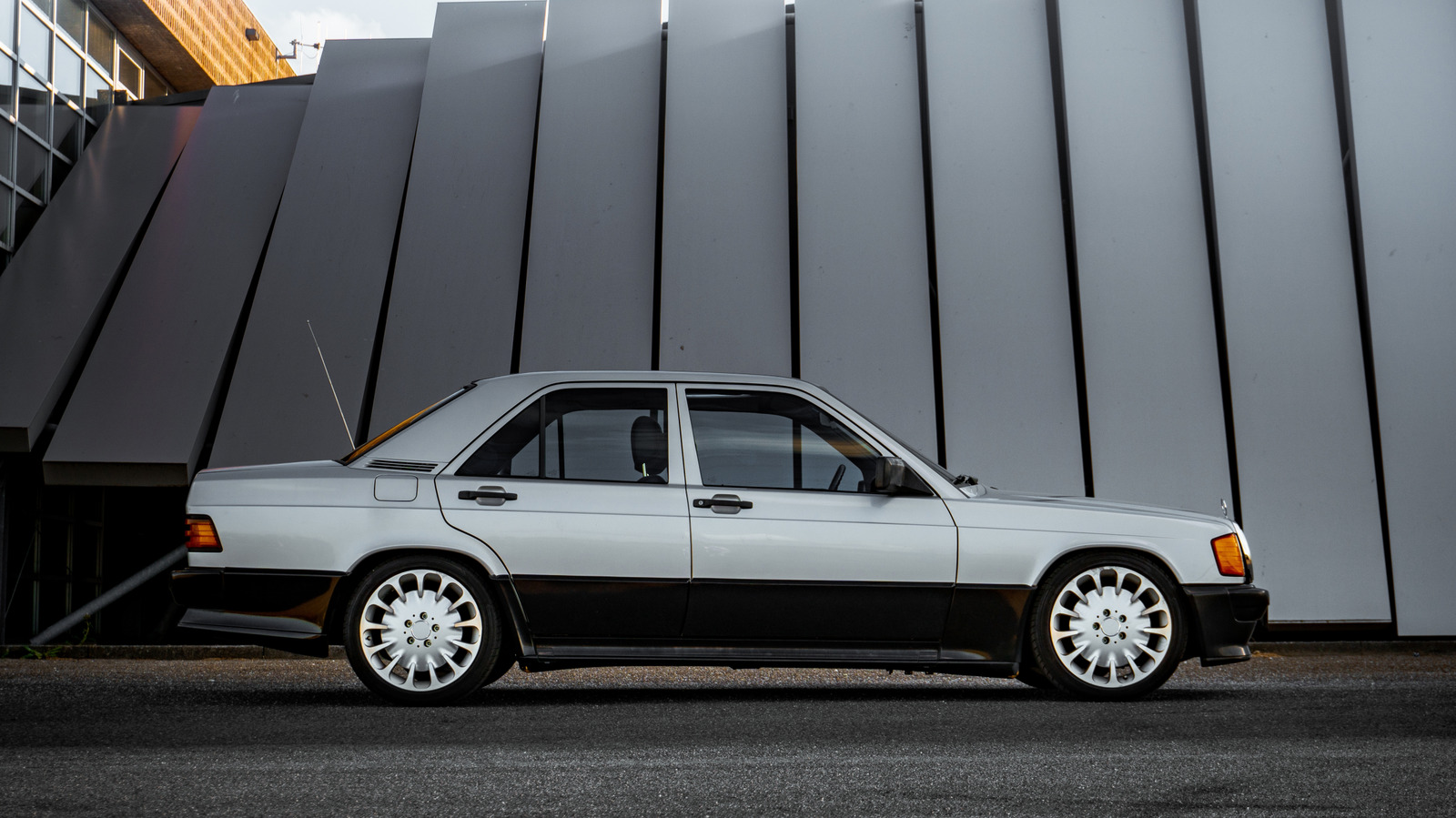


Jalopnik threw the question to its readers this week: What was the single best year in automotive history? Not just the year your favorite car debuted, but the year the entire market peaked for enthusiasts across every segment — sedans, sports cars, hot hatches, grand tourers, daily drivers. The kind of year where you could walk into almost any dealership and leave with something worth driving hard.
The site’s own Brad Brownell planted his flag on 2004. His reasoning is hard to argue with on paper. The Mitsubishi Evo VIII had just landed stateside in 2003, and Subaru followed with the WRX STI in 2004. Suddenly, 300-horsepower all-wheel-drive sedans weren’t reserved for six-figure European exotics. They sat on dealer lots next to Corollas, priced for people who actually worked for a living.
But Brownell’s case runs deeper than the rally-bred twins. The Porsche 996 Turbo was still in production. BMW’s Z8 was available. Honda was building the S2000, Mazda had the RX-8, and Nissan was cranking out 350Zs. Cadillac had just dropped the first CTS-V, a car that single-handedly forced people to take the brand seriously again. Ford’s Focus, the original one with the independent rear suspension, was still proving that cheap didn’t have to mean numb.
He’s not wrong about any of that. But he’s also honest enough to admit he turned 16 in 2004, which is the most important variable in this entire exercise.
The broader question — when did the car market peak for people who actually like driving — is where the real tension lives. Brownell frames it as a window between the 1973 fuel crisis and the 2008 financial collapse. By the mid-1980s, cars were reliable and modern enough to live with daily. By the 2010s, electronic nannies and touchscreen everything had started smothering the connection between driver and machine.
The 1980s had turbo minivans and legendary hot hatches, but also produced some of the most soul-crushing penalty boxes ever inflicted on the American consumer. Interiors were an afterthought wrapped in hard plastic. The 1990s brought the NSX, the Supra, the McLaren F1, but mainstream offerings were still catching up.
By 2004, the convergence was real. Technology had advanced enough to make cars fast, reliable, and refined without yet strangling the driving experience under layers of autonomous intervention. Lane-keeping assist wasn’t standard equipment. Throttle-by-wire hadn’t yet fully numbed pedal feel. You could still buy a new car with a hydraulic power steering rack.
What makes the question sting in 2026 is the contrast. The affordable performance car is an endangered species. The Evo is dead. The STI is dead. The S2000 has been gone for 15 years.
The sports car market has split into six-figure track weapons and crossover-derived pretenders with little in between. Enthusiasts who came of age in that early-2000s window got something that younger buyers simply cannot access at the same price point, adjusted for inflation or otherwise.
Brownell concedes his bias. Everyone who answers this question will reveal theirs. Your best year for cars is almost certainly the year you fell in love with them, the year the magazine covers or YouTube thumbnails burned themselves into your brain at exactly the right developmental moment.
But strip away the nostalgia, look at what was actually sitting on dealer lots in 2004 — the breadth, the accessibility, the sheer number of cars that rewarded a driver for paying attention — and the case holds up even without the sentimentality. The market gave enthusiasts everything they asked for. It just didn’t last.

Share this Story