
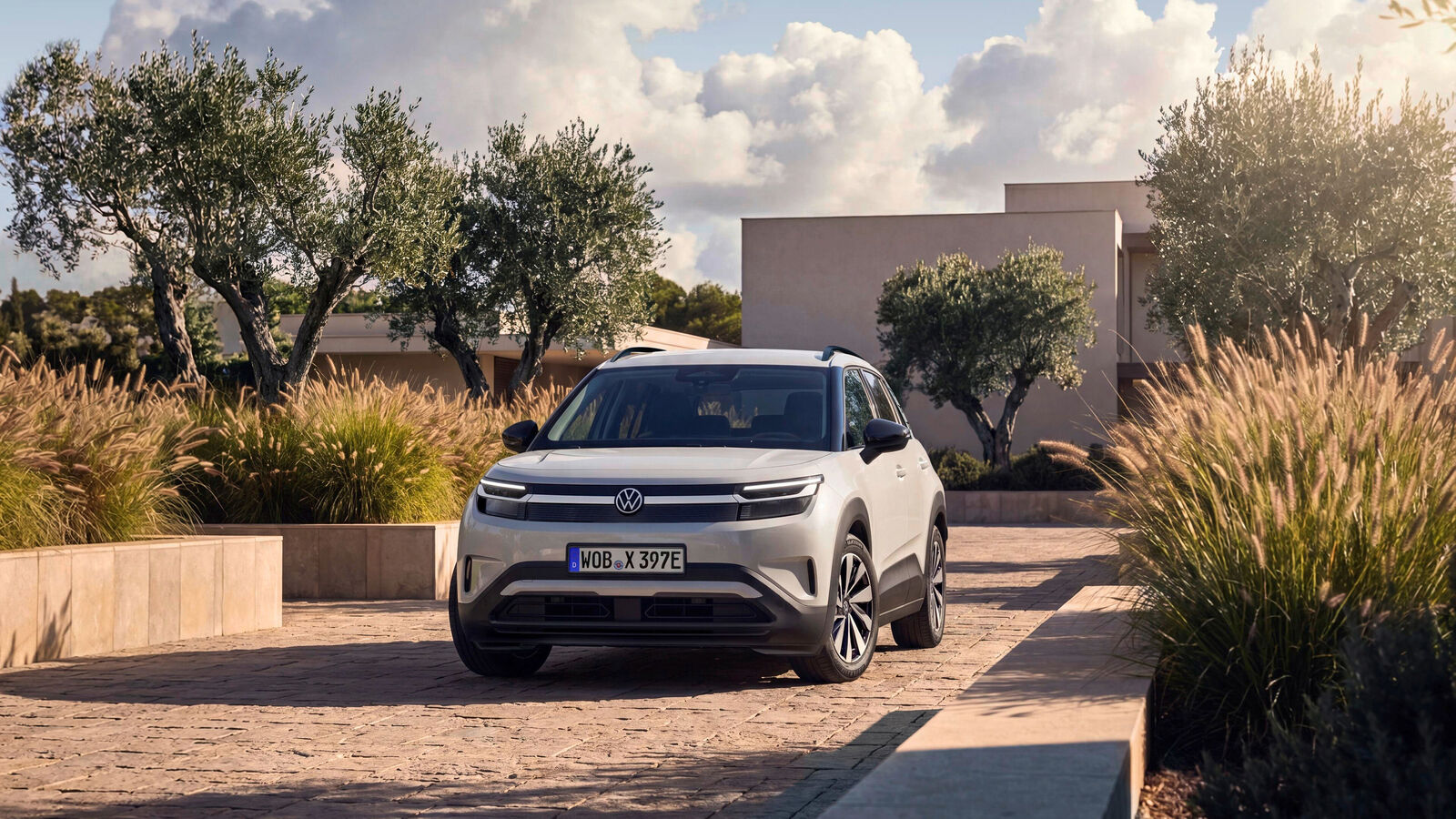


Volkswagen opened pre-sales for the ID. Cross with a 37 kWh battery pack, pushing the starting price in Germany down to 27,995 euros. That is the entry point VW needs if it wants to make its electric crossover anything more than a showroom curiosity.
The smaller battery slots beneath the 52 kWh pack that launched with the ID. Cross in mid-July. It delivers a WLTP range of up to 324 kilometers, which VW is pitching squarely at commuters and city drivers. DC fast charging from 10 to 80 percent takes roughly 23 minutes at up to 90 kW.
Two powertrain options come with the 37 kWh pack: 85 kW (116 PS) and 99 kW (135 PS). Both are capped at 160 km/h. That top speed makes it highway-legal but not highway-fast, a concession that tells you exactly who VW thinks will buy this car.
The 37 kWh ID. Cross is available across three trim levels: Trend, Life, and Style. Even the base Trend gets front and rear parking sensors and smartphone integration. Higher trims can be optioned with Connected Travel Assist, a Harman Kardon sound system, a panoramic roof, and 12-way power seats with massage.
None of that matters as much as the number on the price tag. Sub-28,000 euros for a new electric crossover from a mainstream brand is the kind of figure that actually competes with combustion-powered alternatives on dealer lots. VW has spent years promising affordable EVs.
The ID.3 never quite delivered on that promise, launching too high and requiring repeated price adjustments to move metal. The ID. Cross with this smaller battery is a more honest attempt.
The 324-kilometer range won’t satisfy everyone. Road-trippers and rural buyers will rightly look elsewhere. But the average European commute is well under 40 kilometers round trip. For that use case, a 37 kWh battery is more than sufficient, and it sidesteps the cost and weight penalties of hauling around cells you rarely use.
VW’s timing here is deliberate. Chinese competitors like BYD and MG are selling electric crossovers in Europe at aggressive prices, and legacy automakers have been slow to respond at the bottom end of the market. The ID. Cross at 27,995 euros is VW’s attempt to hold territory before those rivals dig in further.
The question is whether the car can actually be delivered at volume and at that price without eating into margins that are already under pressure. Volkswagen’s EV division has struggled with profitability. CEO Thomas Schäfer has repeatedly said the brand needs to cut costs and simplify its lineup. A stripped-back battery option fits that playbook neatly, at least on paper.
Deliveries and exact market availability beyond Germany haven’t been detailed yet. VW calls this phase “pre-sales,” which in practice means customers can configure and order but may wait months before taking delivery.
The ID. Polo, priced even lower, is still coming. The ID. Cross with the 37 kWh pack is the bridge until that car arrives, a way to hold the line on affordability without waiting for the next platform cycle. Whether it sells in the numbers VW needs is a story that won’t be written until order books close and registration data starts flowing.


Share this Story