
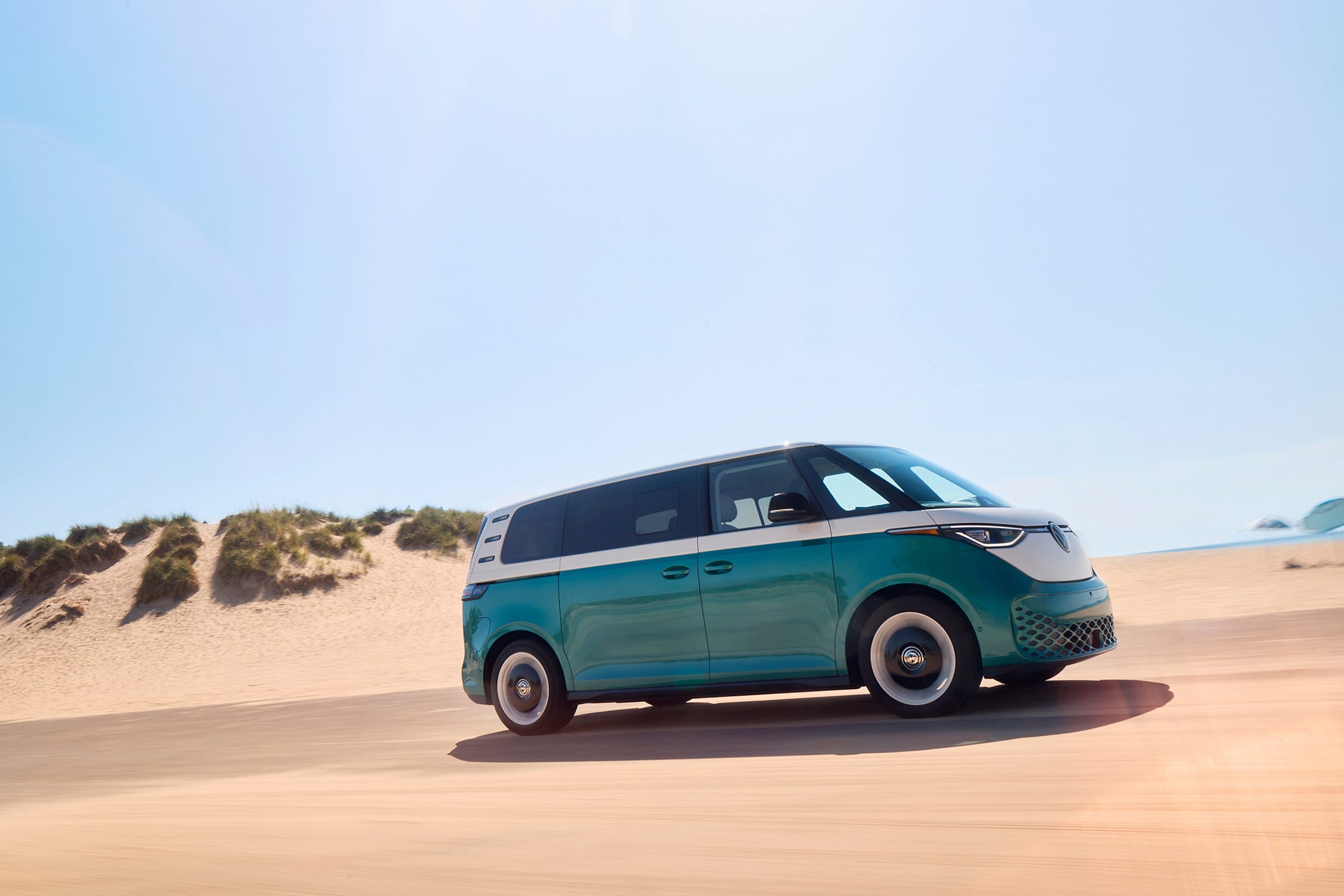


Volkswagen CEO Thomas Schäfer said the quiet part out loud at the Paris auto show this past weekend: the ID.Buzz is too expensive, and that’s exactly why it hasn’t sold in America. His solution is a second-generation model built on an entirely new platform with cheaper batteries. The timeline, though, remains conveniently vague.
The electric Microbus debuted in the U.S. as a 2025 model starting at $61,545, won Car and Driver’s 10Best award, and then promptly went on hiatus. VW pulled it from the 2026 lineup, announced a 2027 return with a new Touring trim, then reversed course again last month and pushed everything to 2028. That’s a lot of schedule shuffling for a vehicle the company calls a priority.
Schäfer told Auto Express that the next-generation ID.Buzz will ride on the Scalable Systems Platform, or SSP, which Volkswagen Group has been developing as the universal architecture for its future electric and combustion-powered vehicles. He also hinted at switching to lithium-iron-phosphate battery chemistry, which costs less to produce than the lithium-ion packs currently in use.
Both moves make sense on paper. LFP cells are already standard in base versions of Tesla’s Model 3 and Model Y, and Chinese automakers have been using them for years to hit aggressive price targets. But SSP has been a moving target inside VW Group for the better part of half a decade, with repeated delays and leadership changes in the software division that underpins it. Betting the ID.Buzz’s future on a platform that doesn’t yet exist in production requires a certain optimism.
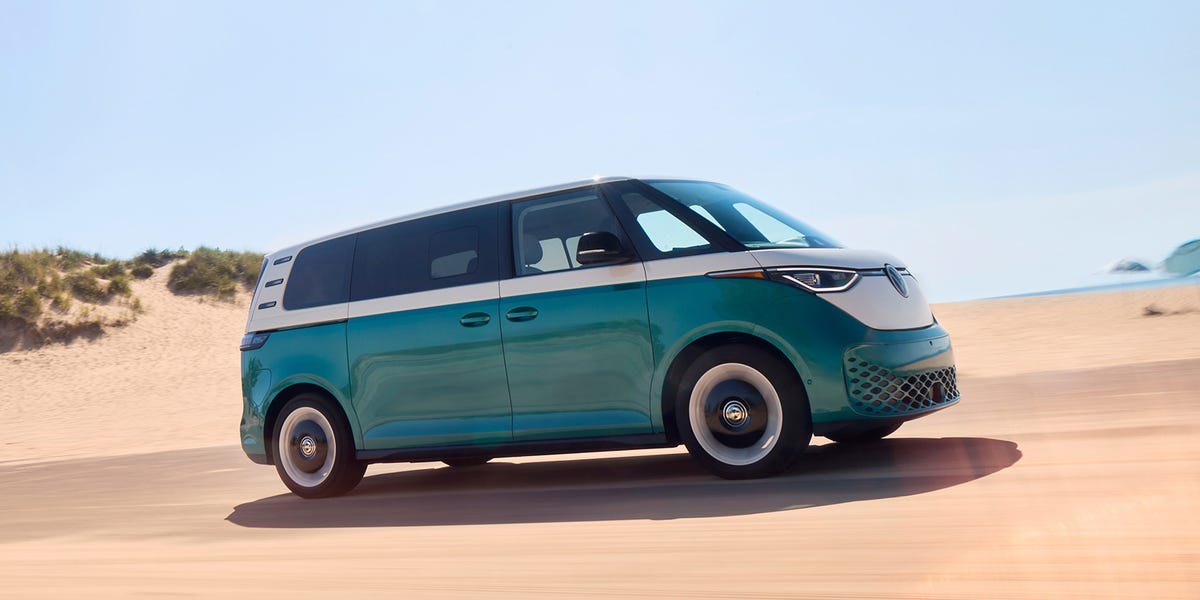
Then there’s the design question. VW design chief Andreas Mindt acknowledged to Auto Express that nostalgia has a shelf life. He pointed to the New Beetle and its successor as cautionary tales, vehicles that leaned hard on retro charm until buyers simply moved on. Whether the next ID.Buzz keeps its cheerful Microbus face or goes in a different direction, Mindt promised it will be “interesting.” That word does a lot of heavy lifting when you have nothing to show.
The current ID.Buzz, when it eventually returns for 2028, is supposed to bring updated software, vehicle-to-load capability, and digital key integration. Pricing hasn’t been announced, but it’s hard to imagine VW shaving much off the $61,545 starting price without the new platform and battery tech Schäfer is describing. Those won’t arrive until the second generation, which is likely years further out.
In the meantime, the competitive landscape isn’t standing still. The Hyundai Ioniq 9 is already on sale. Rivian’s R2 is coming. Every month the ID.Buzz sits on the sideline, the window for a quirky, expensive electric van to find its audience narrows a little more.
VW’s pattern with the ID.Buzz has been to generate excitement, pull back, generate more excitement, then pull back again. The company built one of the most emotionally resonant concept-to-production pipelines in recent memory and then priced it beyond the reach of the buyers who loved the original bus. Schäfer is now saying the company knows the problem and has a plan.
What VW hasn’t demonstrated yet is the ability to execute that plan on time. The SSP platform, the cheaper batteries, the next-gen design — all of it lives in a future that keeps getting pushed further out. The 2028 return of the current model, assuming it actually happens, will be a test of whether American buyers still care enough to wait.

Share this Story