
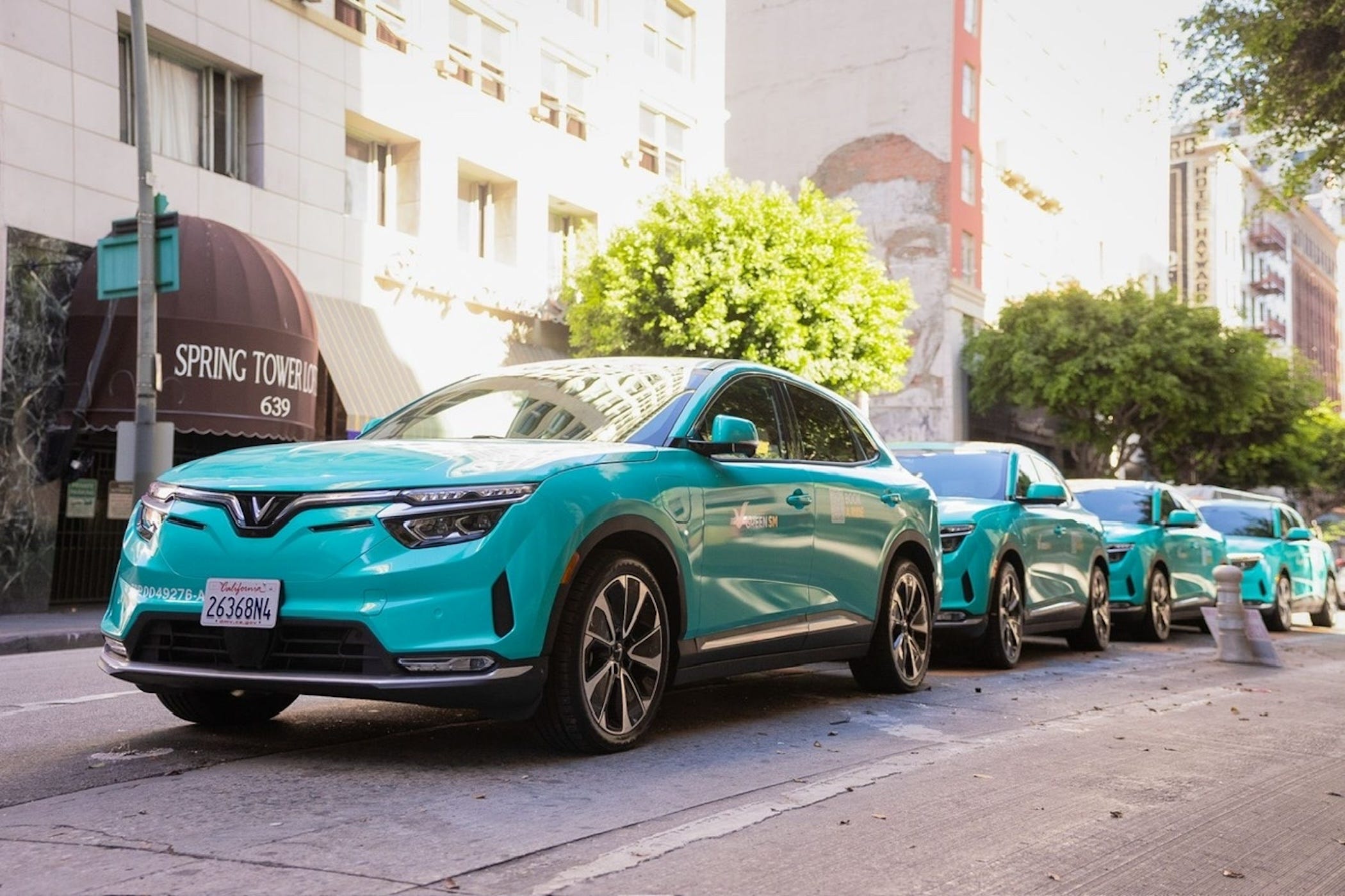


VinFast has registered 389 vehicles in the United States during the first seven months of 2026. Now, in a single week, 500 of its VF8 electric SUVs have flooded the streets of Los Angeles in matching cyan paint.
The vehicles belong to Green SM, a Vietnamese ride-hailing company that just launched its first U.S. operation. The math is blunt: Green SM’s L.A. fleet alone dwarfs VinFast’s entire American retail presence this year by a factor of almost 1.3 to one.
Green SM is not another Uber clone. The company owns every car in its fleet, hires full-time drivers, and trains them in-house. No gig workers, no personal vehicles, no side hustles between fares. It is a model that feels almost quaint against the contractor-driven platforms that dominate American ride-hailing, yet the company claims 850 million completed rides across Europe and Asia.
L.A. riders can book through the Green SM app, call a hotline, or simply flag one down on the street, old-school taxi style. Introductory deals sweeten the pitch: 50 percent off your first five rides and a free Green Pass membership that delivers monthly discount vouchers.
The play here is layered. Green SM gets a foothold in one of the largest and most competitive ride-hailing markets on the planet. VinFast gets something money can’t easily buy: hundreds of thousands of potential passenger-hours in its vehicles without asking anyone to sign a lease or visit a dealer.
When Car and Driver tested a 2023 VF8, the verdict was rough. Handling, suspension, and fit and finish all drew criticism. VinFast says it has improved subsequent model years, but American buyers have not been convinced.
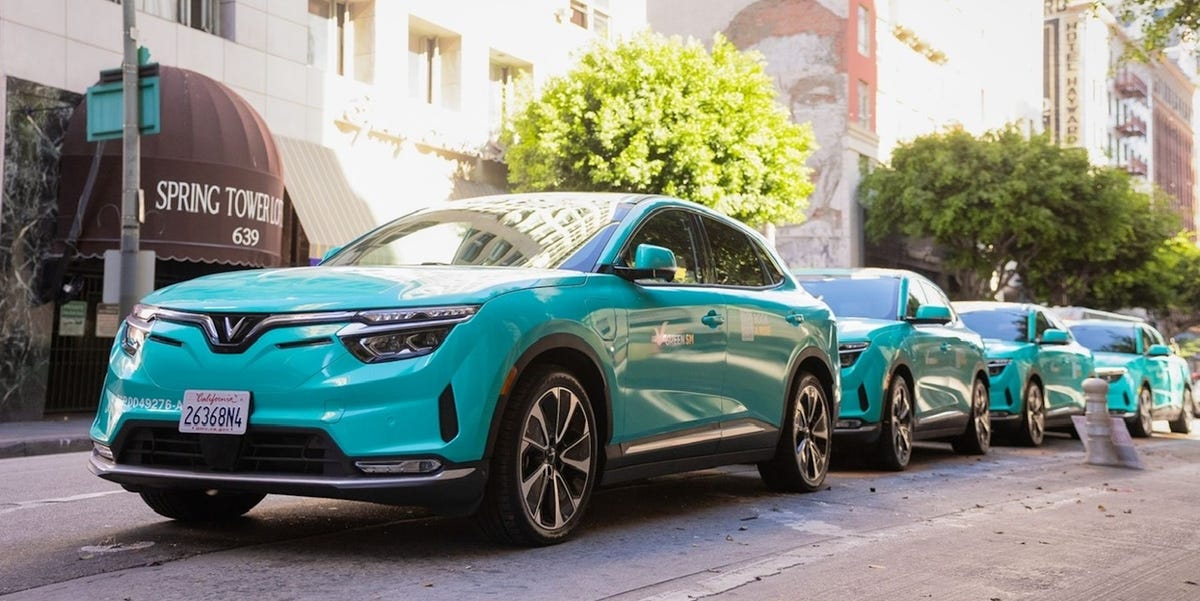
Putting reluctant customers in the back seat of a VF8 for a 20-minute ride to LAX is a different proposition than asking them to spend $50,000 on one. It removes the risk. It lets riders form an opinion based on cabin comfort, quietness, and ride quality without confronting the brand’s thin dealer network or uncertain resale values.
Green SM’s U.S. CEO Hoang Thanh Hang has framed the venture around service quality and intentional customer interaction. That language sounds like it was drafted for a press release, but the underlying business decision is sharper than it appears. In a city already swimming in Ubers, Lyfts, and Waymo robotaxis, differentiating on “we actually employ our drivers” is a gamble that the market has swung too far toward automation and gig labor.
Five hundred cars is not a vanity project, but it is not dominance either. L.A. is enormous. Coverage will be thin at first, and response times will determine whether riders bother opening the app a second time.
VinFast has been trying to crack the American market for three years now. It announced a factory in North Carolina that drew a lawsuit from the state over construction delays. It introduced multiple SUV models and spent on marketing. None of it has moved the needle in any measurable way.
So now the strategy shifts. Instead of selling cars to Americans, put Americans inside the cars and let the experience do the talking. It is a tacit admission that the traditional playbook has failed. Whether 500 cyan crossovers weaving through L.A. traffic can accomplish what billions in investment could not remains an open question, and Green SM’s early ride numbers will answer it faster than any focus group.


Share this Story