
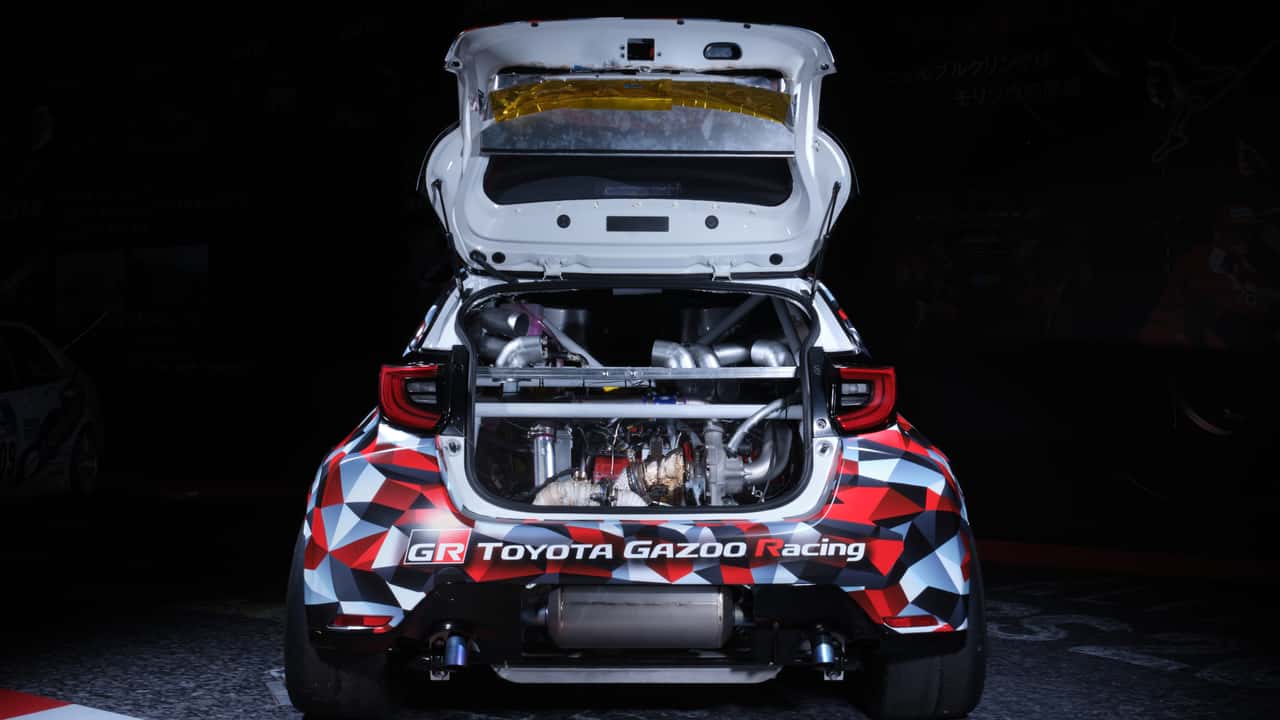


Gazoo Racing’s marketing manager Mikio Hayashi just confirmed what enthusiasts have been desperate to hear: Toyota’s mid-engine sports car program is alive, evolving, and pointed squarely at production. “We are making this car better every day,” Hayashi told Auto Express, adding that the knowledge gained from developing the GR Yaris M concept in motorsport will be “translated into something else — a road car or mass-production model — in the future, possibly.”
That word “possibly” is doing a lot of heavy lifting. But the trajectory is unmistakable.
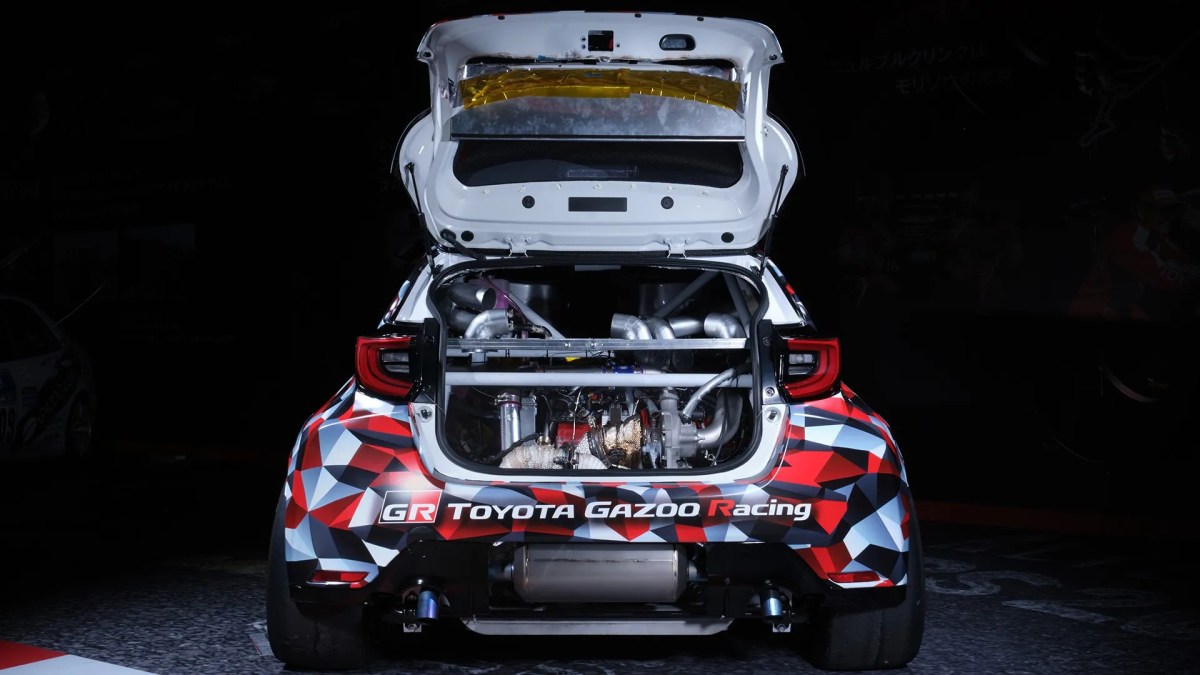
The GR Yaris M concept debuted at the Tokyo Auto Salon in January 2025 and has since been spotted at Japanese race tracks repeatedly. It’s a mid-engine hot hatch built on the bones of the GR Yaris, and nobody inside Toyota pretends it will actually go on sale in that form. The hatchback body is a mule, a rolling laboratory for what insiders increasingly point to as a reborn MR2.
When asked directly whether the MR2 nameplate — dormant for nearly two decades — would return, Hayashi offered the most Japanese non-denial denial imaginable: “Thank you for your suggestion.” That’s not a no.
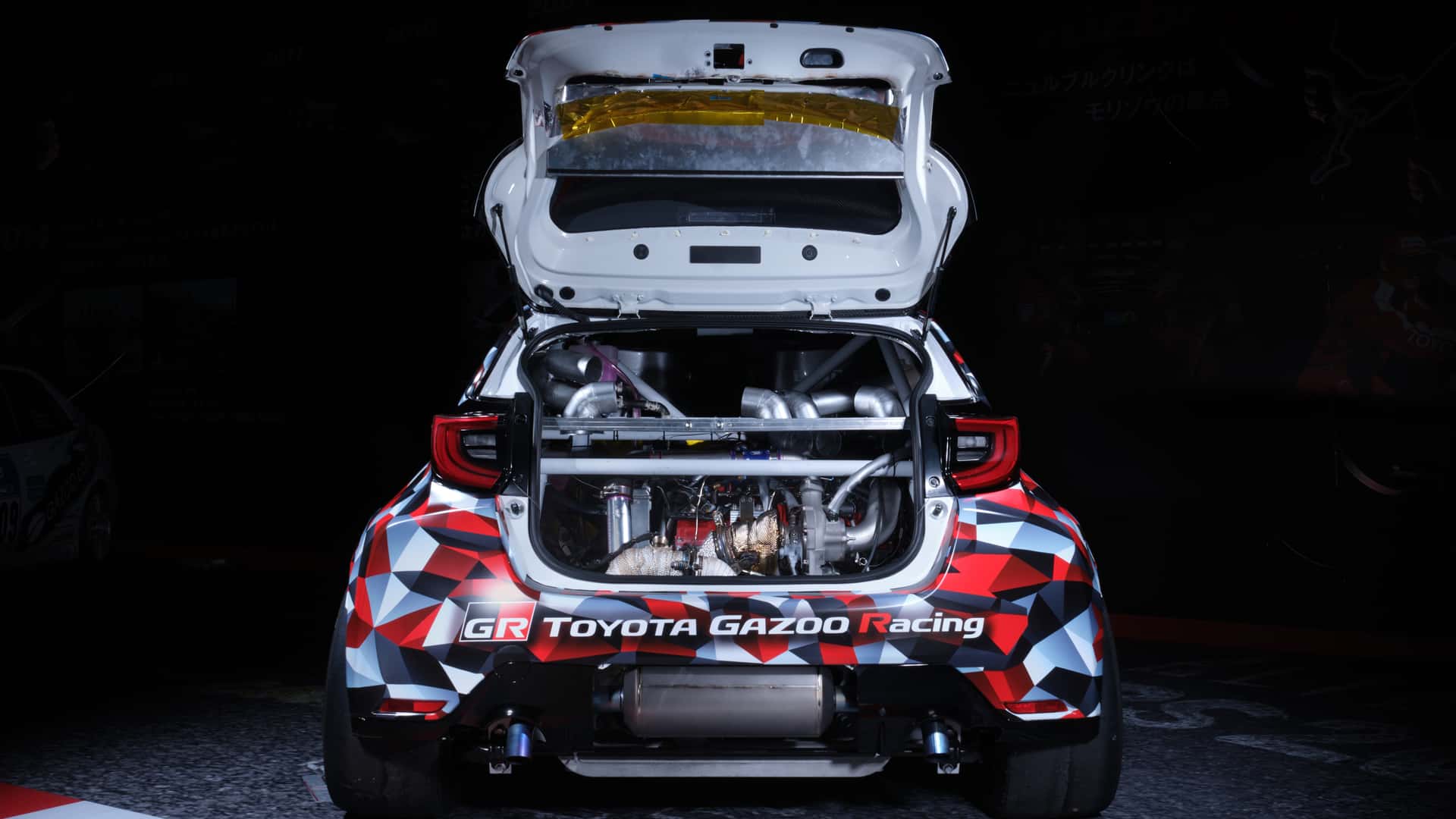
The engine at the center of this project is Toyota’s new turbocharged 2.0-liter four-cylinder, internally coded G20E, designed for high-performance duty in both mid-engine and front-engine configurations. Company officials have hinted at outputs north of 400 horsepower. All-wheel drive is expected. This is not your father’s MR2 Spyder.
And the MR2 wouldn’t be alone. Toyota is simultaneously bringing back the Celica, potentially as the Celica Sport, likely sharing that same turbocharged 2.0-liter heart. Both cars would wear the Gazoo Racing badge, which Toyota now positions as a standalone performance brand rather than a trim level.
The MR2 would slot below the V8-powered GR GT flagship and above the Celica in what is becoming an absurdly ambitious sports car lineup from a company that also sells more Camrys and RAV4s than anyone can count.
Here’s the cold water: GR President Tomoya Takahashi said earlier this year that a mid-engine production car is realistically four to five years out. That puts a new MR2 somewhere around 2029 or 2030, an eternity in an industry where product plans get killed for a bad quarterly earnings report.
The broader question is whether Toyota can sustain this many performance models at once. The current roster already includes the GR Yaris, GR Corolla, GR86, and the Supra, which is also expected to return in some form. Adding the MR2, Celica, and GR GT creates a seven-car performance lineup from a mainstream manufacturer. That’s Porsche territory without the Porsche margins.
Toyota’s bet seems to be that Gazoo Racing can function as a halo that lifts the entire brand, the same logic that kept Nissan pumping out GT-Rs and BMW funding M cars even when the spreadsheets didn’t fully cooperate. The difference is scale. Toyota has the cash reserves and global volume to absorb the cost of niche sports cars in ways that few competitors can match.
Meanwhile, the rest of the industry is consolidating, electrifying, or both. Audi just confirmed its legendary five-cylinder is dying in Europe under the weight of Euro 7 emissions rules. The landscape is littered with automakers retreating from anything that doesn’t generate immediate returns.
Toyota is moving the other direction. Whether the MR2 actually reaches showrooms with 400 horsepower and a mid-engine layout in five years remains an open question. Development programs get shelved all the time.
But the fact that Toyota is publicly testing a mid-engine prototype on race tracks, letting executives talk openly about production intent, and building a dedicated turbocharged engine platform for multiple sports cars suggests this is more than concept-car theater.
The MR2 isn’t back yet. But it’s closer than it’s been in 20 years, and Toyota isn’t being quiet about it.

Share this Story