
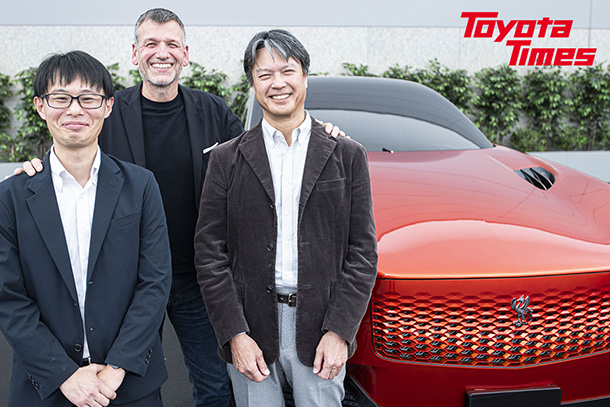


Toyota just became the first automaker to win the Japan Patent Office Commissioner’s Award for design-category intellectual property, a recognition that traces back nearly four decades to 1987 but had never gone to a car company. The distinction, announced for fiscal 2027, rewards Toyota’s systematic effort to lock down legal protection for the visual language that defines its brands.
The award specifically cited Lexus’s “Spindle Body” and Toyota’s “Hammerhead” design philosophies — not as styling exercises, but as brand assets wrapped in layers of design rights, trademarks, and patents secured across global markets. Toyota didn’t just draw pretty cars. It filed the paperwork to own the shapes.
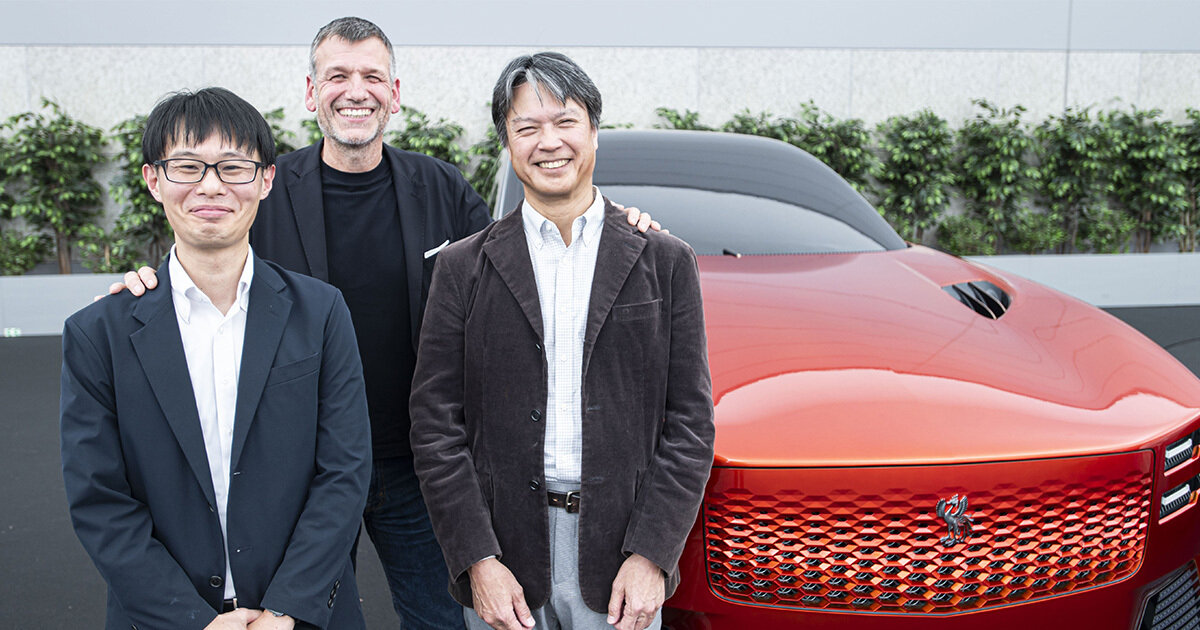
Simon Humphries, Toyota’s Chief Branding Officer and head of design, connected the win directly to Chairman Akio Toyoda’s push to place invention at the center of the Toyota Group. The company’s Group Vision — “Inventing our path forward, together” — became the foundation for a five-brand restructuring that stacked Century on top, followed by Lexus, Toyota, Daihatsu, and GR. Each brand got a defined conviction, a reason to exist.
That clarity, Humphries argued, is what made the IP work possible. “The clearer a brand’s conviction becomes, the more distinctive the design becomes,” Humphries said. “And the more distinctive it becomes, the more it stands apart from everything else. Once that happens, you have to secure it properly as a right, or you cannot protect it.”
That is not designer talk. That is corporate strategy expressed through sheet metal.
Yoshikazu Jikuhara and Hiroki Hattori from Toyota’s Intellectual Property Division described how brand clarity made their jobs easier. When designers know exactly what a brand stands for, they can articulate which elements are distinctive. The IP team then files not just for whole-vehicle protection but for specific features — the parts that carry brand identity.
Hattori explained that his team asks designers directly which features they consider most distinctive, then builds filings around those elements. Jikuhara added that once brand identity is clearly defined within a car’s design, pinpointing the most important protectable elements becomes almost intuitive.
This is the part most automakers get wrong. Design and legal typically operate in separate silos. Styling sketches go one direction, patent filings go another, and nobody sits in a room together until something gets copied.
Toyota’s approach — management, R&D, and IP moving as a coordinated unit — is what caught the JPO’s attention. The five-brand restructuring announced in recent years gave the whole organization permission to think in sharper terms.
Lexus concepts like the six-wheeled vehicle and the Catamaran shown at the Japan Mobility Show emerged from that clarity. So did the IMV Origin, designed specifically for African markets under the Toyota brand. These weren’t random show cars — they were expressions of distinct brand convictions, each backed by IP filings before they ever reached a stage.
Humphries emphasized the word “together” in Toyota’s Group Vision, noting it doesn’t even appear in the Japanese original. He added it because a car is never just a designer’s creation. Suppliers, dealers, production teams, and IP attorneys all shape the final product.
The award itself is a plaque. The real story is the operating model behind it — one where a design sketch and a patent filing are treated as two sides of the same coin.
In an industry where design knockoffs travel at the speed of a social media post, Toyota just demonstrated that protecting your look requires the same rigor as engineering your powertrain. Most competitors still treat IP as an afterthought. Toyota turned it into a competitive weapon.



Share this Story