
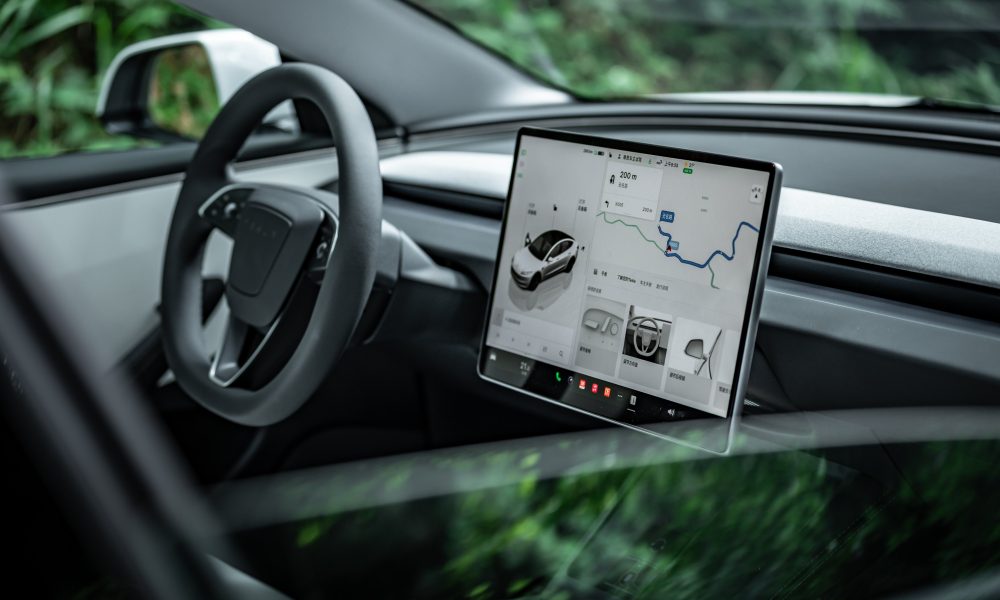


Latvia became the tenth European Union country to authorize Tesla Assisted Driving this week, and the pattern tells you everything about how slowly this is actually moving.
The approval follows the same playbook nine other nations have used since April: recognize a provisional type approval originally granted by the Netherlands’ RDW authority, review Tesla’s documentation, and sign off. Lithuania, Estonia, Denmark, Belgium, Slovenia, Czechia, Croatia, and Slovakia all took the same path. No independent national testing. Just mutual recognition of a single Dutch provisional stamp.
That word “provisional” deserves more attention than it gets.
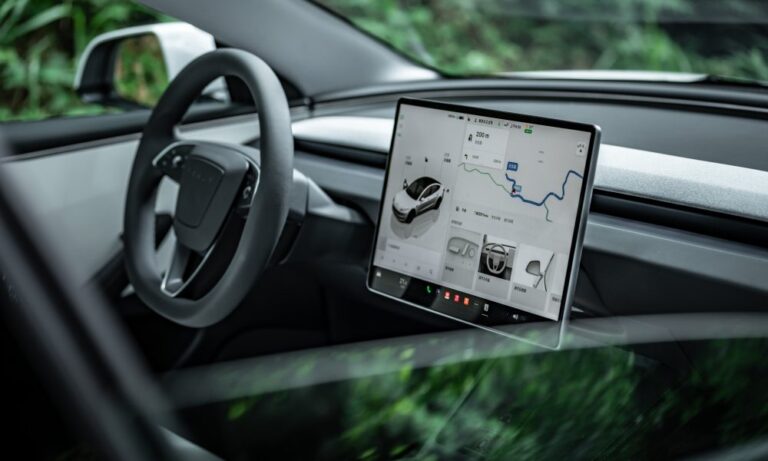
Tesla rebranded its system in Europe after regulators deemed the name “Full Self-Driving” misleading. It is now Tesla Assisted Driving, and it remains SAE Level 2. Drivers can take their hands off the wheel but must watch the road at all times and be ready to grab it back.
This is not autonomy. It is a well-dressed assist system with a new, more honest name.
The ten countries that have cleared TAD share something in common: none of them are large markets. Germany, France, and Italy are still reviewing the system. A vote in the Technical Committee on Motor Vehicles is expected in December, and clearing that hurdle requires at least 15 of 27 member states representing 65 percent of the EU population.
The math isn’t there yet, and the big three remain uncommitted.
Meanwhile, back in the United States, Tesla operates in a parallel universe. The company’s unsupervised Robotaxi service now runs in six cities. In Austin, 463 Cybercabs were registered as of last weekend, and the fleet handled crowd surge during the Formula 1 Grand Prix at Circuit of the Americas.
Riders watched lines of gold Cybercabs stack up on roads near the track. Ashok Elluswamy, Tesla’s head of AI software, posted “Robotaxis as far as the eye can see!” without a hint of irony.
Houston’s Robotaxi geofence expanded the same day Latvia got its supervised assist approval. The new boundary stretches southeast toward central Houston, covering far more territory than the original 25 square miles around Jersey Village. Dallas is next for Cybercab rides in November, and Tesla says 24/7 operations and fleet sales to outside operators are targeted before year-end.
The gap between what Tesla offers in the U.S. and what it can legally sell in Europe is widening, not shrinking. American riders are climbing into steering-wheel-free Cybercabs with no one in the front seat, pulling up live rear camera feeds mid-trip, and activating quiet mode to darken the screen while the car drives itself home from a Formula 1 race. European customers, if they happen to live in Latvia or Slovakia, are getting permission to use a supervised lane-keeping system that requires constant attention.
Tesla even updated the Cybercab’s passenger experience this past week. A rearview camera feed is now accessible during rides, built in roughly two weeks after a rider requested it. The car has no mirrors, no rear window, and no pedals.
Everything runs through software and eight exterior cameras. Senior AI engineer Yun-Ta Tsai said part of the camera view algorithm was optimized using Grok, Tesla’s AI model.
Europe’s regulatory framework was designed for caution, and it is performing exactly as intended. Each national clearance adds political weight toward December’s committee vote. But ten small countries do not equal one Germany, and Tesla knows it.
The December vote will determine whether TAD reaches the customers who would actually move the needle for Tesla’s European business. Until then, the company collects approvals from markets where its fleet is measured in thousands, not hundreds of thousands, while its American operation races ahead without waiting for anyone’s permission.
Share this Story