
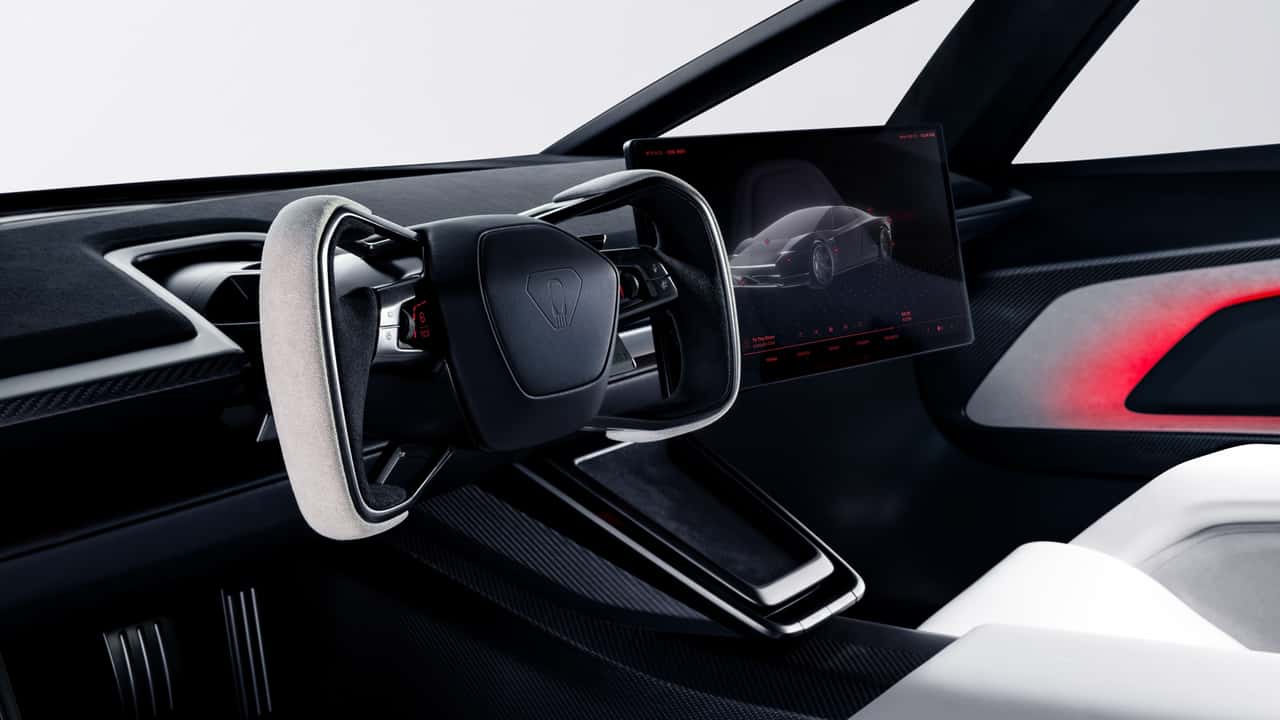


Nearly a decade after Tesla first teased its next-generation Roadster, the company is now drip-feeding details about what drivers will actually see when they sit behind the wheel. The latest reveal is the car’s user interface, and it looks like something pulled from a Tom Cruise movie circa 1986.
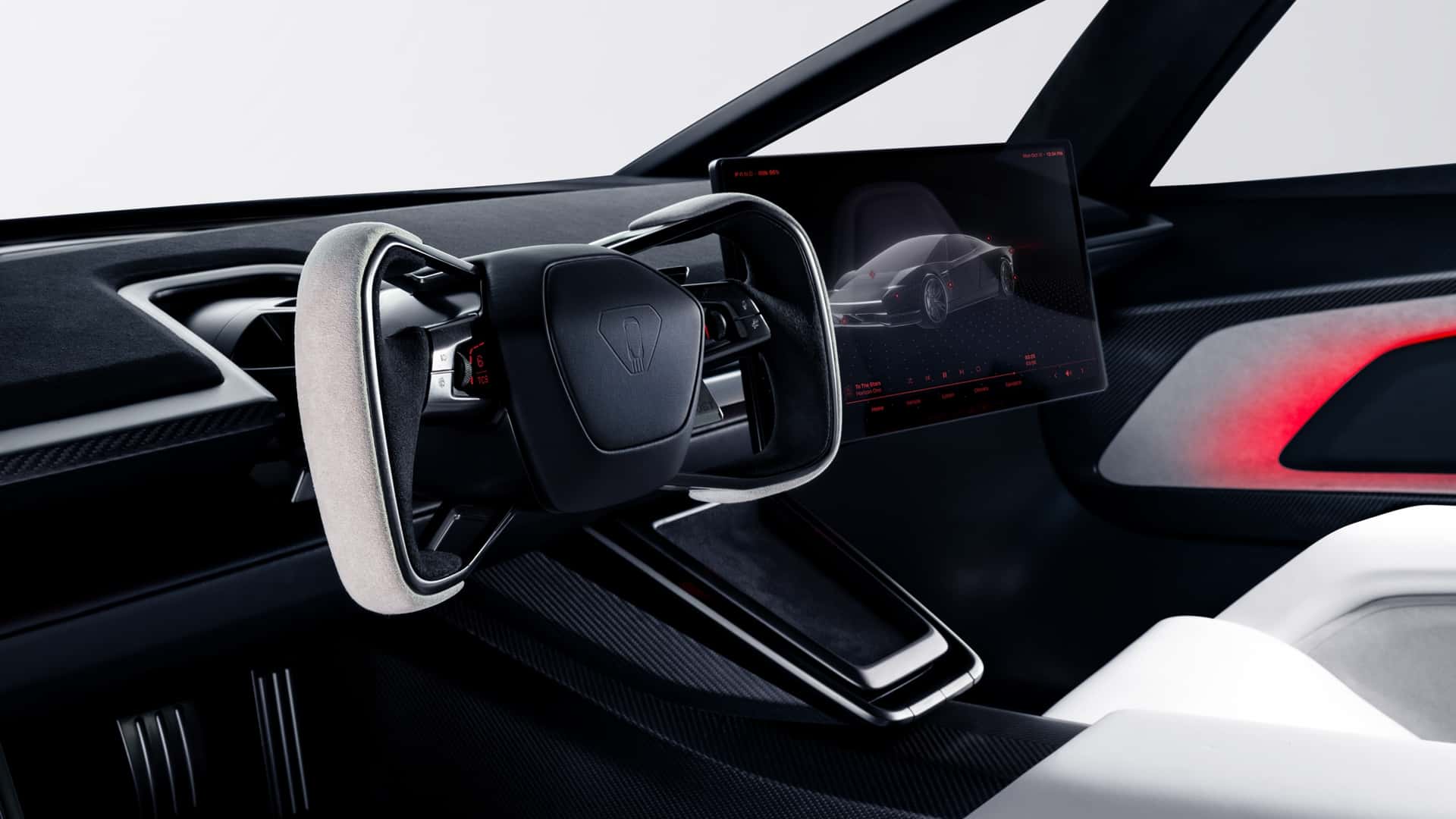
Red graphics on a black background. Battery and motor temperatures. Aero balance. Lap timers. Brake data. Tesla calls it “inspired by fighter jet cockpits,” and for once the marketing language isn’t entirely hyperbolic. The screen is dense with telemetry, the kind of layout you’d expect in a race car, not a street-legal coupe that Tesla says will start production sometime next year.
A short video posted by Tesla walks through the various controls. Drivers can toggle barge boards behind the rear fenders, switch hood vents on or off, lower the suspension, and dial in specific aerodynamic configurations. An animated Roadster on screen mirrors each change in real time.
The retro aesthetic is deliberate. It carries the same angular, Cybertruck-influenced design language that defines the car’s exterior, which looks nothing like the prototype Tesla showed off way back in 2017. That original car is dead. This one is sharper, stranger, and far more ambitious.
At the bottom of the track mode screen sit status indicators for the booster and thruster system. Tesla is selling a version of the Roadster equipped with cold-gas thrusters, the kind of party trick that sounds absurd until you read the claimed performance numbers. The Roadster Thrust is supposed to hit 60 mph in under 0.9 seconds.
The invite-only Roadster Rocket variant claims 0.59 seconds and a 330-mph top speed. The base production car targets 214 mph.
Those thruster numbers come with a catch nobody talks about loudly enough. Five seconds of boost, then up to six hours to refill. That’s not a performance feature for track days. That’s a parlor trick for exactly one pull at a time.
The video doesn’t show how drivers actually engage the thruster system, which feels like an odd omission for a feature Tesla has made central to the Roadster’s identity. You’d expect some dramatic activation sequence, maybe its own screen, some visual confirmation that you’re about to experience forces normally reserved for aerospace.
Ferrari CEO Benedetto Vigna recently praised the Roadster publicly, saying “we have to keep dreaming.” That’s the polite version of acknowledging that Tesla is playing a different game entirely. Ferrari sells driving purity and heritage. Tesla is selling spectacle, cold-gas rockets, and an interface that looks like it belongs in an arcade cabinet.
Production is supposedly starting next year. If you’ve followed Tesla’s timeline on this car, you know what that promise is worth. The Roadster was first unveiled in 2017 with a target production date of 2020. Then it slipped to 2022, then 2023, then it went quiet for a while.
The car Tesla finally showed this month bears so little resemblance to the original concept that it’s essentially a different vehicle wearing the same name.
Whether Tesla delivers the Roadster Thrust or the standard Performance trim first remains unclear. Elon Musk has claimed the car will eventually perform stunts autonomously, describing it as “sentient.” That word is doing a lot of heavy lifting.
The interface, at least, looks real. It looks finished. And it looks like someone on Tesla’s design team genuinely loves the 1980s. Whether the car underneath it actually ships on schedule is the question that has gone unanswered for nine years running.
Share this Story