
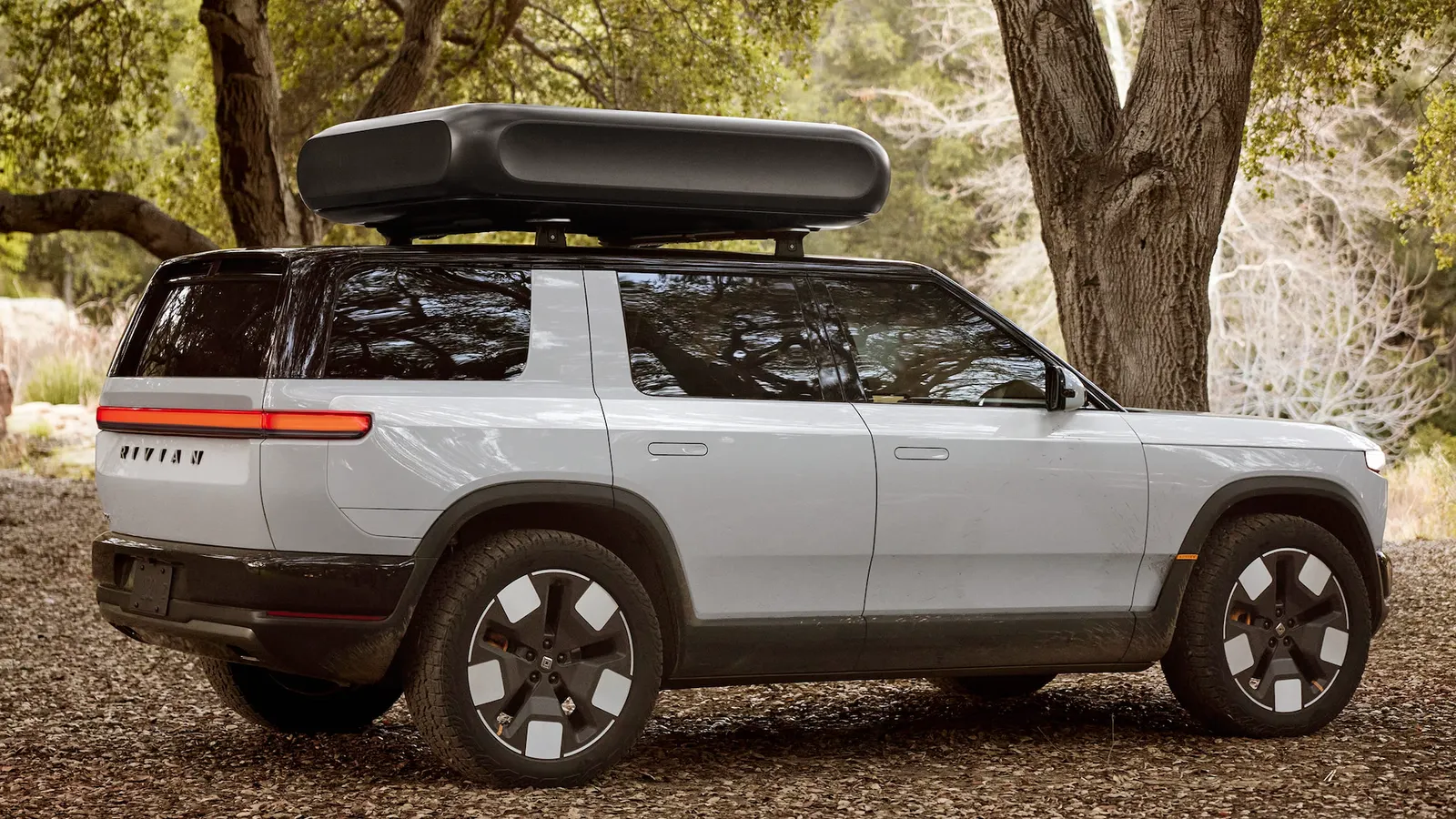


Rivian lost $36 million in the second quarter, a dramatic improvement over the $335 million hole it dug in the same period last year. The company has never turned a profit.
Consolidated revenue hit $1.6 billion, up 27% year over year, with $1.1 billion from vehicle sales and $515 million from software and services. That software number is inflated by $308 million flowing from the Volkswagen Group joint venture, a revenue stream that didn’t exist a year ago. Strip that out, and the automotive business alone tells a more modest story.
Deliveries totaled 12,194 EVs in Q2. Rivian bumped its full-year delivery target to 65,000 to 70,000 vehicles, up from the previous range of 62,000 to 67,000, buoyed by the June launch of its R2 SUV. CEO RJ Scaringe said a second production shift for the R2 should come online by the end of Q3.
CFO Claire McDonough called 2026 a “transition year,” which is corporate shorthand for “don’t judge us yet.” She warned that Q3 financials will take a hit from R2 launch complexity before the company sees improvement in Q4. Rivian absorbed roughly $100 million in incremental costs during Q2 just from ramping R2 production.
McDonough also flagged rising commodity and memory costs tied to Rivian’s autonomy platform, plus the usual macro and geopolitical headwinds she described as creating “added complexity, cost and uncertainty.” Tariff relief helped the quarter, with an IEEPA refund receivable and $108 million in regulatory credit revenue partially offsetting R2 launch expenses.
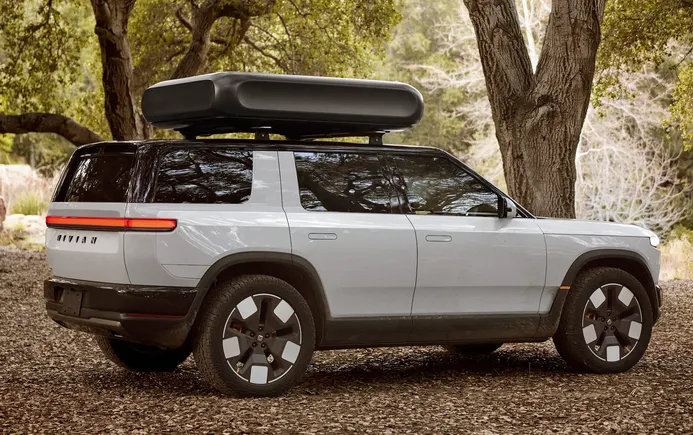
The company insists R2 will achieve a positive gross profit as part of its exit rate for 2026. That phrasing matters. Exit rate means December, not the full year, a carefully chosen metric that lets Rivian claim progress without delivering sustained results.
A rear-wheel-drive version of the R2, priced at $44,900, is slated for 2027. Rivian also announced plans to boost initial capacity at its future Georgia plant from 200,000 to 300,000 units annually, funded by a $4.5 billion DOE loan commitment.
Cash position looks healthy on paper. Rivian reported approximately $5.3 billion on hand, supplemented by a July follow-on offering that raised about $1.3 billion through the sale of 86 million Class A shares. The company also expects $1 billion in nonrecourse debt from the VW joint venture and a $250 million equity investment from Uber.
That Uber relationship is worth watching. The ride-hailing company committed up to $1.25 billion in Rivian through 2031, tied to purchasing 50,000 R2 SUVs for use as robotaxis. It guarantees volume but also ties Rivian’s fortunes to Uber’s autonomous ambitions, which remain unproven at scale.
Rivian previously walked back its 2027 profitability target, and the Q2 numbers show why the goalposts keep moving. Revenue is growing and losses are shrinking. But the company is still spending heavily to launch new vehicles, build factories, and develop autonomy software while burning through cash that must be continuously replenished through equity dilution and government-backed debt.
The math is straightforward. Rivian needs to sell a lot more R2s at a positive margin before any of these financial engineering maneuvers translate into a self-sustaining business. A second production shift and cheaper RWD variant could change the trajectory, or they could just accelerate the spending.
Scaringe has built vehicles people genuinely want. Whether he can build a company that pays for itself remains an open question heading into a Q3 that his own finance chief just warned will get worse before it gets better.
Share this Story