
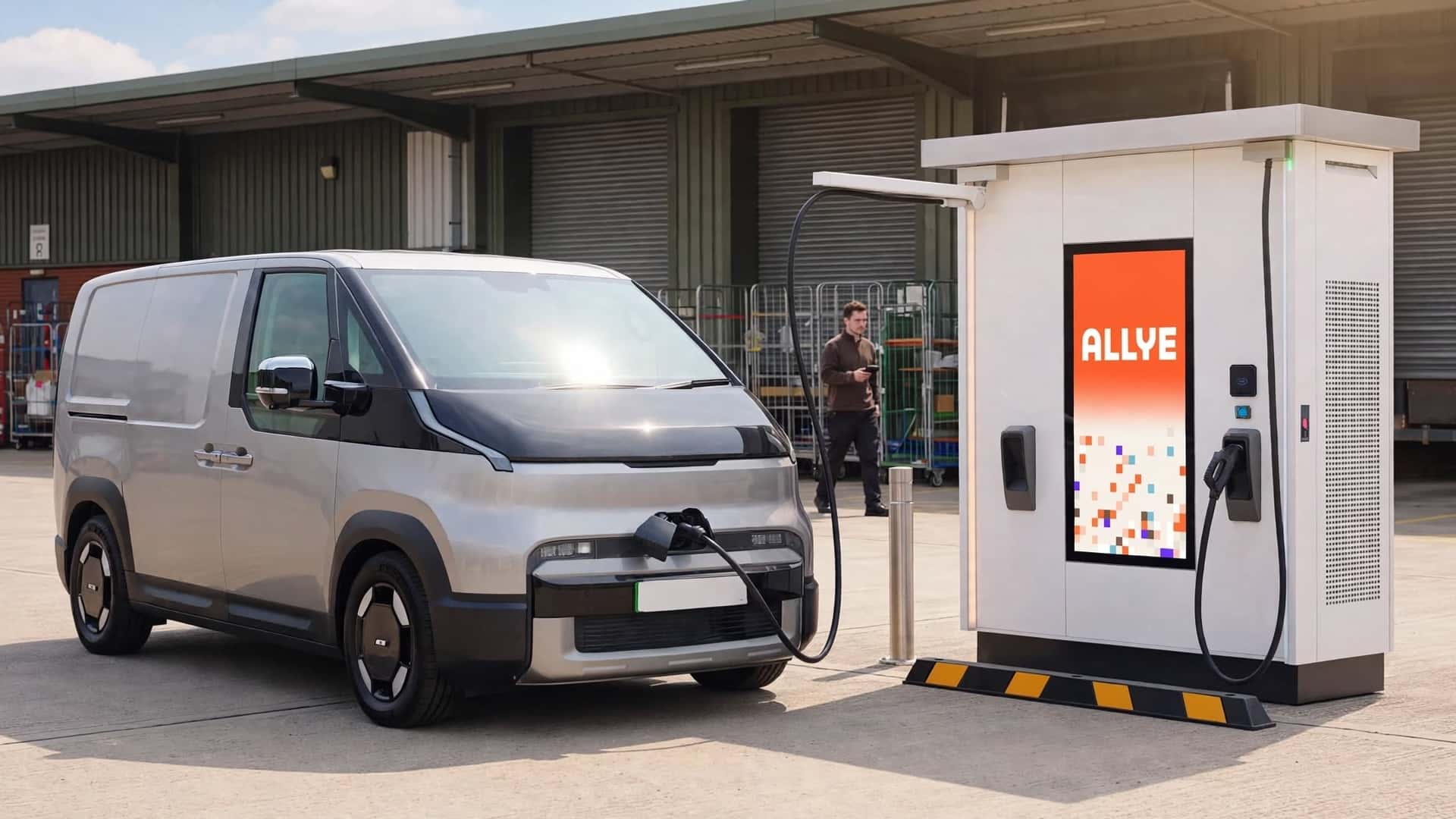


A refuse depot in Glasgow was staring down a £300,000 grid upgrade quote just to plug in its electric trucks. Instead, it got a battery-buffered fast charger installed in a single day.
That charger, built by British startup Allye Energy, represents a quietly clever workaround to one of the most persistent bottlenecks in EV infrastructure: the grid itself. The company’s new MEV unit packs repurposed electric vehicle batteries inside a standalone cabinet that can deliver up to 400 kW to two vehicles at once, while sipping as little as 16 amps from a standard three-phase industrial outlet.
The math is simple. The charger slowly fills its onboard battery storage from the grid when no vehicles are connected. When an EV plugs in, it draws from those batteries at full speed. No substation upgrade. No months of permitting. No six-figure electrical bill before a single electron reaches a vehicle.
Allye offers the unit with either 155 or 232 kilowatt-hours of built-in storage, sourced from second-life packs pulled from UK-registered cars. The batteries come from different manufacturers and vary in age, which makes the battery management system the real engineering challenge here, not the charging hardware.
At the Glasgow depot run by J&M Murdoch, the charger is currently dispensing around 200 kWh per day. That is modest throughput for a 400 kW-capable unit, but it matches reality. Fleet depots don’t need blistering speeds around the clock. They need reliable energy where the grid can’t deliver it affordably.
The portable form factor matters too. The MEV sits on the ground, hooks up to mains power, and starts working. If the lease runs out or operations shift, a truck hauls it to the next site. No stranded infrastructure. No writedowns.
Allye claims 95 percent of the components are British-sourced. The unit works with both 400-volt and 800-volt EV architectures. Safety features include pyro fuses on each battery pack, off-gas detection, and fire barriers between packs. Cable theft, a genuine plague at UK charging sites, is addressed with cut detection, forensic marking, and quick-release terminals for fast replacement.
There is a catch buried in the physics. At 16 amps on three-phase power, the grid input is roughly 11 kW. Charging two Teslas back-to-back from empty would drain the buffer completely and require well over a day to replenish. Scale up to 125 amps and the recovery time shrinks dramatically, but the whole value proposition depends on matching the trickle-charge rate to actual daily demand.
This is not a replacement for high-traffic public fast charging corridors. It is a patch for the places where fleet operators need power now and utilities are quoting delivery timelines measured in quarters, not weeks.
The second-life battery angle adds another dimension. As millions of EV packs age out of automotive duty over the coming decade, finding productive second acts for them becomes an industrial-scale problem. Allye is betting that stationary buffering is one answer, and that fleet managers will pay for speed of deployment over raw capacity.
Whether the economics hold at scale depends on battery degradation rates, pack sourcing costs, and how aggressively UK utilities defend their upgrade revenue. Allye has a working unit in Glasgow. The question now is how many depots are sitting on similar six-figure grid quotes with no patience left to wait.





Share this Story