


Nissan is staking the future of its bestselling nameplate on something you can’t see in a spec sheet: silence.
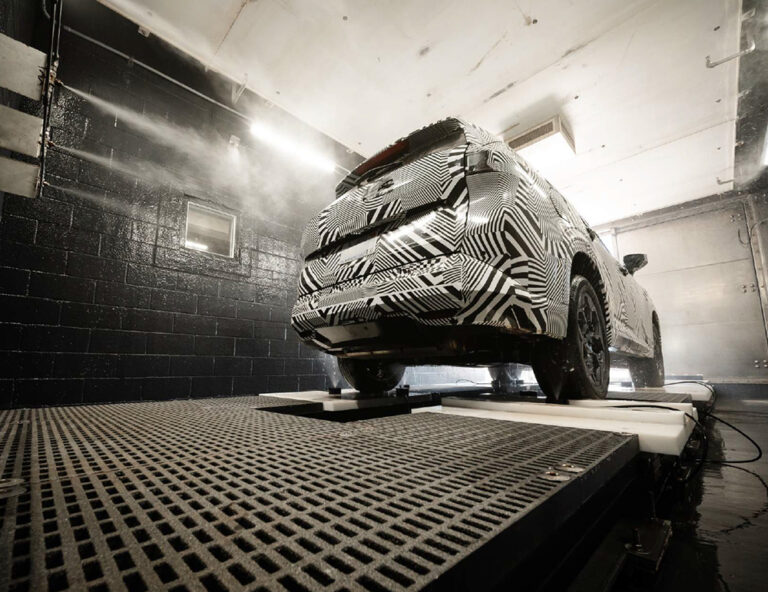
The 2027 Rogue Hybrid, arriving in limited SR with Tech Package trim this fall before a broader rollout in January 2027, was engineered from the ground up around cabin refinement. Sound-deadening materials packed into the wheel wells, concealed wipers, door-mounted mirrors, slim roof rails, and even redesigned ventilated seats all serve one goal. Keep the outside world out.
“It’s easy to have a normal conversation with passengers in both rows, even on the interstate,” said Derek Johnson, an ADAS engineer at Nissan Technical Center North America in Farmington Hills, Michigan.
That’s a telling emphasis for a vehicle entering the most crowded fight in the American market. Compact crossovers account for roughly 21 percent of all U.S. vehicle sales, according to Mobility Global’s 2025 data. The RAV4, CR-V, Tucson, and Forester all offer hybrid variants now.
Nissan is not trying to win on fuel economy numbers or cargo volume alone. It is trying to win on feel.
The centerpiece of that strategy is a feature called Smooth Stop, which Nissan claims is a class first. The system automatically modulates braking pressure as the vehicle decelerates, eliminating the lurch that typically comes at the tail end of a stop. Drivers hold the brake pedal steady and the car handles the finesse.
Johnson compared it to the technique professional chauffeurs use.
Paired with Nissan’s e-Pedal system, another class exclusive according to the company, the Rogue Hybrid can accelerate and decelerate using only the throttle in certain conditions. Both features target one very specific scenario: the daily commute in heavy traffic, where driver fatigue accumulates in hundreds of tiny, irritating micro-stops.
Then there is ProPILOT Assist, now in its latest generation. Nissan says the front camera’s field of view is 20 percent wider and object detection range is up to 33 percent farther, translating to roughly two extra seconds of reaction time at 70 mph. Engineers calibrated the system on California roads, chasing real-world smoothness in lane centering and speed modulation rather than relying on simulation alone.
The higher-tier version, ProPILOT Assist with Hands-Off Traffic Jam Support, allows hands-free driving below 30 mph and automated lane changes at highway speeds with a tap of the turn signal. It comes standard on Platinum and available on SR. Nissan is not the first to offer hands-free capability in this class, but bundling it with one-pedal driving and automated braking refinement creates a layered pitch few competitors match at this price point.
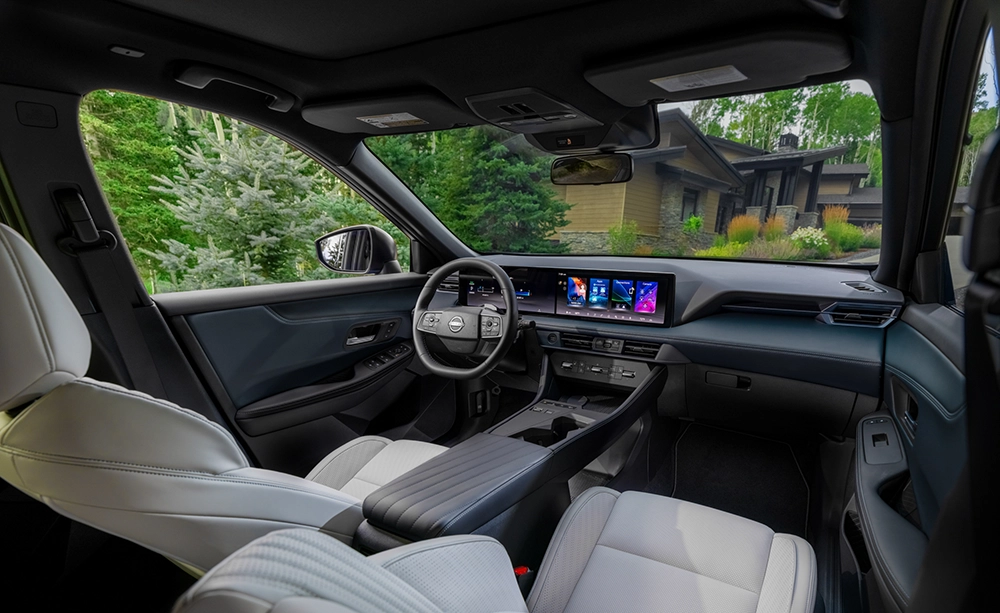
Inside, dual 14.3-inch displays are available, and a Qi2 wireless charger comes standard across the lineup, another class exclusive claim. Apple CarPlay and Android Auto are standard. The digital instrument cluster now renders nearby vehicles graphically when ProPILOT Assist is active, giving the driver a clearer picture of what the system sees.
Nissan’s Zero Gravity seats return, and the company says front headroom leads all hybrids in the segment.
Johnson, who started at Nissan as an emissions test intern in 2021 and still drives a 2006 Xterra, represents a generational shift inside the company. Engineers his age grew up with smartphones and expect technology to work without a manual. That philosophy shows in how the Rogue Hybrid presents its tech: clean, shallow menu structures, minimal learning curve.
Whether the market rewards refinement over raw value remains the open question. Toyota and Honda have spent decades building hybrid credibility. Nissan is arriving late to this party, betting that how a car feels at a stoplight matters as much as what it costs at the pump.
Pricing has not been announced. That number will determine whether the Rogue Hybrid’s quiet confidence translates into loud sales.

Share this Story