


The 2027 Nissan Rogue Hybrid is arriving with something unusual for a modern crossover: physical controls for climate, fan speed, airflow direction, heated seats, and volume. In a segment drowning in touchscreen-only interfaces, Nissan’s design team made a deliberate choice to keep the most-used functions within tactile reach. That decision tells you more about where this vehicle is aimed than any styling detail.
Nissan’s best-selling nameplate in North America gets a full redesign with a hybrid-only powertrain built around the company’s e-POWER system paired with standard all-wheel drive. The SR with Tech Package lands this fall in limited numbers, with additional trims expected in January 2027. Targeted fuel economy sits at 40 city, 36 highway, and 38 combined, though those figures still await EPA confirmation.
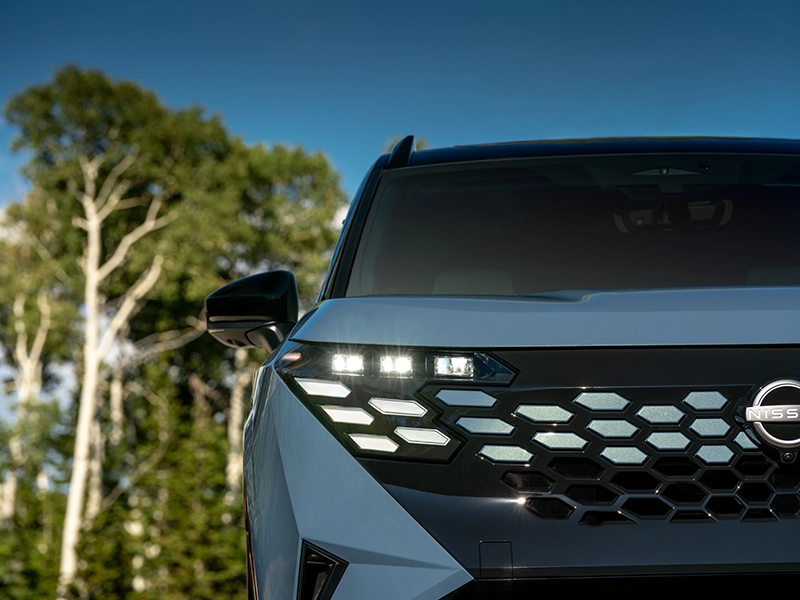
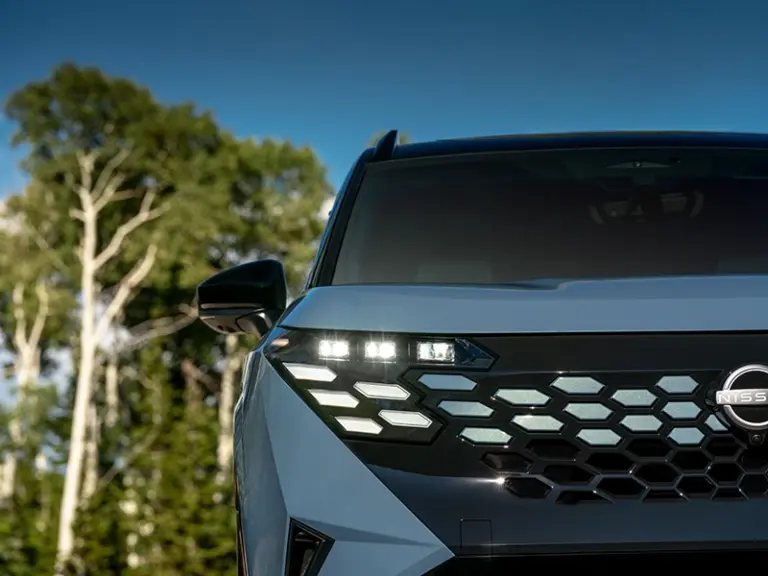
From the outside, the new Rogue Hybrid looks wider and more planted than the outgoing model, even though the footprint is largely unchanged. Senior design manager Hiren Patel, who worked on the original Rogue back in 2001, says the team leaned into geometric sharpness over the softer look that defined earlier generations.
There are Easter eggs scattered across the sheet metal. The available signature running lamps use a two-three arrangement, a nod to ni (two) and san (three) in Japanese. The C-pillar’s rising beltline creates a triangular shape meant to evoke Mount Fuji, with a small cloud motif hidden behind the glass at its peak. It’s the kind of detail most owners will never notice, which is probably the point.
Chrome is nearly gone from the exterior. Inside, piano black surfaces have been deliberately reduced. Matte, family-friendly materials cover the high-touch zones instead, and after years of watching fingerprints and scratches accumulate on glossy trim across the industry, this feels like an overdue correction.
The cabin gets dual 14.3-inch displays on higher trims, standard wireless Apple CarPlay and Android Auto, a standard Qi2 wireless charger, and available Google Built-in with Google Gemini. Zero Gravity seats come standard in all four outboard positions, front and rear. Platinum models add quilted upholstery inspired by premium down jackets.
Nissan is pushing hard on the family angle. Rear doors open to nearly 90 degrees, and the Rogue Hybrid offers five LATCH points for child seats, a feature few competitors in the segment match. Front headroom and legroom both claim class-leading status among hybrids, according to Nissan’s competitive set.
The under-cupholder storage bin, introduced in the 2026 model year, returns with a larger opening. Small, practical, and exactly the kind of feature that separates vehicles designed by people who actually use crossovers from those designed by committee.
Wheels come in 18-inch standard on SV and 19-inch on SR and Platinum, with machined patterns that play with light as they rotate. The full-width rear tail lamps carry a gradient pattern that grows coarser toward the edges, creating a sense of motion even when the vehicle is parked.
Targeted at 38 combined MPG without a plug, standard AWD, and a deliberate retreat from the all-touchscreen philosophy, the Rogue Hybrid is clearly aimed at the Toyota RAV4 Hybrid’s grip on the mainstream crossover market. Whether Nissan’s e-POWER system can match Toyota’s hybrid refinement and real-world efficiency remains the open question.
Patel and his team have built something that looks confident on paper. Fall 2027 will show whether buyers agree with their bets, especially the one that says people still want buttons.


Share this Story