
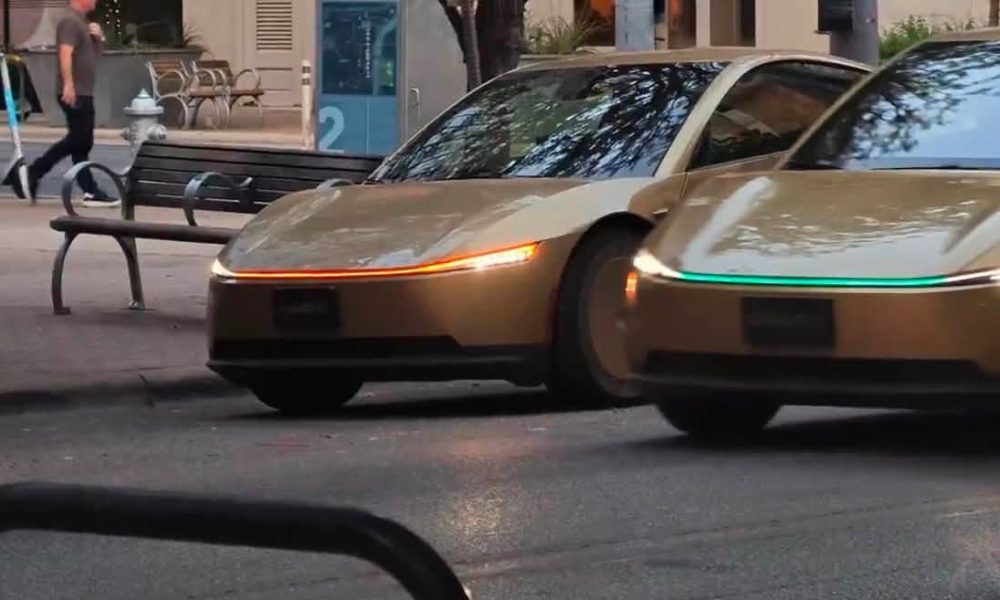


The National Highway Traffic Safety Administration just converted its polite questions about Tesla’s Cybercab into a legally enforceable demand backed by the threat of perjury. A Special Order issued this week requires a Tesla officer to sign a sworn affidavit attesting to the completeness of every response, with a hard deadline of September 30.
The order escalates Audit Query AQ25002, which NHTSA opened on September 3, the same day Tesla launched commercial Cybercab rides in Austin. That initial inquiry wanted to know how Tesla certified a vehicle with no steering wheel, no pedals, and no mirrors as compliant with Federal Motor Vehicle Safety Standards. Two weeks later, the agency decided polite inquiry wasn’t enough.
A Special Order is the same legal instrument NHTSA used against Tesla in 2023 during its Autopilot probe. It transforms a fact-finding exercise into something with teeth.
Several of the 21 requests drill into a specific problem. One asks whether Tesla used temporarily attached human controls at any point during the certification process, and if so, which safety standards depended on that hardware being present. Another quotes the federal regulation directly: “The service brakes shall be activated by means of a foot control.” The Cybercab has no foot pedal, and NHTSA wants a detailed explanation of how the vehicle satisfies that requirement.
The sharpest question may be the simplest one. NHTSA wants to know why Tesla didn’t pursue the Part 555 exemption pathway, the same route Zoox used in July to legally operate a vehicle without a steering wheel. That exemption exists precisely for this kind of design. Tesla chose to skip it and self-certify instead.
The order does not claim the Cybercab is unsafe. It does not allege Tesla broke any rule. But it puts the company in a position where a named executive must personally vouch for the legal logic behind every certification decision Tesla already made.
Potential civil penalties could reach $139 million if the certification turns out to be flawed, and a false sworn statement carries its own criminal exposure.
Cybercab passengers in Austin are still hailing rides through the Robotaxi app while this clock ticks. The Special Order does not pause commercial operations. It just sets a date by which Tesla must put its legal reasoning on the record, signed by someone willing to stake their name on it.
Tesla has said nothing publicly about how it plans to respond.
The timing collides with a period of aggressive expansion for the company. Tesla has been scaling its Austin robotaxi footprint and promoting the service as the first driverless commercial fleet operating without the regulatory exemptions its competitors sought. That framing was always a gamble.
Self-certification means Tesla declared on its own authority that the Cybercab meets every applicable federal safety standard. That is a bold claim for a vehicle that lacks the physical controls those standards were written around.
NHTSA’s move does not kill the Cybercab or ground the fleet. But it forces Tesla to do something the company has historically resisted: show its work, under oath, on a federal deadline, with a specific person’s signature attached.
Ron Baron, one of Tesla’s longest-standing institutional bulls, appeared on CNBC the same day the Special Order surfaced, telling viewers the time to buy Tesla stock is now and that FSD adoption is accelerating. He cited 1.48 million active FSD subscriptions and a 55 percent attach rate on new deliveries. Baron Capital holds roughly $5 billion in Tesla across its funds.
The stock barely moved on the NHTSA news. Whether it stays that calm depends entirely on what Tesla files before September 30, and whether the person who signs it is comfortable with what’s inside.
Share this Story