
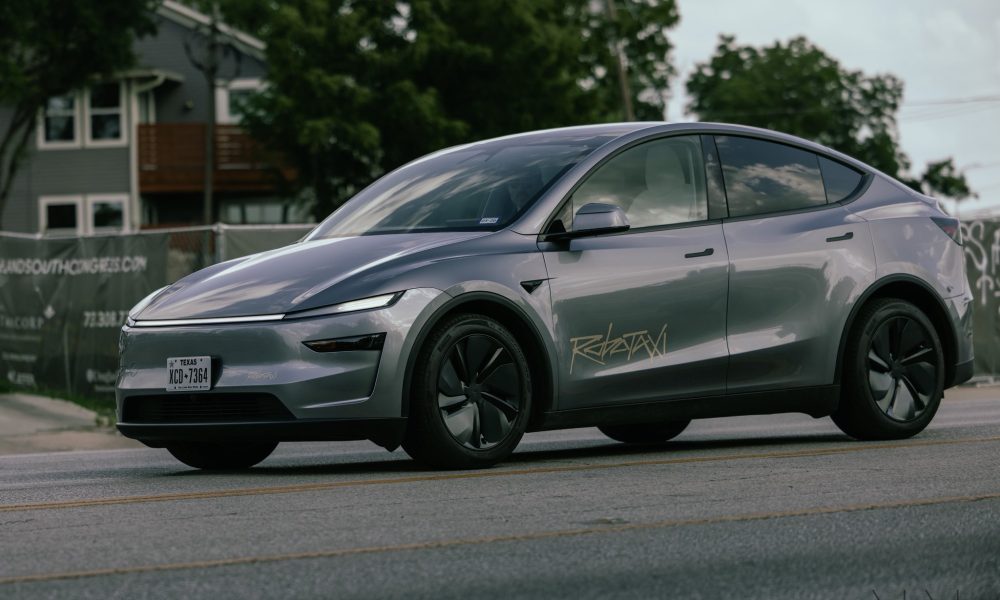


Ashok Elluswamy, Tesla’s AI lead, told an X user on September 4 that 24-hour Robotaxi service is roughly a month away. “Next month or so,” he wrote, once the next module merges into the Full Self-Driving v15 pipeline. The comment came one day after Tesla opened public Cybercab rides in Austin.
Right now, Tesla’s paid Robotaxi network runs from 6 a.m. to 10 p.m., seven days a week, across Austin, Dallas, Houston, Miami, Orlando, and Tampa. That 16-hour window is actually shorter than the 6 a.m. to 2 a.m. schedule the company maintained for much of the prior year.
Elluswamy didn’t specify whether overnight operation would start with the purpose-built Cybercabs, the existing Model Y fleet, or both. He gave no city-by-city timeline.
The connection to FSD v15 matters. Tesla has described that software as a step-change architecture with seven parallel development tracks and roughly ten times the parameters of previous builds. Early versions are already running on the fleet but contain only about 40 percent of the planned capability.
Running cameras-only vehicles through low-light, late-night streets without a safety driver is a different proposition than daytime suburban loops.
By July, the unsupervised fleet had logged more than 380,000 miles across six cities in two states. Tesla called the safety record clean, with no incidents caused by the vehicles. That sounds encouraging until you realize 380,000 miles is what a mid-size taxi fleet in one city covers in a few weeks.
The overnight push lands at a moment when Tesla is fielding attention from every direction. NHTSA opened an Audit Query into the Cybercab’s self-certification on the same day Elluswamy made his comments. The agency wants to understand how Tesla certified a vehicle with no steering wheel, no brake pedal, no gas pedal, and no mirrors as compliant with Federal Motor Vehicle Safety Standards that were written assuming all those things exist.
Tesla has 45 Cybercabs registered in Austin so far.
Separately, Tesla began rolling out FSD Supervised v14.3.9, which introduces an active safety layer for manually driven cars. The system can take over steering, braking, and acceleration when it detects an imminent collision that standard automatic emergency braking cannot handle alone. It can also re-engage if it senses the driver accidentally disengaged FSD or is heavily distracted.
The feature works only if FSD is enabled and purchased or subscribed to, and the car remains supervised.
Then there is the marketing front. Tesla Asia announced Cybercab display events in Hong Kong, Tokyo, Beijing, and Shanghai this month. No test rides, no service launches, just static showings meant to ride the wave out of Austin.
China already has a functioning autonomous ride-hailing market through Baidu’s Apollo Go and Pony AI, so a parked Cybercab in Shanghai is less a declaration of intent than a photo opportunity.
All of this is happening at once, and that is the tension. Tesla is trying to push a six-city Robotaxi pilot toward round-the-clock operation while a federal safety regulator is still asking basic questions about the vehicle’s certification. It is showcasing the Cybercab overseas while its domestic fleet numbers fewer than 50 units.
It is layering new emergency-intervention software onto consumer vehicles while positioning the same neural network stack as ready for unsupervised overnight duty.
October is four weeks away. Elluswamy’s “or so” is doing heavy lifting.
Share this Story