
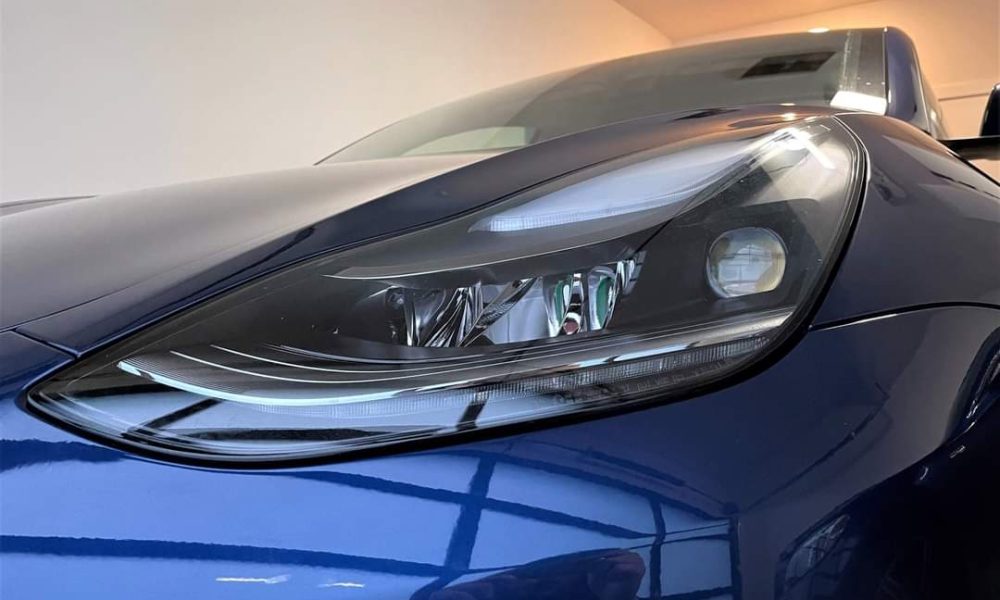


Tesla’s version 2026.38 software update introduces Dynamic Headlight Leveling, a feature that physically tilts low-beam projectors using internal motors to counteract changes in vehicle pitch. No trip to a service center required. No new hardware. Just an overnight download.
The system reacts in real time when a car accelerates hard, climbs a grade, or carries heavy cargo in the trunk. All of those conditions push the nose up and the headlights into oncoming drivers’ eyes. The software now commands the leveling motors to compensate, keeping the beam pattern aimed at pavement instead of windshields.
This is not the same thing as Tesla’s matrix high-beam system, which selectively dims individual LED segments to carve shadows around other vehicles. Dynamic Headlight Leveling works exclusively on the low beams, adjusting their physical angle rather than reshaping the light output.
The timing is hard to ignore. Earlier Model 3 and Model Y vehicles were subject to an NHTSA recall specifically for excessive low-beam glare. That recall left a residue of frustration among owners and a regulatory spotlight on Tesla’s headlight engineering.
Deploying a software-based leveling fix through an over-the-air update addresses the root complaint without requiring a fleet-wide service campaign, at least for vehicles already equipped with the necessary leveling hardware.
Early reports show the update reaching certain Model 3 and Cybertruck examples in the United States and the United Arab Emirates. Tesla has not published a broader rollout schedule, and the deployment does not appear locked to a single hardware revision. Owners either get it or they wait.
For those who do receive it, there is nothing to toggle. No menu buried three screens deep. The headlights simply respond as conditions change.
That kind of invisible integration is Tesla’s preferred mode when a feature works well. It is also convenient when the company would rather not draw fresh attention to a problem that generated a federal recall.
The broader pattern here is familiar. Tesla has spent years proving that over-the-air updates can do more than push new entertainment apps or adjust regenerative braking curves. Suspension tuning, charging speeds, range calibration, and now headlight aiming have all been revised remotely.
Each instance reinforces the argument that Tesla’s vehicles are platforms, not finished products at the point of sale.
But the flip side of that argument is worth examining. If headlight leveling can be fixed with software that already talks to motors already installed in the car, the question becomes why it was not calibrated correctly from the factory. Selling a vehicle with hardware capable of dynamic leveling and then waiting years to activate it suggests either an engineering oversight or a deliberate choice to prioritize other development work.
The practical result for drivers is straightforward. Better nighttime visibility, less blinding of oncoming traffic, and one fewer reason for regulators to send letters. Tesla has not said whether the feature will eventually reach all vehicles with compatible hardware or remain limited to newer builds.
NHTSA has not commented on whether Dynamic Headlight Leveling satisfies the conditions of the earlier recall or represents a separate improvement. That distinction matters, because one closes a regulatory file and the other simply adds a feature. Tesla, as usual, is not clarifying which box this checks.

Share this Story