
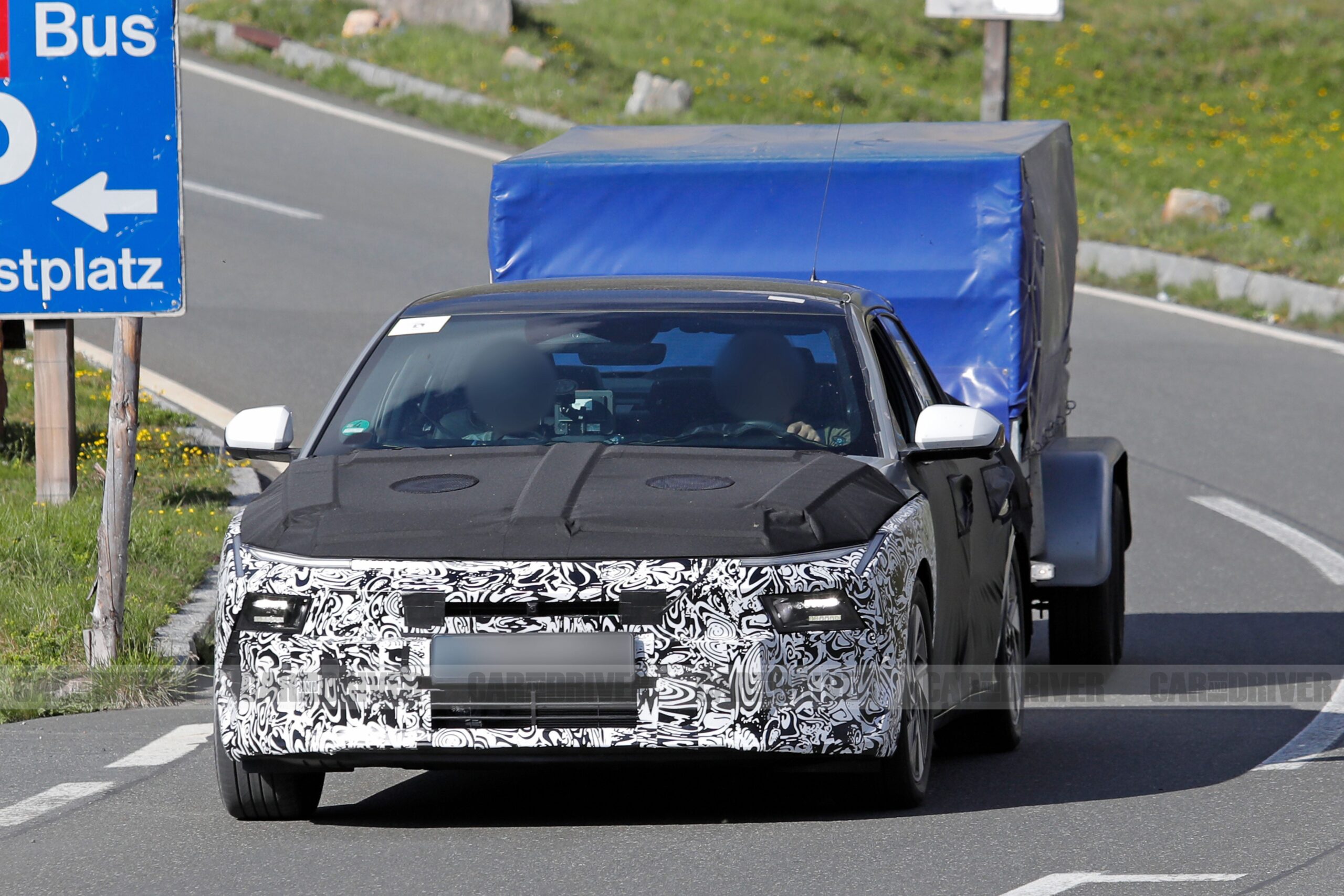


Hyundai’s second-bestselling nameplate in America is getting a full redesign, and the first spy shots reveal a compact sedan that isn’t playing it safe.
Prototypes of the next-generation Elantra have been caught testing in both Austria and California, wrapped in black camouflage but unable to hide an unconventional lighting signature and a reworked silhouette. The new car is expected to arrive in 2027, likely as a 2028 model, replacing a seventh-generation car that debuted for 2021 and has been printing money for Hyundai ever since.
The Elantra moved 148,200 units in the U.S. last year, trailing only the Tucson in Hyundai’s domestic lineup. That’s a remarkable number for a compact sedan in a market supposedly dominated by crossovers, and it explains why Hyundai isn’t content to phone this one in.
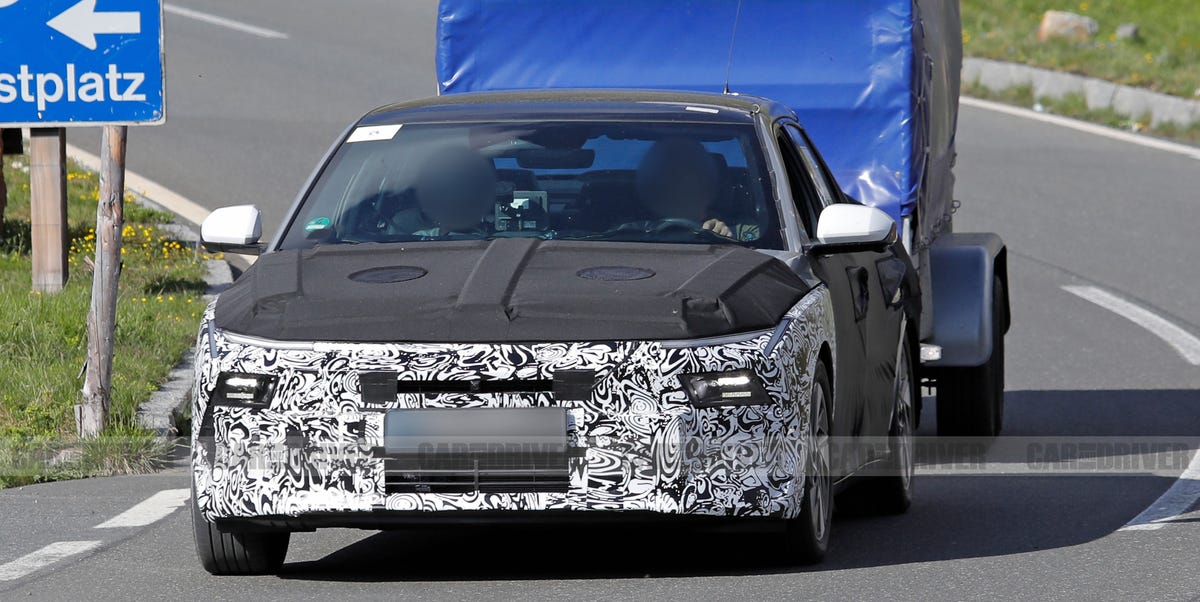
Up front, parallelogram-shaped headlights sit beneath a thin LED strip that stretches across the fascia. At each end, LED slashes form the leading edge of a body line that flows up and over the front fenders. It’s a complex face, more concept-car than rental-lot appliance, continuing the design aggression Hyundai introduced with the current car’s dramatic creases and upturned eyes.
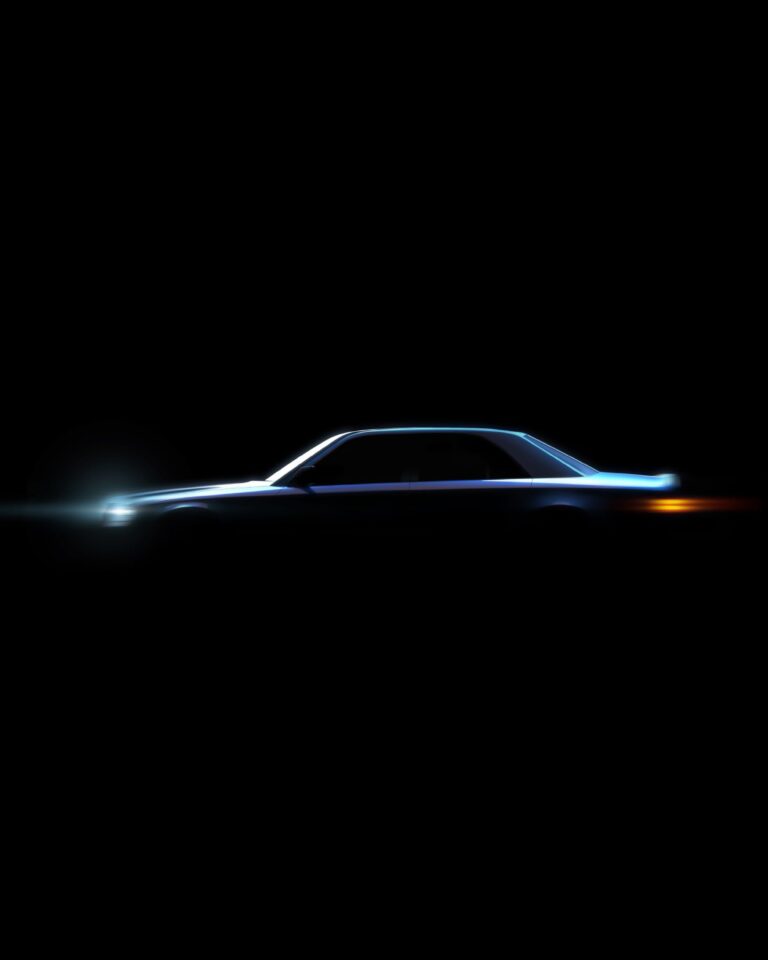
The profile tells its own story. The C-pillar features a body-colored section that doesn’t quite meet the roofline, interrupted by a thin black strip, with a small triangular quarter window tucked behind it. It’s an unusual treatment that suggests Hyundai’s designers are trying to create the illusion of a floating roof or fastback proportions without actually changing the sedan’s fundamental architecture.
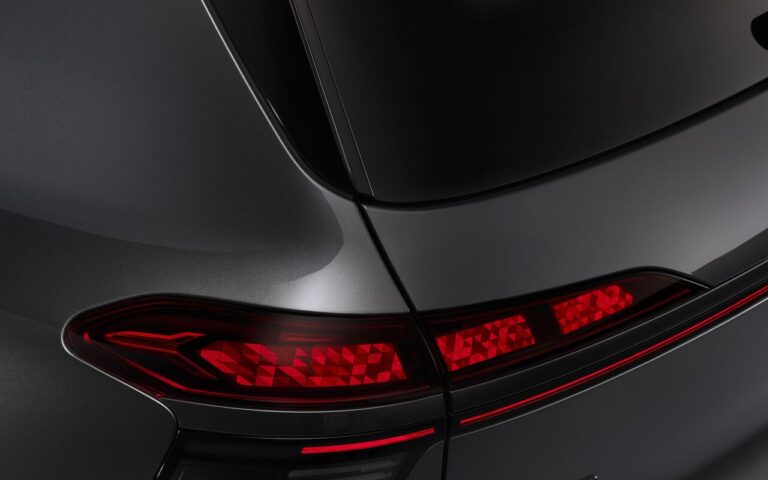
Out back, taillights appear to be built from two perpendicular LED lines, a horizontal element possibly spanning the full width of the car meeting vertical bars at the outer edges of the rear fascia. It’s a look that echoes recent Hyundai design language seen on the Ioniq family but translated into a combustion-powered context.
One prototype was spotted in Austria pulling a small trailer, simulating the caravan culture popular across Europe. That detail matters because Hyundai plans to sell this Elantra in European markets for the first time, broadening the car’s global footprint and likely justifying the engineering investment a clean-sheet redesign demands.
Powertrain details remain unconfirmed, but expectations point toward a continued lineup of four-cylinder engines paired with a hybrid option. The big question for enthusiasts is whether the Elantra N survives the generational transition. The current N packs 276 horsepower from a turbocharged four-cylinder and offers a six-speed manual, a combination that feels increasingly endangered in 2026.
Hyundai has been on a decade-long tear of building cars that look more interesting than they need to. The original Elantra was anonymous transportation. The current one turned heads. This next one, judging by what’s visible through the camo wrap, intends to push even harder.
In a segment where the Honda Civic sets the benchmark and the Toyota Corolla sells on sheer inertia, Hyundai has chosen design provocation as its weapon. The Elantra doesn’t need to outsell either rival to justify its existence. It needs to make people look twice. Based on these early spy shots, mission understood.

Share this Story