
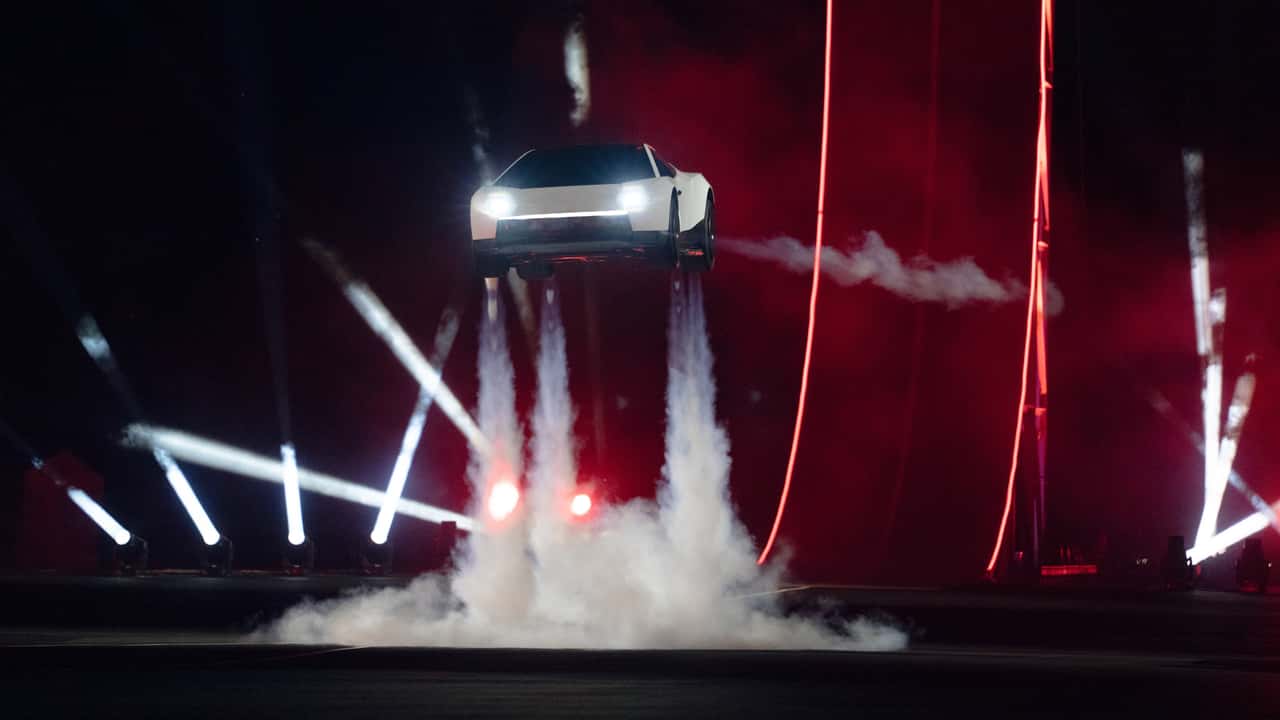


Two days after an unmanned Tesla Roadster flipped through the air at a SpaceX facility in McGregor, Texas, Elon Musk took to X and upped the ante. The car, he said, “will be sentient” enough to repeat those stunts on command. He also dangled a looping track at Giga Texas where owners could try it themselves.
No date. No technical explanation. No fine print.
The October 15 demo was undeniably theatrical. A Roadster with no driver climbed a steep ramp using suction, drove upside down, launched off a jump over a row of parked vehicles and a semi-truck, then used cold gas thrusters to stick the landing. Tesla says 10 nozzles and ultra-high-pressure air tanks made it happen, borrowing the same attitude-control hardware SpaceX uses to orient spacecraft.
That is real engineering. What followed on social media is something else entirely.
Musk’s post described a future where an owner simply asks the Roadster to perform any of those tricks on its own. The word “sentient” did a lot of heavy lifting in that sentence, and Tesla did nothing to support it. There was no mention of what self-driving system would recognize a ramp, calculate a flip trajectory, and identify a safe landing zone without human input.
There was no mention of software validation, regulatory approval, or liability.
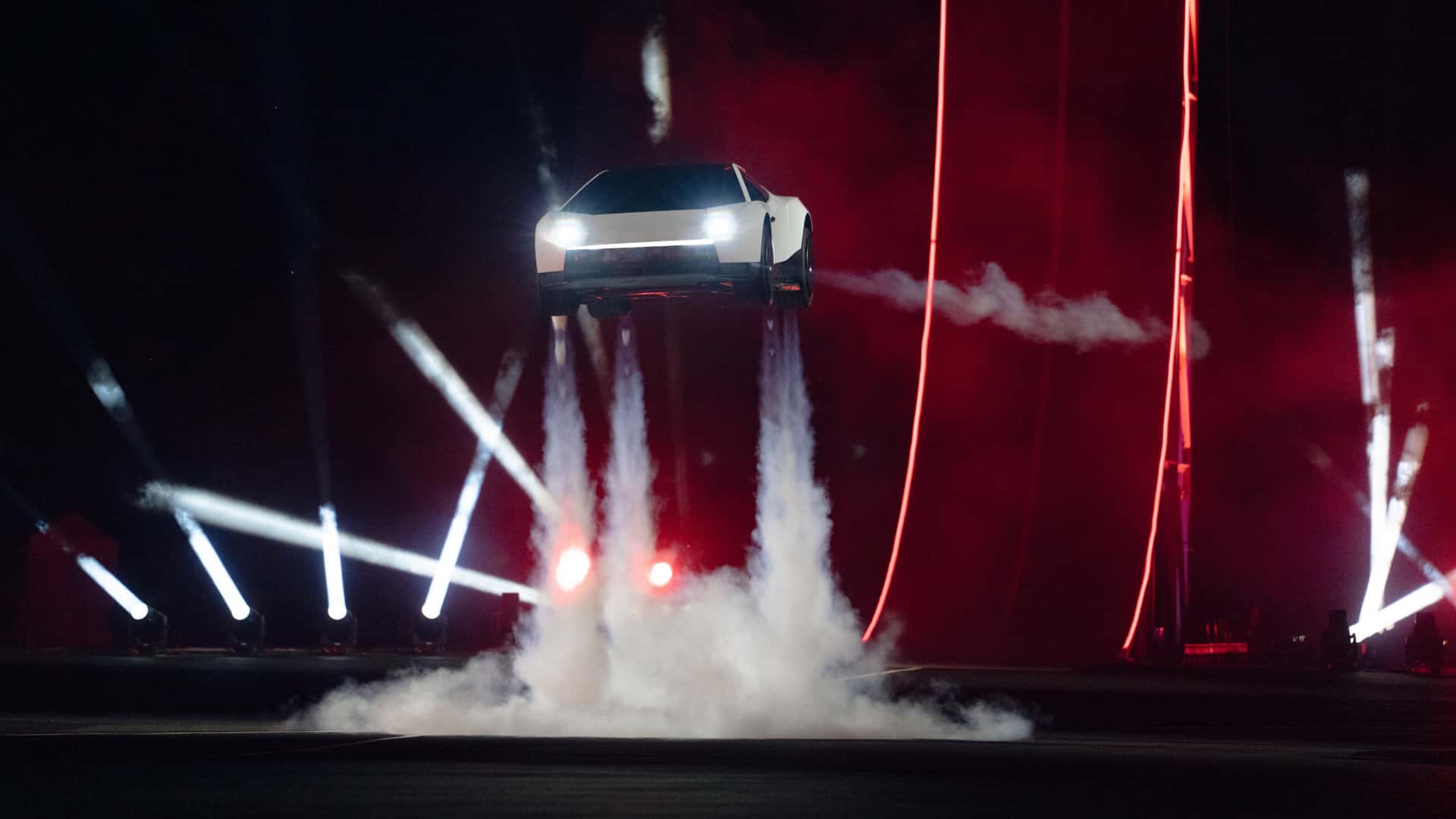
The looping track got even less detail. Musk said it would be at Tesla’s Austin headquarters and would be “crazier even than Hot Wheels.” That is the entire engineering brief made public so far. No dimensions, no layout, no cost, no timeline.
Context matters here because the Roadster itself remains years from reaching customers. Production is widely described as targeting somewhere around 2028 at Giga Texas. The version capable of the flying maneuvers, commonly referred to as the Rocket package, is reportedly invite-only.
The base car still carries Tesla’s long-standing claims of 1.9-second zero-to-60, a top speed near 250 mph, and roughly 620 miles of range. None of those numbers have been independently verified, and none of them are connected to the stunt hardware.
So what Musk actually promised is a car that does not yet exist, running software that has not been described, on a track that has not been designed, at a facility where the production line has not been built.
Tesla has a pattern here. The Roadster was first teased in 2017 with a target date of 2020. It has been pushed back repeatedly. The Semi took six years from reveal to first delivery. Full Self-Driving has been “almost ready” for the better part of a decade and was recently rebranded in Europe after regulators called the name misleading.
None of that means the Roadster demo was fake. The physics were real, the hardware worked, and the spectacle landed exactly as intended. But there is a canyon between a controlled demo on a private SpaceX test range and a production vehicle that performs autonomous aerial stunts at the touch of a button.
Any autonomous stunt mode on a closed course would still require safety protocols, supervision, and someone carrying the liability when a “sentient” jump goes sideways. Tesla has not addressed any of that.
The Roadster reservation list is long. The promises keep getting bigger. The gap between what Musk says on X and what Tesla ships to driveways keeps widening, and nobody at the company seems in a hurry to close it.
Share this Story