
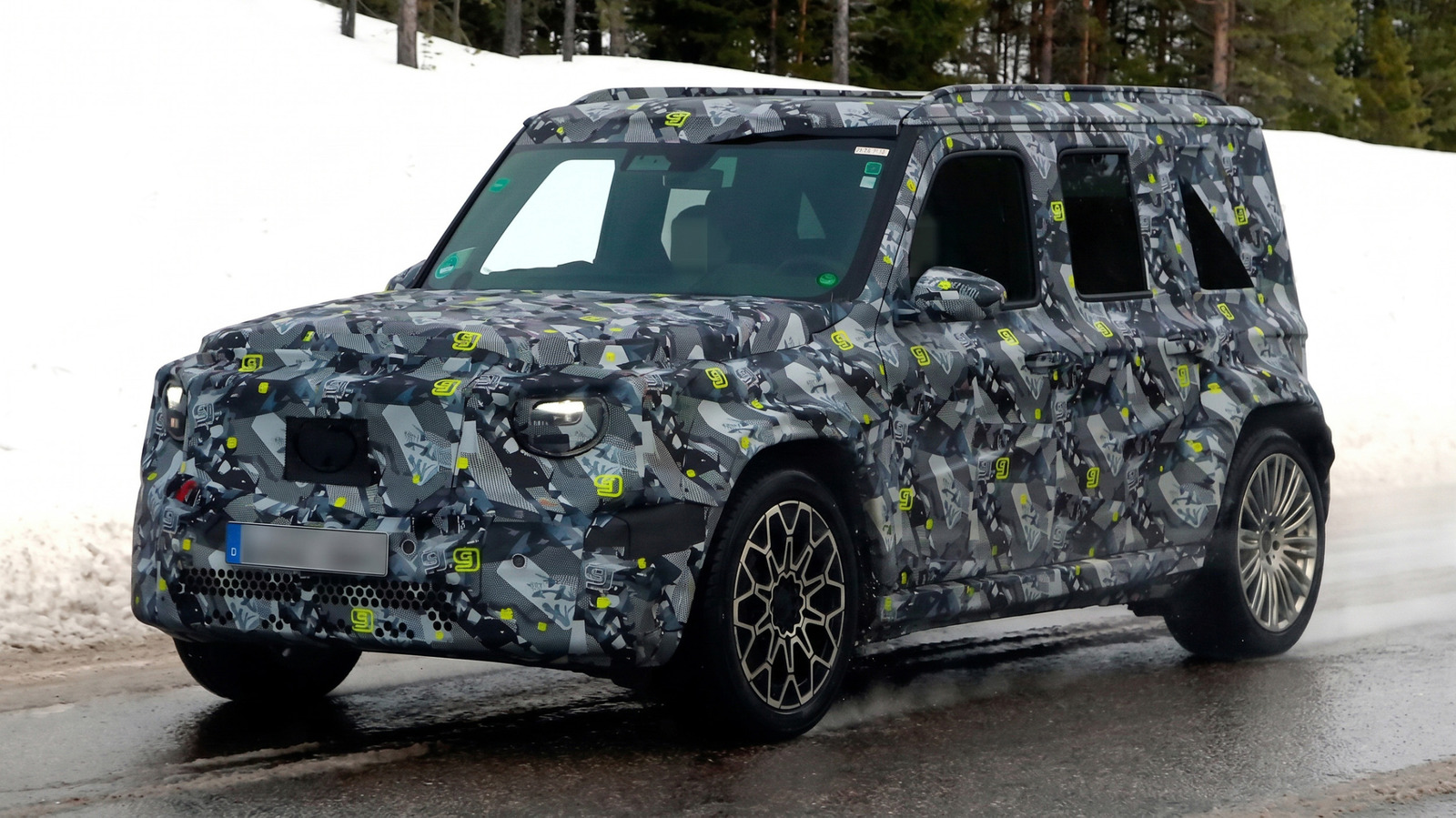


Ola Källenius could not contain himself. Speaking to Bloomberg Business, the Mercedes-Benz CEO said the compact G-Class is coming “sooner than you think,” then pinned it down to “less than 24 months from now.” That puts the launch window before the end of 2028, roughly five years after Mercedes first floated the idea.
Five years from announcement to showroom floor is a long time to keep a phone “on fire with messages,” as Källenius described the reaction. But the wait tells its own story. What started as a straightforward electric off-roader has become something more complicated, and more interesting, because the market refused to cooperate with the original plan.
Mercedes first revealed the concept in 2023 and dropped an official teaser in 2025. Back then, the pitch was simple: a smaller, fully electric sibling to the G-Wagen, lowercase “g” and all. No combustion fallback.
That plan is dead. U.S. dealer pushback, tepid demand for the larger G580 with EQ Technology, and the broader slowdown in EV adoption forced Mercedes to add a hybrid powertrain. The company that wanted to go all-electric by 2030 keeps finding reasons not to.
The hybrid option will reportedly use the electrified 1.5-liter four-cylinder already doing duty in the new CLA. The electric version retains a dual-motor all-wheel-drive layout paired with an 85 kWh NMC battery. Both configurations will come standard with AWD, because slapping a G badge on something without permanent four-wheel drive would be corporate malpractice.
What separates this from the rest of Mercedes’ compact SUV stable is the architecture. The GLA and GLB ride on shared passenger-car platforms. The little G gets a bespoke ladder-frame chassis, engineered specifically for off-road capability.
That is an expensive decision for a vehicle aimed at a lower price point than the $150,000-plus G-Wagen. It signals Mercedes is serious about making this thing actually work in dirt, not just look like it could.
Spy shots show a shape that borrows heavily from its bigger brother. Boxy proportions, flat panels, round LED headlights, a tall greenhouse, low-mounted taillights. It is unmistakably a G-Class in miniature, which is the entire point.
The interior will pull from the current Mercedes tech catalog with a higher seating position and more cargo volume than the brand’s other small SUVs.
The competitive target is not the Suzuki Jimny, despite the obvious visual overlap. Mercedes is aiming squarely at a smaller Land Rover Defender that Jaguar Land Rover has been rumored to be developing. Both companies see the same gap in the market: buyers who want authentic off-road credibility in a compact package, wrapped in a premium badge, at a price below the full-size models that have crept past six figures.
Källenius knows exactly what he has. The G-Class brand carries weight that no marketing budget can manufacture. Shrinking it down and pricing it within reach of a wider audience is the kind of move that either prints money or dilutes the original. Mercedes is betting heavily on the former.
The company still has not confirmed a name, a debut date, or a price. What it has confirmed is that the hybrid compromise was necessary and the ladder frame is non-negotiable. Källenius wants this truck on dealer lots before his next contract renewal becomes a topic of conversation.

Share this Story