
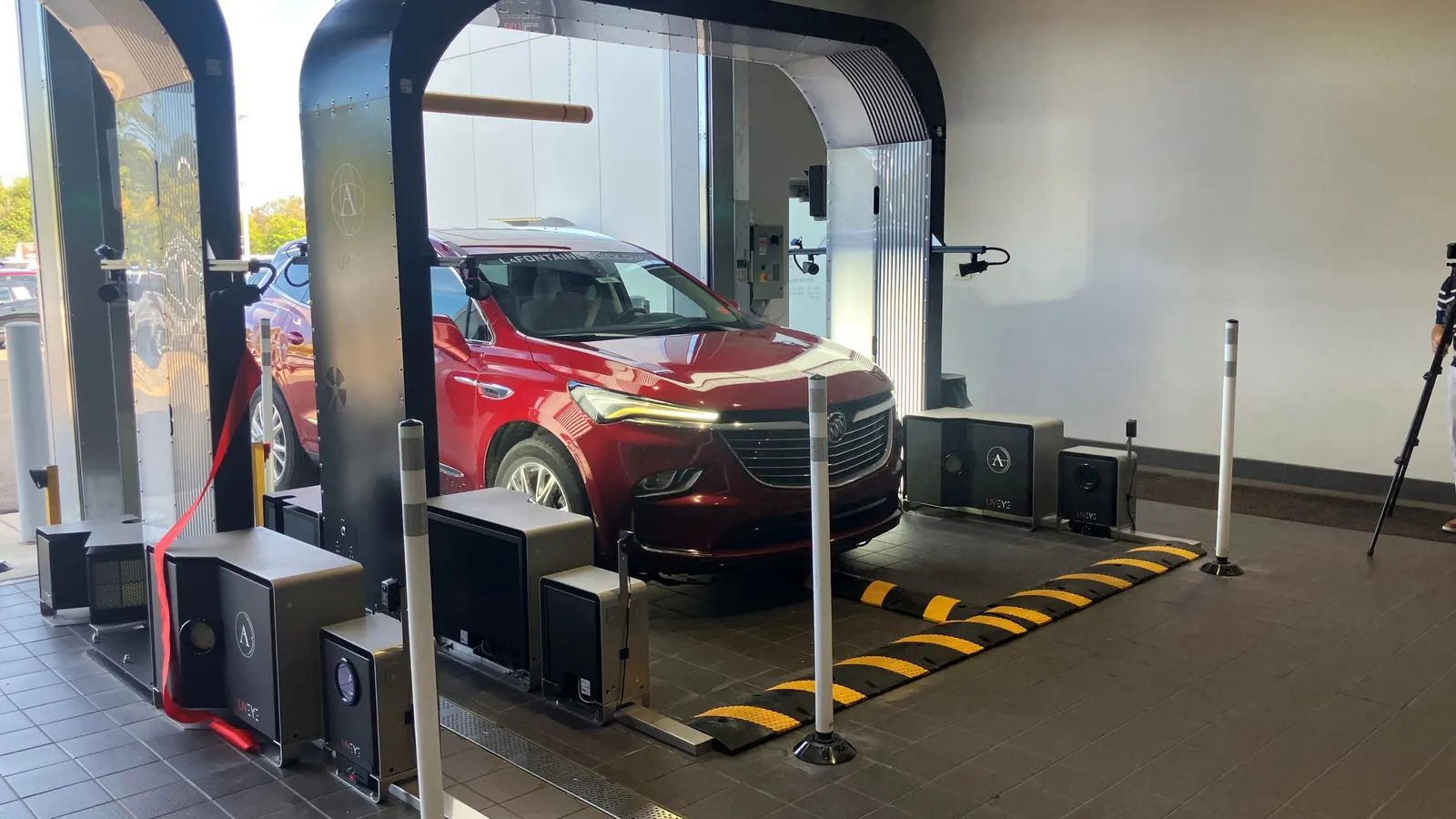


A vehicle inspection system originally conceived at an Israeli security checkpoint is now rolling into more than 40 Michigan dealerships. LaFontaine Automotive Group has committed to installing UVeye’s AI-powered scanning tunnels across every one of its locations, making it the largest single-dealer-group deployment of the technology to date.
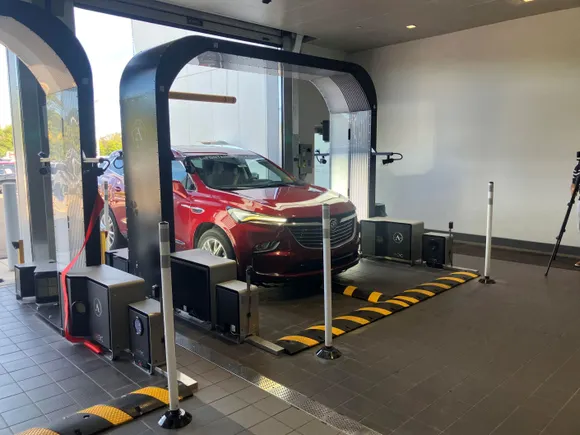
The setup is deceptively simple. Cars drive through a short tunnel and over a floor-embedded scanner. High-speed cameras capture the underbody, tires and exterior surface in seconds.
The system spits out a detailed condition report, flagging fluid leaks, component damage, tire wear, alignment problems, dents and scratches. UVeye calls it an automotive MRI.
“It shows damage and what’s really wrong with the car,” LaFontaine CEO Ryan LaFontaine said at the system’s unveiling at his flagship General Motors store in Highland Township, north of Detroit.
The origin story is almost too good. About a decade ago, UVeye CEO Amir Hever watched a guard at an Israeli government facility poking a mirror on a stick under cars to look for hidden explosives. He asked the guard point-blank whether that mirror could actually find a bomb. The guard didn’t say yes.
Hever, an image-processing specialist, and his brother Ohad, a medical engineering expert, built the scanning platform and co-founded UVeye. The company now has roughly 1,000 units deployed across the U.S., with investors that include General Motors, Toyota and Volvo.
But Hever’s ambitions stretch far past the service lane. He told WardsAuto he envisions the scanners showing up “pretty much everywhere,” including parking lots, car washes and grocery stores. The pitch: shoppers could routinely run their vehicles through a scanner while picking up milk, catching problems before they become expensive.
That is a bold vision, and one that depends on consumers caring enough about proactive maintenance to scan their cars multiple times a week. That remains unproven. But the dealership case is easier to make.
Carlos Mojica, LaFontaine’s retail development senior manager, framed the scanner as a trust-building tool. Customers have long been skeptical when a service advisor recommends repairs they cannot see for themselves. The UVeye report puts the evidence on screen.
“This brings consumer and dealership staff on the same page about the vehicle,” Mojica said. “That’s the most important piece.”
He was quick to note the scanner does not replace technicians. They still diagnose and turn wrenches. But walking into a service bay with a detailed exterior and underbody report already in hand shaves time and reduces guesswork.
The used-car side may benefit even more. Trade-in appraisers typically eyeball exteriors and rarely get a thorough look at the undercarriage. Mojica called the underbody scan “a huge feature” for catching damage that would otherwise slip through a visual walkaround.
Fleet and rental companies have already adopted the system for a similar reason, using it to document vehicle condition at pickup and return.
For dealerships, the real question is whether the transparency cuts both ways. A scanner that catches every dent and scratch on a trade-in will lower appraisal values. A scanner that flags every worn bushing in the service lane will inflate repair orders. The technology is neutral, but the incentives around it are not.
Northwood University, known for its dealer-focused curriculum, sent its automotive department chair to the LaFontaine event. Elgie Bright said the school is integrating digital tools like UVeye into its coursework. “Being at the forefront, not behind, is important for us,” he said.
LaFontaine’s rollout across more than 40 stores will be the largest real-world test of whether AI-driven inspections change the economics of fixed operations, or just add another piece of equipment to the service drive.



Share this Story