
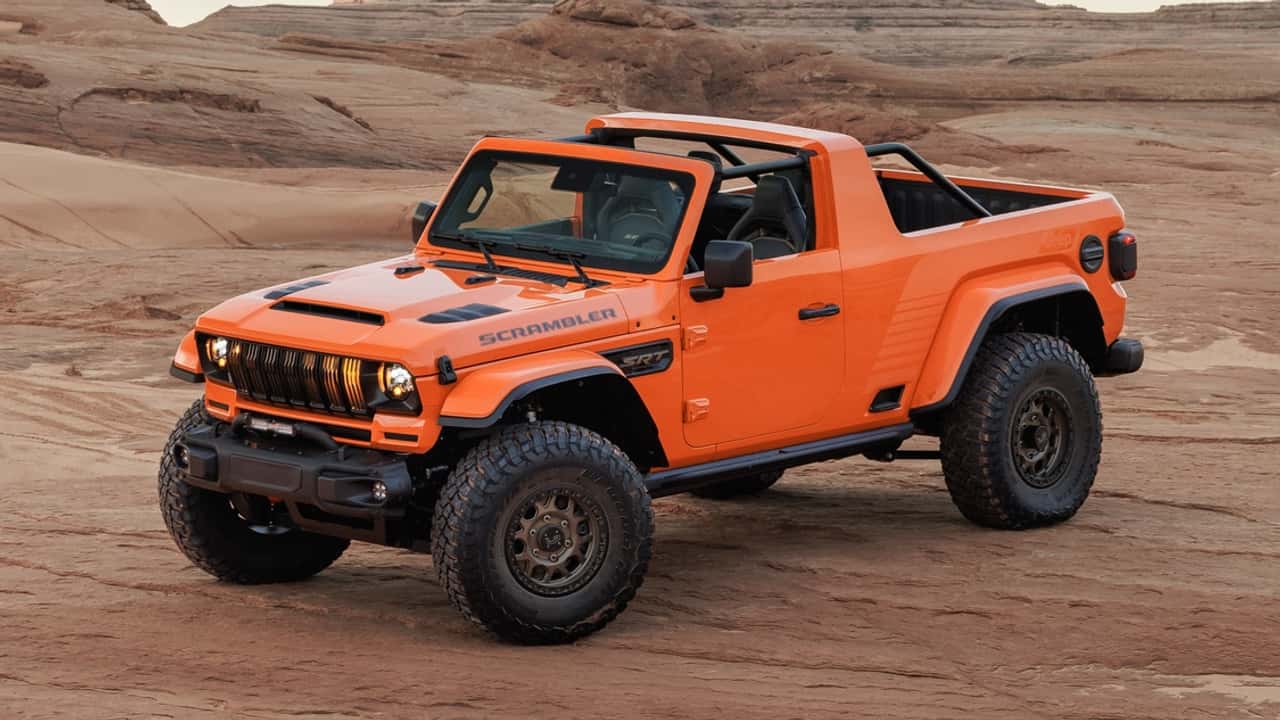


For the first time, a vehicle wearing a Wrangler badge rolls on independent front suspension. Jeep chose a show floor in Las Vegas to commit the heresy.
The Wrangler Scrambler SRT Concept, shown by Stellantis on November 2 at the SEMA Show, is a two-door pickup with a working bed, a 6.4-liter Hemi V8 and a front end that throws out decades of Jeep doctrine. Jeep calls it a concept that previews possible future hardware. Nobody is taking orders.
Tim Kuniskis, who runs American Brands, SRT Performance and Direct Connection for Stellantis North America, pitched it as a challenge to the brand’s own rules.
“What happens when SRT stops treating the trail as the limit and builds the ultimate open-air desert weapon?” he asked at the reveal.
The answer starts at the front axle, or the lack of one.
Wrangler owners treat the solid front axle as scripture. It ties both wheels together and lets them flex to absurd angles over rock ledges, which is exactly why crawlers swear by it. The Scrambler SRT drops it entirely.
In its place is an independent setup developed with off-road racer Casey Currie. It offers 14 inches of travel up front and 15 in the rear.
Jeep says the payoff is stability at speed, tighter steering and better wheel control at the pace a desert racer actually runs. That is a long way from the crawl speeds Wrangler buyers know.
The trade is real. Independent suspension lets each wheel work on its own, which keeps a truck composed at 80 mph across whoops, but it gives up some of the extreme articulation that makes a solid axle king at walking pace.
Jeep is betting desert buyers will take that deal.
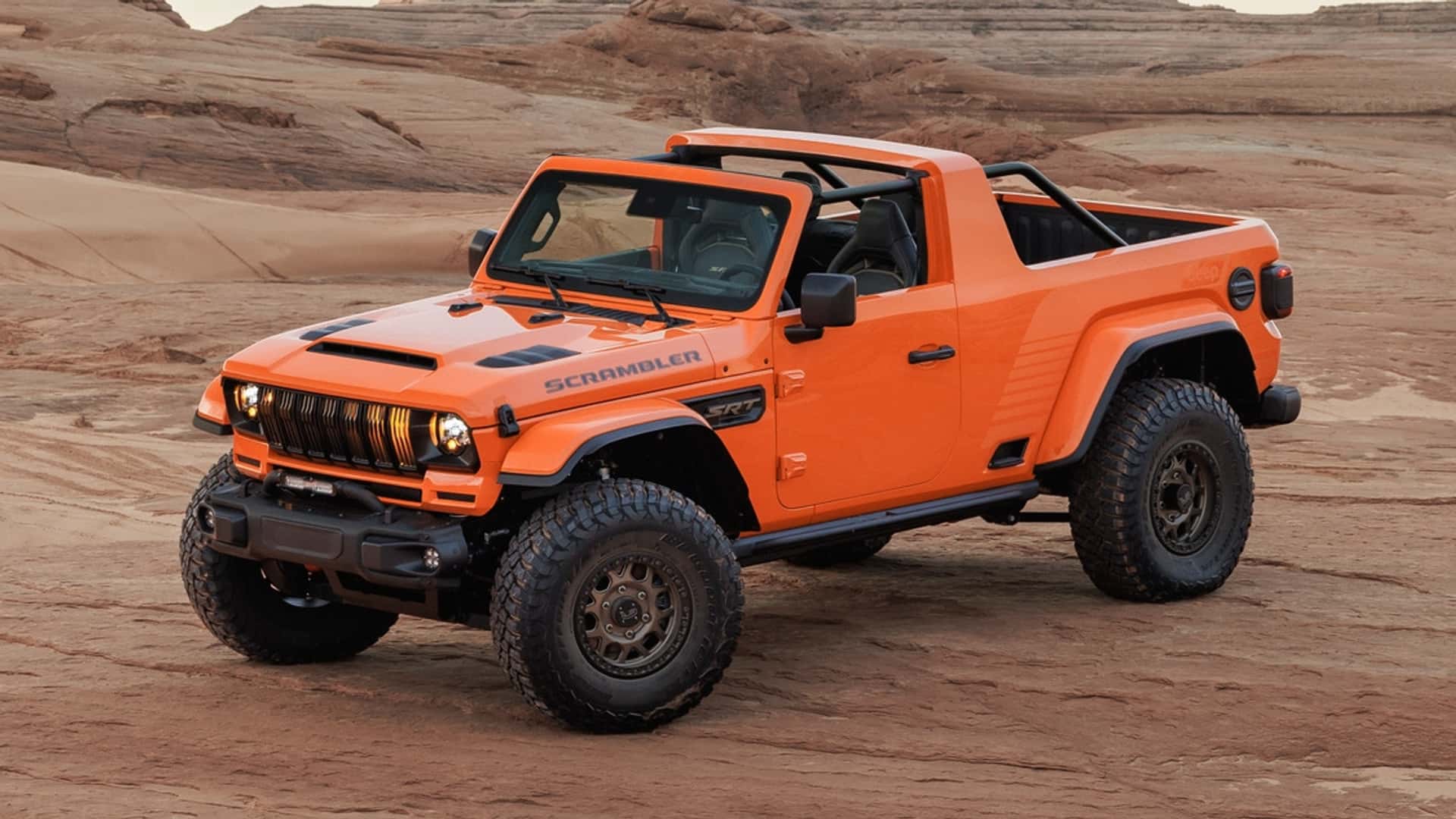
The rear follows the same logic. Jeep borrowed from Trophy Truck racing, building an axle meant to absorb repeated high-speed hits rather than simply twist over boulders. The whole thing rides on 37-inch tires.
Speed first, rocks second. No Wrangler has ever been engineered in that order.
The Hemi makes 470 horsepower and 470 lb-ft of torque, the same output buyers already get in the Wrangler Rubicon 392. That matters, because it means the engine is the least radical part of this truck.
The paint is a loud orange Jeep calls Punk’n, in case anyone missed the truck from across the hall. The bed is functional, not the decorative stub past Wrangler show trucks wore for looks.
Inside, reversible jump seats let passengers face forward or turn toward the bed. That is a layout for chase crews and spotters, people who spend their weekends trailing race trucks through the dirt.
Jeep knows exactly who it is chasing here. It is the Ford Bronco Raptor crowd, buyers who already chose independent suspension and high-speed desert work over rock crawling.
The name carries baggage too. The original Scrambler was a Jeep pickup, and the brand is already mining that heritage with its Rewind package for the 2026 Wrangler and Gladiator.
The difference is that this time the nostalgia sits on top of a chassis Jeep has never sold.
And it may never sell it.
Jeep has confirmed nothing for production. Not the independent front end, not the bed, not the truck itself.
So the brand that built its identity on a solid front axle has now shown, in public, that it is willing to build a Wrangler without one. Loyalists will have opinions. Desert racers already do.
Kuniskis asked his question on stage. The people who sign off on production plans have yet to answer it.

Share this Story