


Right now, the only hybrids General Motors builds are Corvettes. The E-Ray, the new Grand Sport X and the ZR1X all pair electric motors with a V8, and none of them will ever haul three kids and a hockey bag to practice.
That is about to change, and it starts in Michigan.
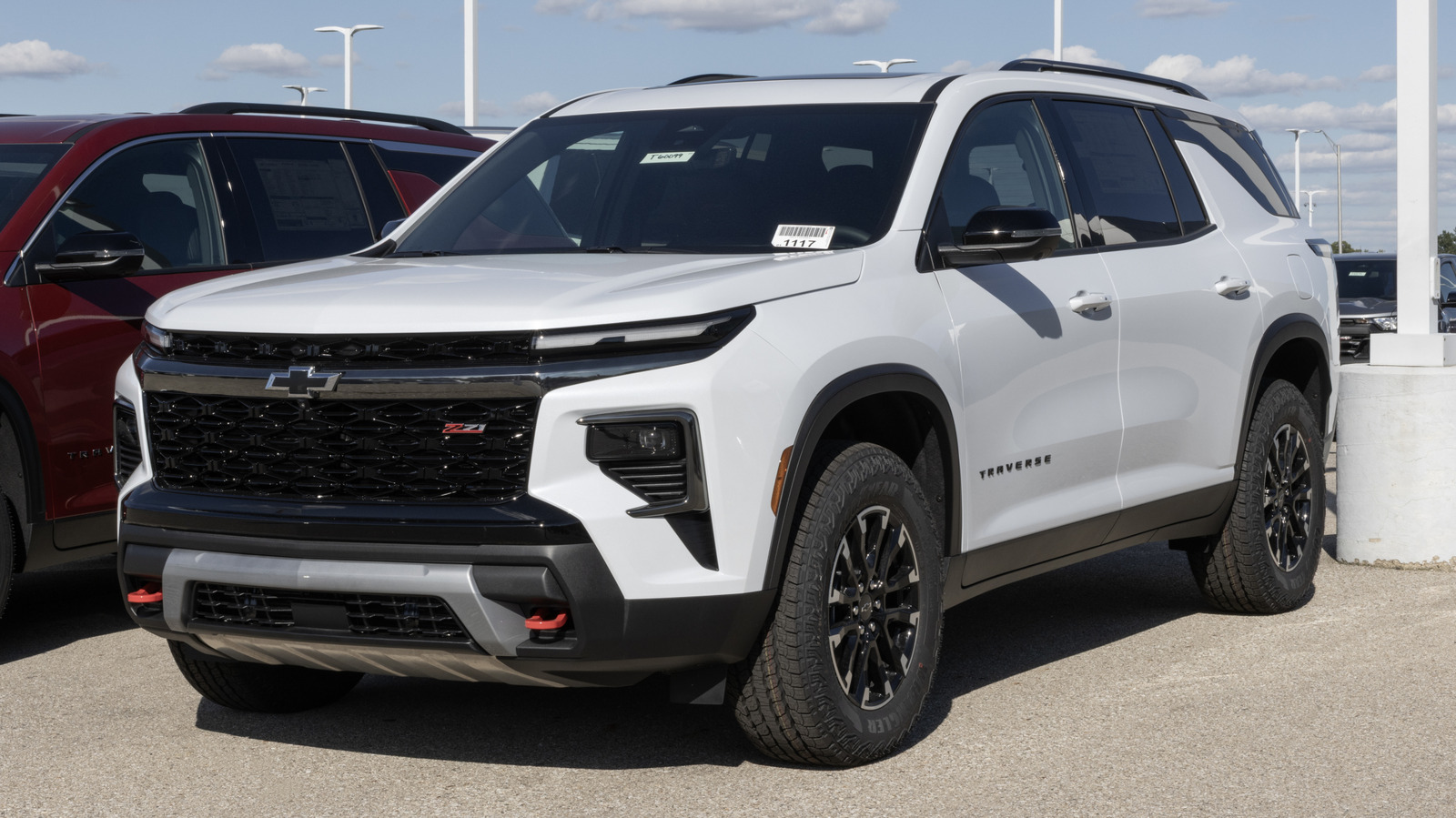
On GM’s most recent earnings call, Mary Barra confirmed the company will build hybrids at its Lansing Delta Township plant. She didn’t name the models, but sources speaking to Reuters did: the three-row Chevrolet Traverse, Buick Enclave and GMC Acadia, all of which already roll off the Lansing line.
GM is putting $1.25 billion into the plant to make it happen.
The vehicle choice shows where GM sees the money. These are big, heavy family crossovers that burn real fuel. Their buyers want better mileage without changing how they live or hunting for a place to plug in.
Barra said hybrids will reach multiple segments, so the three-row trio is an opening move, not the whole plan.
Plug-ins are on a parallel track. An early October report pointed to GM’s new plug-in hybrids arriving next year or in early 2028, with up to 70 miles of electric range. The Chevrolet Equinox and Silverado are among the models expected to get PHEV versions.
Hard details are scarce. GM hasn’t published specs, pricing or firm timing for any of it.
Toyota has been selling hybrid family haulers for more than two decades. GM spent most of the last ten years ignoring the idea, betting it could leap straight from a combustion-heavy lineup to a showroom full of batteries.
That bet held until Donald Trump returned to the White House and the federal EV tax credit disappeared. EV demand fell hard, and an all-electric plan became a tough sell to investors.
So GM is backing up, and it isn’t cheap.
The company expects a $7.6 billion charge tied to its reduced EV spending. That hurts, but it’s smaller than Ford’s $19.5 billion write-down late last year after it killed several of its own EV programs.
Earlier this year, GM also sold its 49.99 percent stake in a battery plant it co-owned with Samsung SDI, citing softer EV demand.
Barra still hasn’t given up on the original destination. She said GM is “trying to be very thoughtful about what we do from a hybrid and a plug-in hybrid perspective,” and called EVs the company’s “end game.”
The spending partly backs her up. This month GM previewed a fourth-generation EV platform for several new electric models, and it’s developing lithium-manganese-rich batteries that promise 33 percent more energy density than current LFP cells at roughly the same cost.
That leaves GM running two strategies at once. One is a hybrid program it brushed aside for a decade and now has to build in a hurry. The other is an EV program it still calls the future, even as it writes billions off the present version of it.
The first test comes on the Lansing line, in a minivan-sized crossover that, for now, has no hybrid badge, no fuel economy figure and no on-sale date.
Share this Story