
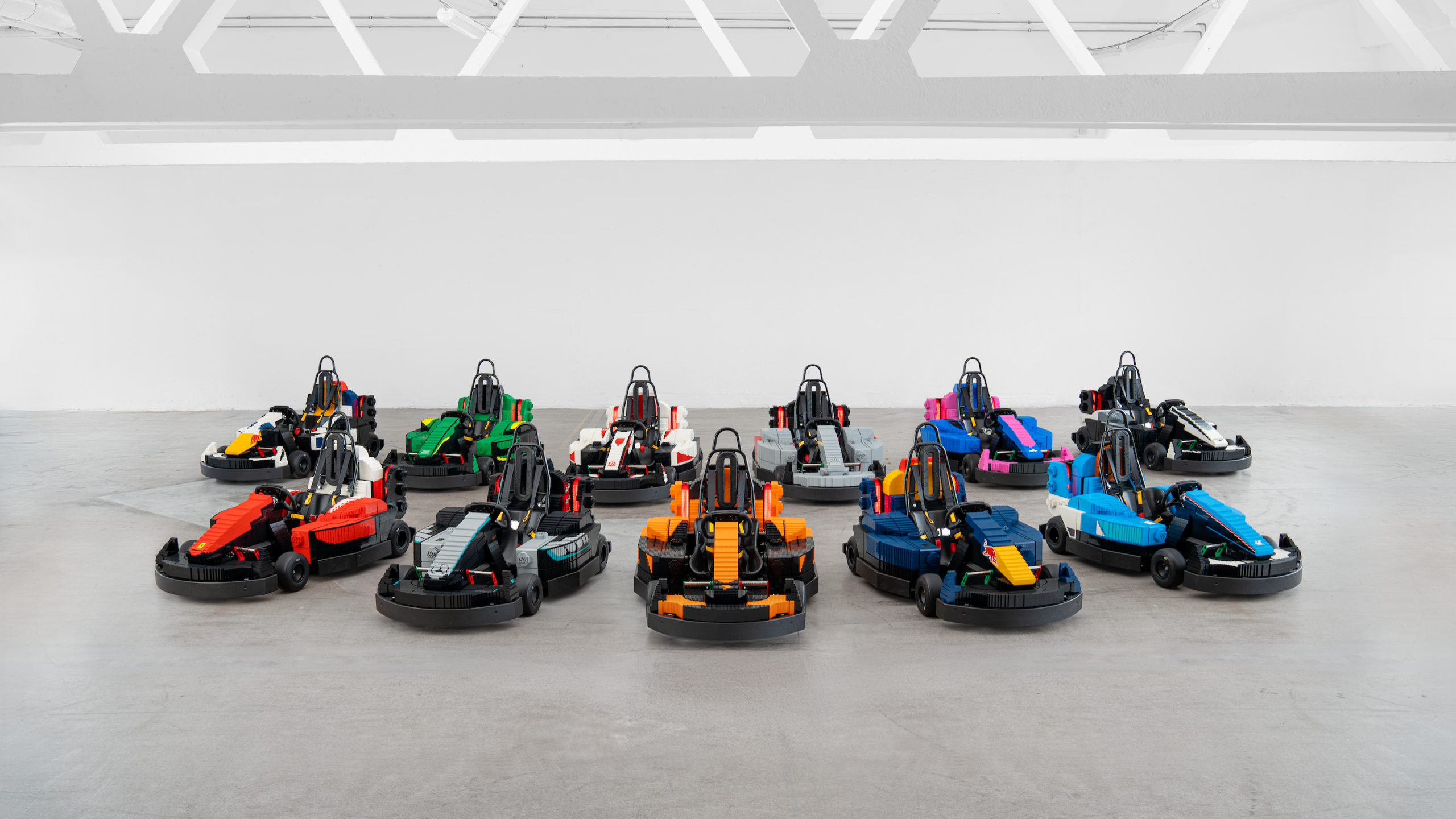


Last year in Miami, 20 Formula 1 drivers crammed into 10 drivable Lego cars — two drivers per car, each vehicle weighing 3,306 pounds and built from nearly 400,000 bricks. It was absurd. It was also a hit.
So Lego did what any smart partner would do: it scrapped the whole approach and started over.
This weekend at Silverstone, the Lego Drivers’ Parade 2.0 will field 22 vehicles — more than double the Miami fleet — each built from just 28,000 pieces. The cars are radically smaller, weighing roughly 617 pounds apiece, with only about 143 pounds of that mass actually being Lego bricks. The rest is go-kart running gear, including standard go-kart wheels replacing the Pirelli slicks used on last year’s near-1:1-scale behemoths.
Every driver gets their own car this time. No more awkward ride-sharing.
The top speed has crept up too, from 12.5 mph in Miami to a claimed 15.5 mph at Silverstone. That’s still slower than most people jog, but in a machine made largely of interlocking plastic, it’s fast enough to generate the kind of chaotic energy that made the Miami parade a social media phenomenon. Lego released a 48-minute documentary about last year’s event and called it “a lap of chaos, childlike joy, and laughter.”
The unspoken translation: it moved product.
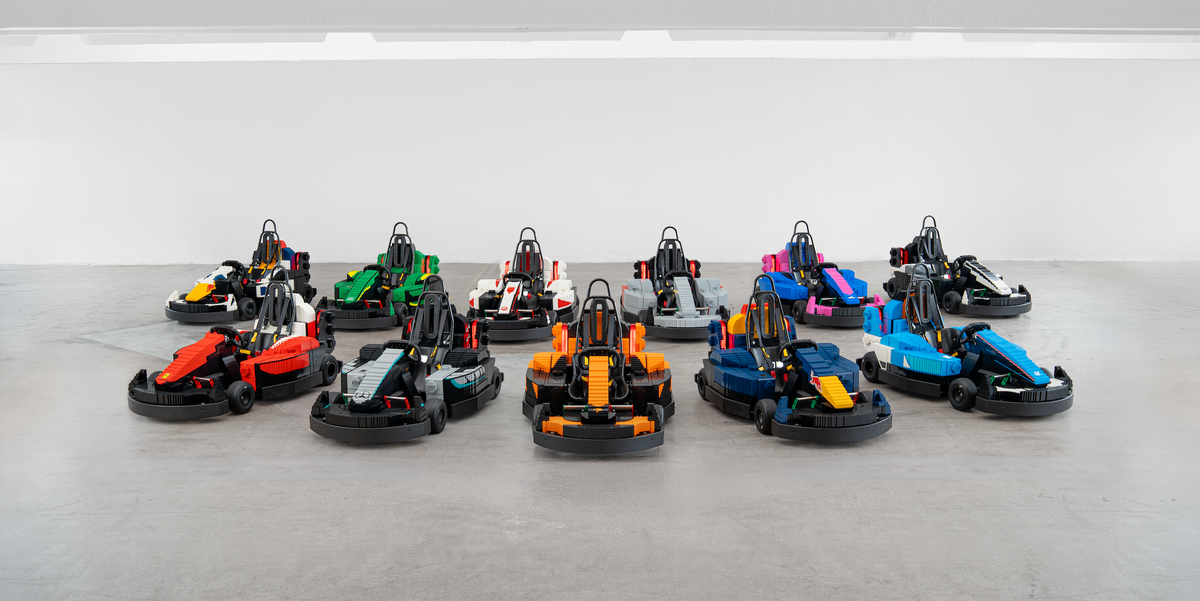
And that’s the real engine underneath this partnership. Lego and F1 have been working together since 1998, and the collaboration now stretches from $12 McLaren Speed Champions kits on toy store shelves to $230 Technic models that adult fans display like trophies. Last year, Lego launched minifig-scale Speed Champions sets for all 10 F1 teams.
The parade itself is scheduled roughly two hours before Sunday’s race, giving it prime pre-broadcast real estate. That timing isn’t accidental. It plants Lego’s brand directly alongside the most-watched moment of a Grand Prix weekend, when cameras are already rolling and casual viewers are tuning in.
The engineering pivot from Miami to Silverstone tells you something about how both brands are thinking. The massive 400,000-piece cars were a spectacle, but they were also logistically punishing — building 10 of them was clearly the limit. By shrinking the brick count to 28,000 and leaning on go-kart mechanicals, Lego can now scale the concept to cover the entire grid.
Lighter cars also mean easier transport, simpler pit logistics, and a format that could theoretically travel to multiple races per season.
A Lego spokesperson kept it simple: “We were blown away by the excitement generated by the 2025 Formula 1 Miami Drivers’ Parade. So, this year we wanted to go even bigger and better.” That reads like boilerplate, but the execution suggests a more calculated ambition. Twenty-two cars means one for each driver, including reserves or substitutes, ensuring nobody sits out regardless of last-minute grid changes.
The shift from engineering showpiece to scalable marketing vehicle mirrors what the best brand partnerships eventually figure out. The first act is spectacle. The second act is repeatability. If Silverstone works, expect Lego karts at Austin, Suzuka, and Abu Dhabi before long.
Formula 1 has spent the last decade turning itself into an entertainment brand that happens to race cars. Lego has spent even longer turning itself into a lifestyle brand that happens to sell bricks. The parade is the purest expression of where those two trajectories converge — a place where nobody pretends the point is competition, and everyone understands the point is joy, cameras, and commerce.
At 15.5 mph, you have plenty of time to see the logos.




Share this Story