
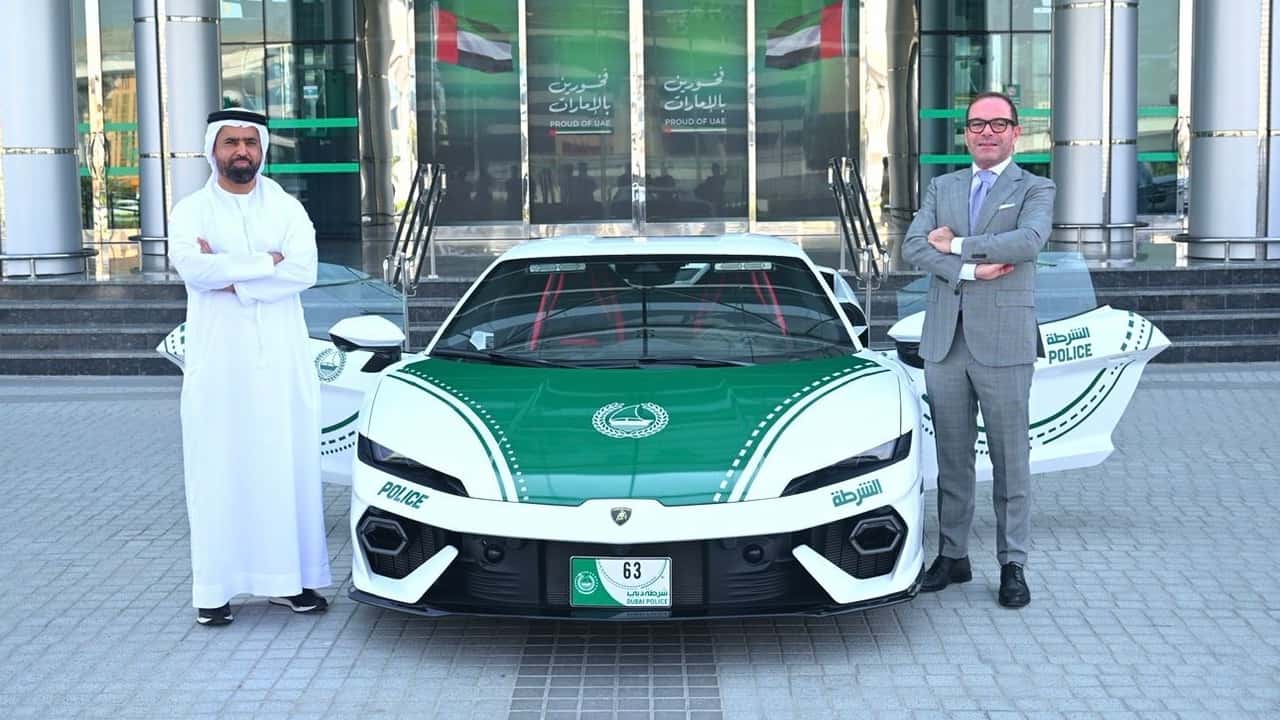


Dubai Police just took delivery of a Lamborghini Temerario, a 920-horsepower hybrid supercar that will never chase down a single suspect. The twin-turbocharged V8 and three electric motors can hit 62 mph in 2.7 seconds and top out at 213 mph. None of that matters for its actual job, which is standing still and looking expensive.
The Temerario joins the force’s luxury patrol program, a collection of exotics parked at tourist hotspots so visitors can snap selfies with officers. It sits alongside a Mansory Ferrari 812 Superfast and other machines that exist purely as rolling billboards for a city that treats spectacle as municipal policy.
Brigadier Saeed Al Hajri, director of the General Department of Criminal Investigation, described the fleet as “an innovative approach to policing, combining an effective security presence with community and tourist engagement.” Colonel Mohammad Abdulrahman Abdulwahid, head of the Tourist Police Department, added that the force aims to reflect “Dubai’s leadership and unique character.” The language tells you everything about the priorities here. This is branding, not law enforcement.
Lamborghini Abu Dhabi and Dubai facilitated the handover. General manager Martino Picotti called it a continuation of an existing relationship between the brand and the UAE, which is a polite way of saying both sides benefit from the arrangement. Lamborghini gets its newest product photographed in police livery and shared across every social media platform on the planet. Dubai gets another piece of evidence that it operates on a different frequency than the rest of the world.
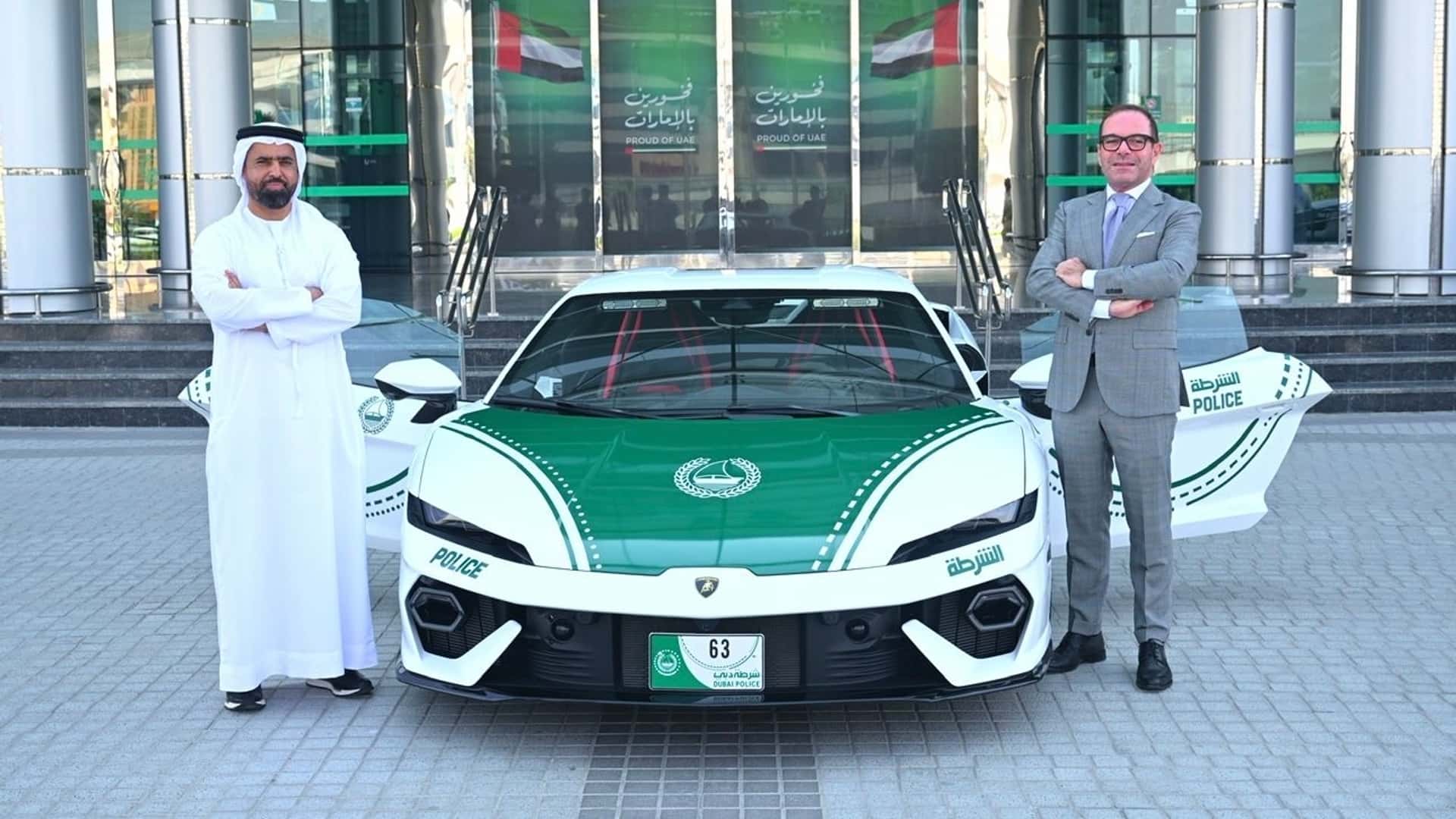
The Temerario itself is Lamborghini’s replacement for the Huracán, built around a flat-plane crank 4.0-liter twin-turbo V8 supplemented by a front e-axle and a P1 electric motor mounted between the engine and the gearbox. The combined 920 horsepower represents real engineering substance underneath the tourist-trap deployment.
Italy’s own police force received a Temerario recently too, though Italian highway patrol actually uses its Lamborghinis for urgent medical transport and high-speed organ delivery runs. Dubai’s version will mostly idle at the Burj Khalifa while someone in cargo shorts poses next to it.
The strategy is deliberate. Placing a $300,000-plus supercar at a pedestrian destination lowers the barrier between officers and the public. People who might never approach a standard patrol car will walk straight up to a Lamborghini. The engagement data apparently justifies the expense, or at least nobody in Dubai’s budget office is asking hard questions about cost-per-interaction when the alternative is another white Toyota Land Cruiser.
What’s revealing is the gap between the car’s capability and its mission. The Temerario was engineered to attack racetracks and devour mountain roads. In Dubai Police service, it will accumulate mileage measured in parking lot loops and slow rolls down Sheikh Zayed Road for Instagram content.
The hybrid system that enables its performance was designed by people obsessed with lap times. Its most demanding duty cycle will be keeping the air conditioning running while parked.
Dubai has been building this exotic fleet for over a decade now. The Bugatti Veyron came first, then Ferraris, McLarens, Aston Martins, and various Lamborghinis. Each addition generates a fresh wave of global media coverage, which is precisely the point. The city treats its police fleet the way fashion houses treat runway shows. The clothes were never meant to be worn on the street.
The Temerario is the latest and most technically advanced entry in that collection. Whether it ever turns a wheel in anger is beside the point entirely.
Share this Story