
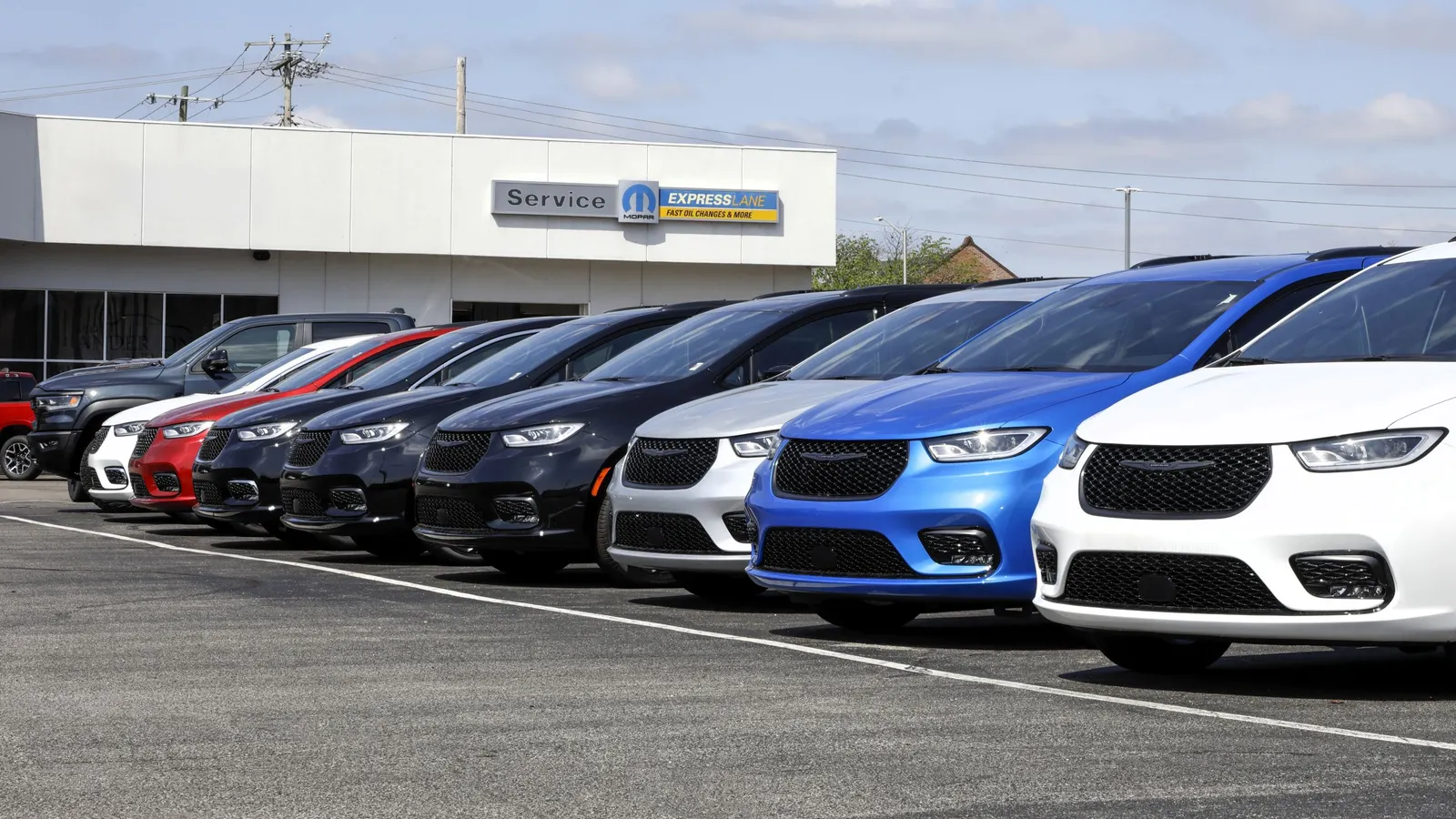


A single Carvana-owned Chrysler Dodge Jeep Ram store in Casa Grande, Arizona, sold 998 vehicles in June. Before Carvana acquired it, that store rarely moved more than 50 a month.
Those extra trucks and minivans aren’t going to Arizona buyers. They’re shipping to customers in Pennsylvania, Massachusetts, California, and beyond. Carvana is using its franchise licenses not to build local dealership empires but to funnel inventory into its national sales machine.
One CDJR dealer in Pennsylvania discovered Carvana’s Arizona store had sold Ram pickups directly into his backyard. When his marketing firm, Savvy Dealer, dug deeper, the number was far larger than the initial three Rams that caught his attention. Carvana was buying Google vehicle ads in the Pennsylvania market, and its Arizona inventory was appearing at the top of local search results.
“They are specifically targeting local demand from seven states away,” said Nick Chivinski, VP of marketing and strategy at Savvy Dealer.
Manufacturers traditionally discourage this kind of cross-market poaching. Franchise systems are built on territorial agreements and the understanding that the dealer who advertises locally, sponsors the Little League team, and keeps the service bays open will also reap the sales. Carvana has little interest in that compact.
And the data on service tells the story. Widewail, which tracks online reputation, found that after Carvana took over CDJR stores, negative service mentions spiked. At Carvana’s Sacramento location, negative service comments jumped to 66.7% from 42.7%.
Review response rates cratered. In Boston, response rates dropped from 94% to zero. In San Diego, from 95% to 27%.
Carvana probably doesn’t care. Steve Greenfield, general partner of Automotive Ventures, said the company is likely optimizing for units sold, not fixed operations profit. “I imagine they don’t really care too much about making an individual Stellantis store a profit-optimizing entity,” he said.
The real prize may be used cars. Owning Stellantis franchises gives Carvana access to closed manufacturer auctions, where off-lease returns and fleet vehicles trade hands among franchised dealers only. Multiple dealers have told consultant John Murphy that Carvana has been snapping up the majority of supply at those events.
That access matters now more than ever. Roughly 500,000 additional off-lease vehicles are returning to the market in 2026, a 25.7% jump over 2025 according to Edmunds. Carvana can outbid traditional dealers at those auctions because its reconditioning costs are lower, thanks to the ADESA wholesale auction network it acquired in 2022. Without a $1,200 to $2,000 recon ticket per car, the math works differently.
“If you’re not planning to have that recon cost, you can pay more and still have a margin,” said Nathan Shaver of Shaver Automotive Group.
What traditional dealers are left with is the service work. Carvana sells the truck. The local dealer changes the oil, handles the recall, rotates the tires.
It’s not nothing, but it inverts the franchise relationship. The selling dealer doesn’t know the customer. The servicing dealer didn’t make the sale.
Cuyler Owens of Widewail put it bluntly: “People are buying from Carvana because it’s easier, it’s faster, it’s not scary.” That is an indictment of the traditional buying experience that no amount of territorial protection can fix.
Stellantis has so far stayed quiet on how it plans to handle a franchise owner whose entire strategy undermines the network that’s supposed to support its customers long after the sale. The longer that silence lasts, the louder Carvana’s sales numbers will speak.

Share this Story