
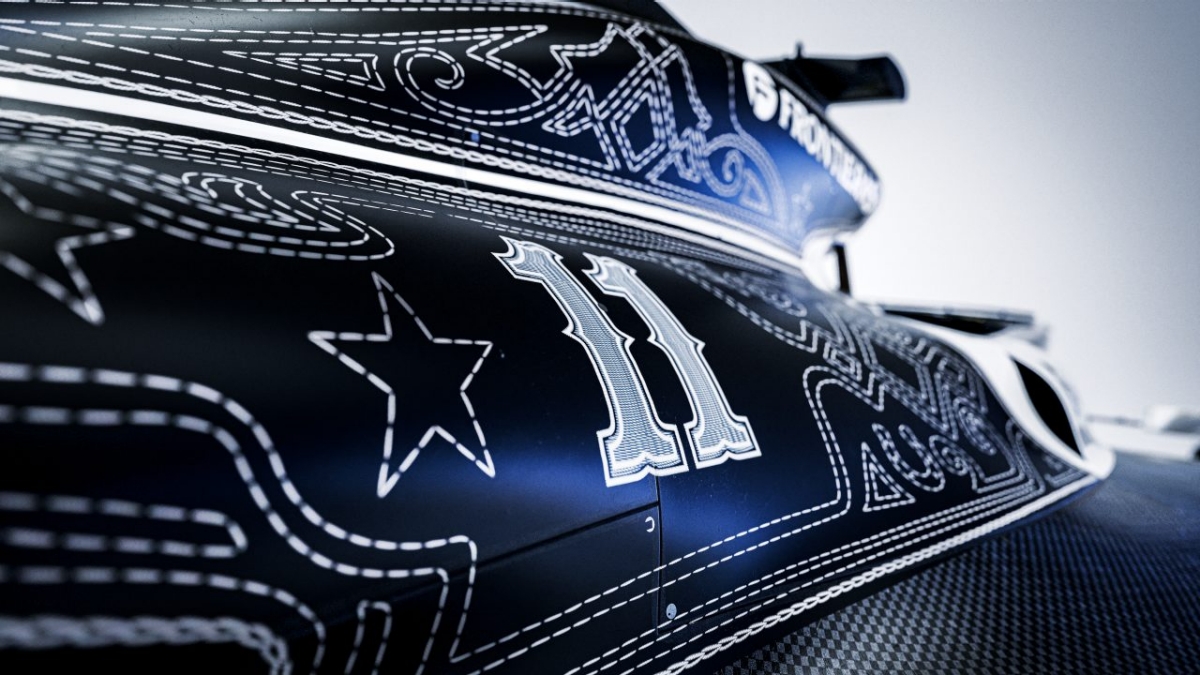


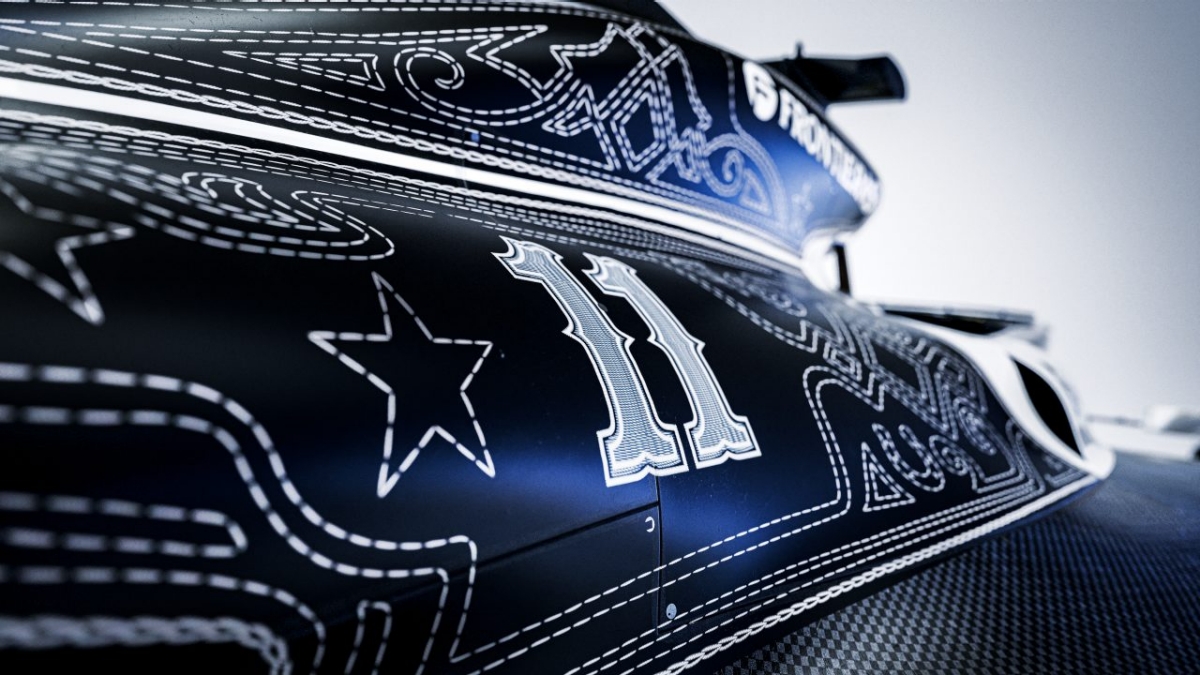
The Cadillac Formula 1 Team is rolling into the Circuit of The Americas this weekend wearing what amounts to a digitally embroidered cowboy shirt stretched over a 200-mph carbon fiber missile. It is the team’s third one-off livery in its debut season, following custom designs at Miami in May and Silverstone in July. It might be the most audacious yet.
The design mimics the chain stitching of vintage western shirts and blue jeans, the scrollwork of fine saddlery, all rendered stitch by painstaking digital stitch onto the aerodynamically sculpted bodywork of a current F1 car. Hidden in the details: an embroidered Austin skyline, a map of the circuit, 50 stars, Texas cactuses, and a horseshoe turned heels-up for luck.
Vincent Traina, a Dallas native and design manager at GM’s Performance, Motorsports and Accessories studio, led the effort from the Detroit side. He grew up watching F1 races his father recorded off European broadcasts. “Injecting that creativity from the GM Design side, bringing in the culture of Texas as a Texan, and being such a fan of Formula 1, it all hit home for me,” he said.
The project came together in weeks, not months. That is a blink in F1 livery terms, where sponsor placement alone can consume entire design cycles. Traina’s Michigan team worked alongside designers at Cadillac F1’s UK technical center, where senior CG artist Jamie Thresher handled the brutal task of making embroidery look convincing on a surface shaped entirely by aerodynamic demands.
“Of all the themes we came up with, this was probably the hardest one we could have picked,” Thresher admitted. “Rendering each individual stitch and executing it well in a digital illustration is hard.”
The tension running through this project is one Cadillac will face repeatedly as America’s newest F1 team: how to wave the flag without becoming a parody of itself. F1’s paddock is dominated by European sensibility, Italian engineering heritage, British racing tradition, Swiss watchmaker precision. An American team rolling in with cowboy motifs could easily read as tone-deaf tourism.
Traina was clearly aware of the line. “It had to be serious, it had to look authentic,” he said. “We treated the Cadillac Formula 1 car like we would treat the interior of a Cadillac production vehicle, keeping the design elements very elevated, keeping the color palette nice and clean, but still bringing in the culture.”
Cassidy Towriss, the team’s Chief Brand Advisor, framed the three liveries as chapters in a deliberate identity-building exercise. Miami explored American symbols. Silverstone celebrated American color. Austin digs into character.
“There’s so much depth to American culture, and that gives us room to express who we are as a team,” she said.
Drivers Valtteri Bottas and Sergio Pérez will wear custom race suits echoing the western theme, which is the kind of detail that shows Cadillac understands F1’s merch and social media economy as well as its engineering one. In a sport where livery reveals regularly generate more online engagement than qualifying sessions, a well-executed one-off design is currency.
Whether the stitching translates at 200 mph is almost beside the point. These liveries exist primarily in high-resolution renders, Instagram carousels, and broadcast close-ups during pit stops. The car could be wrapped in burlap and it would not change Bottas’s lap time by a thousandth of a second.
What the Austin livery does reveal is how seriously GM is investing in F1 as a brand platform, not just a motorsport program. Three bespoke liveries in a debut season, with a transatlantic design pipeline connecting Detroit and the UK, suggests a marketing apparatus running at full tilt alongside the racing operation.
Thresher, the UK-based artist who spent weeks digitally stitching denim patterns onto front wing endplates, summed it up simply. “I never once thought I would be designing an F1 livery,” he said. The next question is whether Cadillac’s on-track results will eventually match the ambition of its paint schemes.
Share this Story