
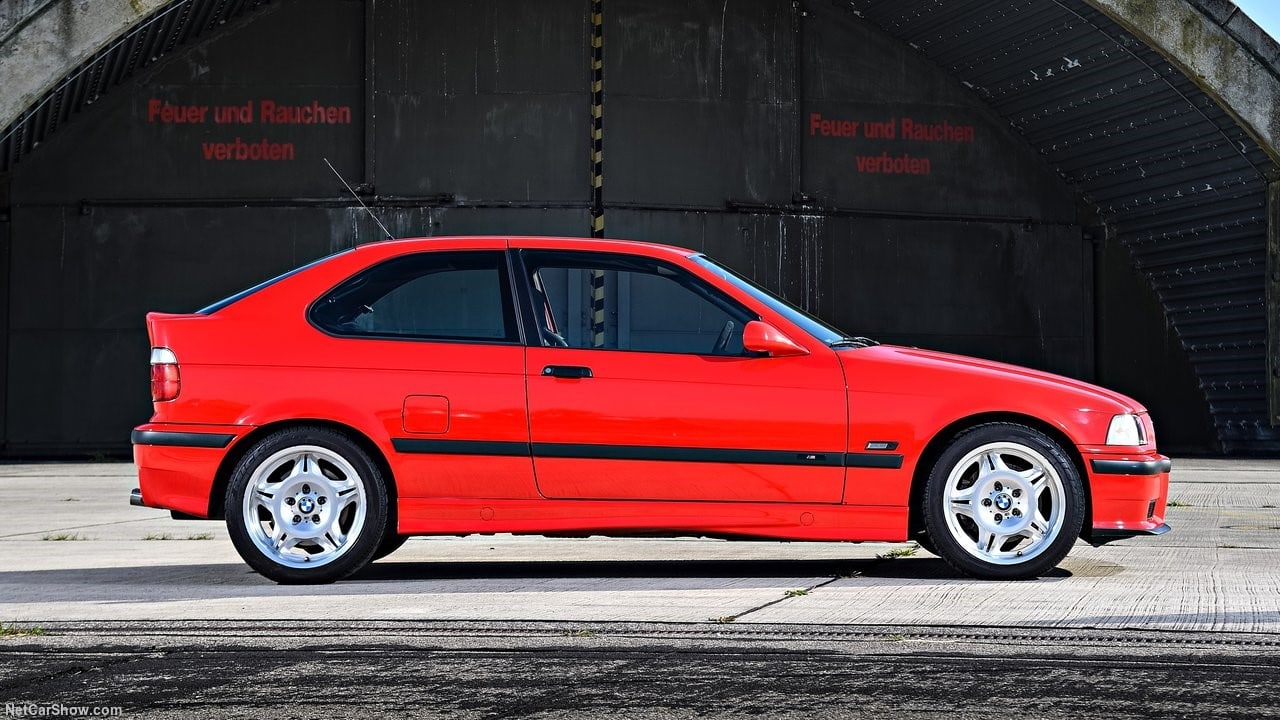


BMW built nearly 400,000 E36 3 Series Compacts between 1994 and 2000. Every single one left the factory with two side doors and a tailgate. Every single one except this.
BMW Classic has pulled a one-off five-door 316i Compact from its vault in Munich, a car that had never been shown publicly until now. No fanfare, no anniversary tie-in. Just a quiet reveal of a prototype that sat hidden for roughly three decades.
The spec sheet kills any notion this was a hot-rod experiment. It’s a 316i, the cheapest gasoline Compact in the range, originally finished in Boston Green with cloth seats, an automatic gearbox, and heated seats. Someone later repainted it red.
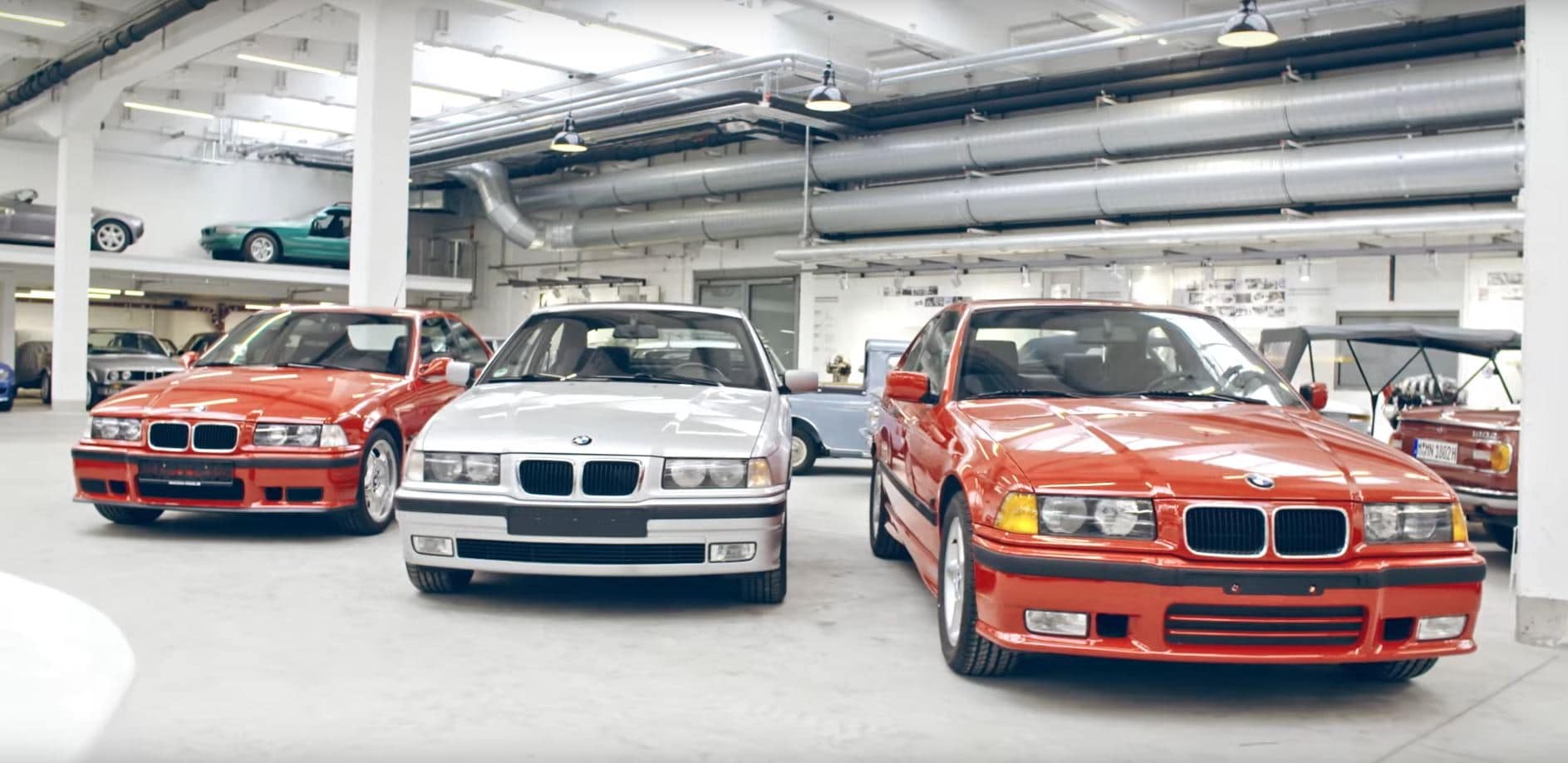
This was a car built to test whether the Compact could work as a proper family hatchback, the kind of thing you’d park next to a Volkswagen Golf at the school gate.
The details betray its hand-built origins. The windows are manual wind-ups, yet the center console carries switches for electric windows. That’s not a production-ready interior. That’s an engineering team raiding the parts bin and bolting together a proof of concept without worrying about the brochure copy.
BMW launched the E36 Compact in April 1994 as a shorter, cheaper entry point to the brand. It borrowed E30 semi-trailing-arm rear suspension and interior bits to hit its price target. In the UK, a 316i Compact listed at £13,650 in 1995, roughly £2,000 less than any other BMW. In the U.S., it sold as the 318ti.
Two extra doors would have shattered that equation. New door stampings, new tooling, new structural engineering, all piled onto a car whose sole purpose was to be the least expensive BMW in the showroom. A five-door Compact would also have stepped on the toes of the 3 Series sedan and Touring, which already served buyers who needed rear-door access for kids and cargo. The math didn’t work, and the project died as a single prototype.
BMW wouldn’t sell a five-door hatchback for another decade. The E46 Compact that replaced this car in 2000 kept the three-door layout. It took the E87 1 Series, unveiled at the 2004 Paris Motor Show, to finally put a five-door BMW hatch in dealer showrooms.
When it arrived, BMW launched the five-door first and didn’t add a three-door variant until 2007. That was a complete reversal of the strategy that killed this prototype.
The five-door 316i isn’t even the strangest E36 Compact in the Munich collection. BMW M built an M3 Compact in 1996, stuffing the European S50B32 3.2-liter inline-six under its hood for 316 horsepower and a 331-pound weight advantage over the M3 Coupe. That car got loaned to magazines, tested publicly, written about. The board still said no.
The M3 Compact has been a known curiosity for years. The five-door 316i is the opposite kind of secret: not a performance showcase but a market study, a bean-counter’s question rendered in steel and glass. Could BMW sell a proper hatchback at the bottom of its range and still make money?
The answer, apparently, was not yet. The 1 Series proved the concept viable a decade later, and BMW has been selling five-door hatches ever since. The red 316i in Munich is the receipt for a bet the company wasn’t ready to place.

Share this Story