
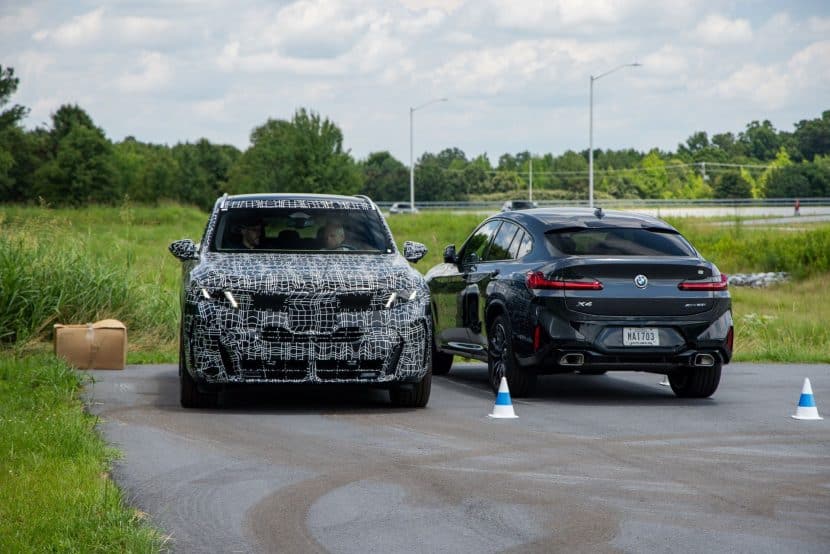


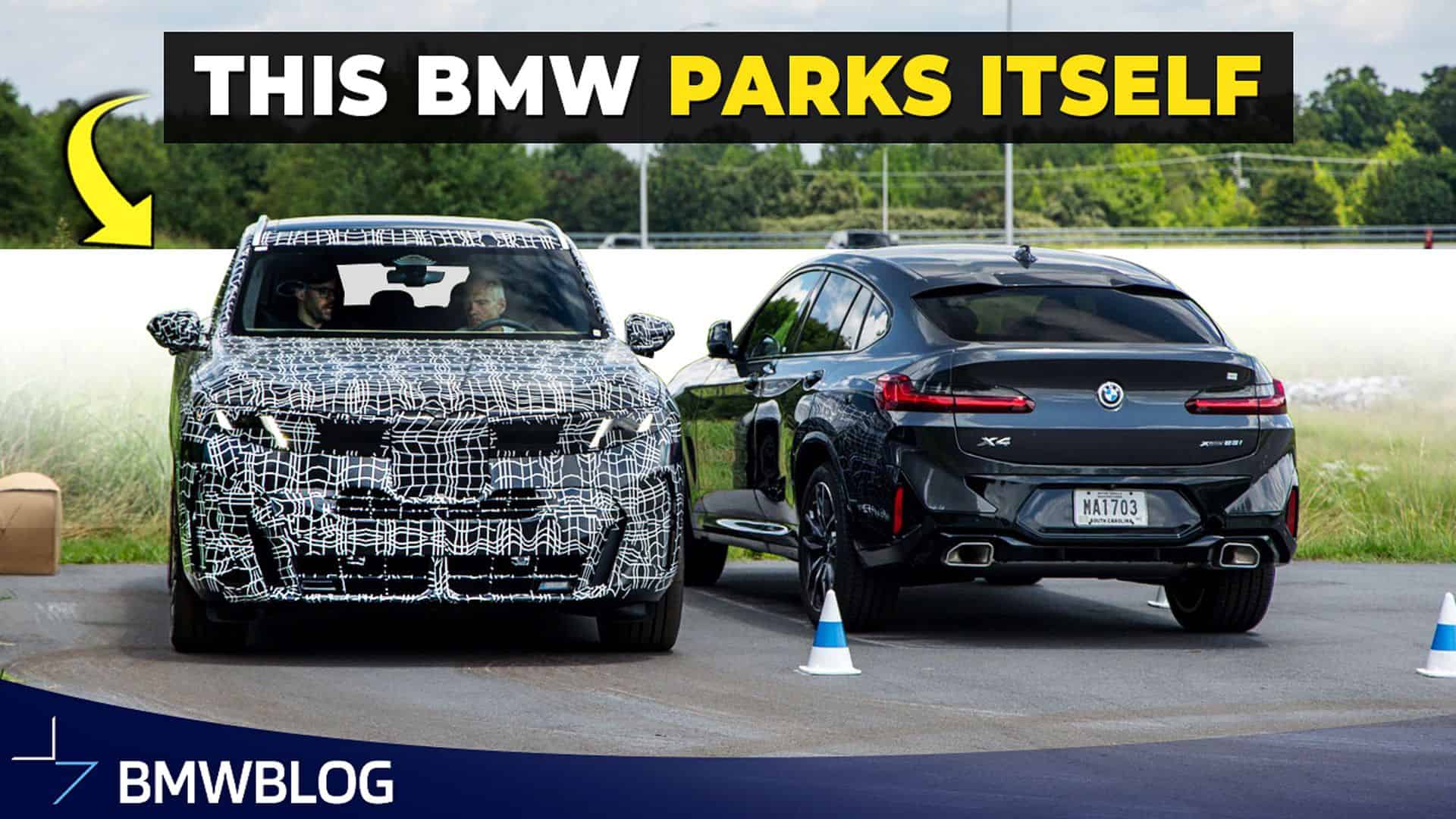
The 2027 BMW X5 just showed its hand on where automated driving is actually headed, and it’s not where most people think. At a prototype drive last week in Spartanburg, BMW engineers laid out a parking and safety suite that does more than any previous X5 — then drew a hard line at SAE Level 2, meaning the driver never leaves the loop.
That tension defines the entire system. The car can steer itself into a space, brake for a cyclist it sees behind a pillar, and remember 600 meters of a route you drove once six months ago. But it still needs your foot on the brake and your eyes on the screen. BMW calls the philosophy Symbiotic Drive, and it’s the clearest sign yet that the German automaker has stopped chasing full autonomy and started optimizing the middle ground.
Start with the parking detection. Cameras and ultrasonic sensors run simultaneously — cameras read painted lines, curbs, and even surface texture differences between cobblestone and asphalt, while ultrasonics map physical objects. The result is that the system can identify and offer a parking spot before you’ve driven past it, a meaningful jump from ultrasonic-only setups that required you to creep by slowly.
The parking button now lives on the steering wheel. That sounds trivial until you consider how many advanced features die quiet deaths because they’re buried three menus deep. Tap it, pick a spot on the display, confirm, release the brake. The car steers. You control speed and watch.
Saved paths are where the engineering gets genuinely interesting. The X5 records up to 200 meters of an incoming route and holds it in memory after shutdown. For regular spots — your garage, your office — you can save up to 10 named paths covering 600 meters across three connected segments.
The system recognizes your approach and prompts you without any menu interaction. When a saved path encounters a new obstacle — a trash can, a parked bicycle — the car recalculates around it in real time instead of stopping dead. GPS, cameras, and ultrasonics triangulate against the stored route and adjust. Earlier systems simply gave up.
The Safe Exit function is the kind of feature that sounds like a gimmick until you picture a seven-year-old in the back seat. Before any door opens, exterior cameras and sensors scan for approaching traffic, cyclists, and pedestrians. The door is held electronically.
A directional audio alert plays from the speaker nearest the hazard. Red indicator lights on the door exterior warn approaching cyclists. The system holds the door partway open even after clearing the first wave of traffic, in case a second one follows.
Cross-traffic braking during park-out maneuvers has been refined too. The car backs out while scanning, and when it detects a crossing vehicle, it stops with a controlled deceleration — not the panic-brake lurch of older systems. Previously, that stop killed the entire sequence. Now a continue button appears. Tap it, confirm with the brake, and the maneuver resumes.
Remote parking through the My BMW app lets you complete a maneuver from outside the car, using the same sensor fusion. Narrow garages where opening a door after parking would require a yoga certification are the obvious use case.
Lane keeping now reads both steering input and driver gaze to distinguish intentional lane changes from drift. Side collision warning applies corrective steering toward your lane center rather than into an adjacent lane — a critical distinction that keeps the system from creating the problem it’s trying to solve.
None of this is Level 3. None of it pretends to be. BMW recently explained why it dropped Level 3 ambitions, and the X5’s parking suite is the practical answer to what replaces that goal.
Instead of a system that takes over completely in narrow conditions, BMW built one that works with you across a much wider range of situations. The car got smarter. The driver still matters. That might be the most honest position anyone in this industry has taken in years.


Share this Story