
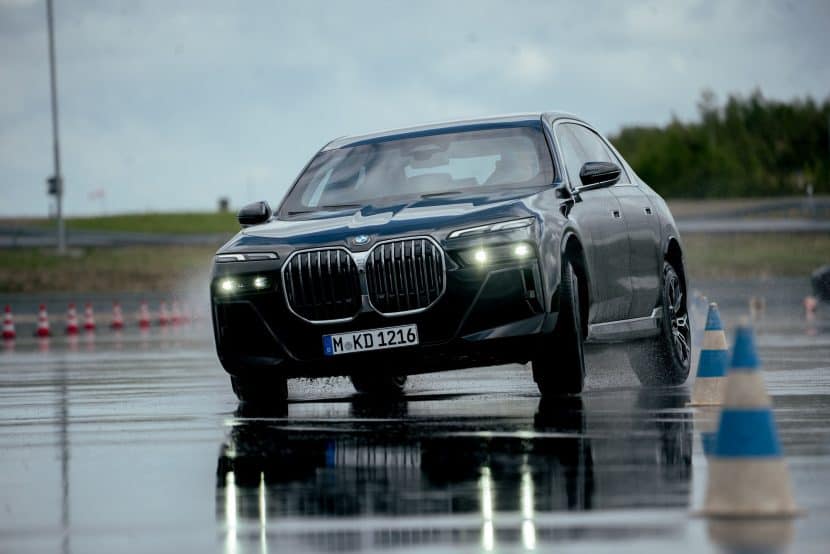


On May 14, at a sprawling test facility in Sokolov, Czech Republic, BMW handed the keys to some of its rarest production vehicles to 67 guests from eight European countries and essentially said: push them hard.
The third annual BMW Protection Driving Experience brought together the company’s armored lineup — the X5 Protection VR6 and the 7 Series/i7 Protection — alongside their standard showroom siblings. The point wasn’t a static display behind velvet ropes. BMW wanted participants sliding these fortified machines through high-speed emergency braking drills, reversing down off-road slopes, and threading slalom courses on unpaved surfaces.
The guests came from the UK, Estonia, Denmark, Slovenia, Poland, Slovakia, Germany, and the Czech Republic. Not random enthusiasts. These were the kind of people who might actually need a bulletproof car — corporate executives, political figures, and the security professionals who protect them.
BMW’s Protection Vehicle division has been at this for nearly half a century, and the current portfolio is deliberately narrow: just two models. The 7 Series Protection (also available as the fully electric i7 Protection) and the X5 Protection VR6. No configurator, no dealer stock.
Every unit is built to order with options that never appear on a standard spec sheet — auxiliary lighting, radio transceivers, onboard fire extinguishers, Michelin PAX run-flat tires, and a fresh-air supply system designed to keep occupants breathing clean air in a chemical attack.
The weight numbers tell the real story. The i7 Protection hits 4,900 kilograms — nearly 11,000 pounds. That’s roughly three standard 5 Series sedans stacked on one set of axles.
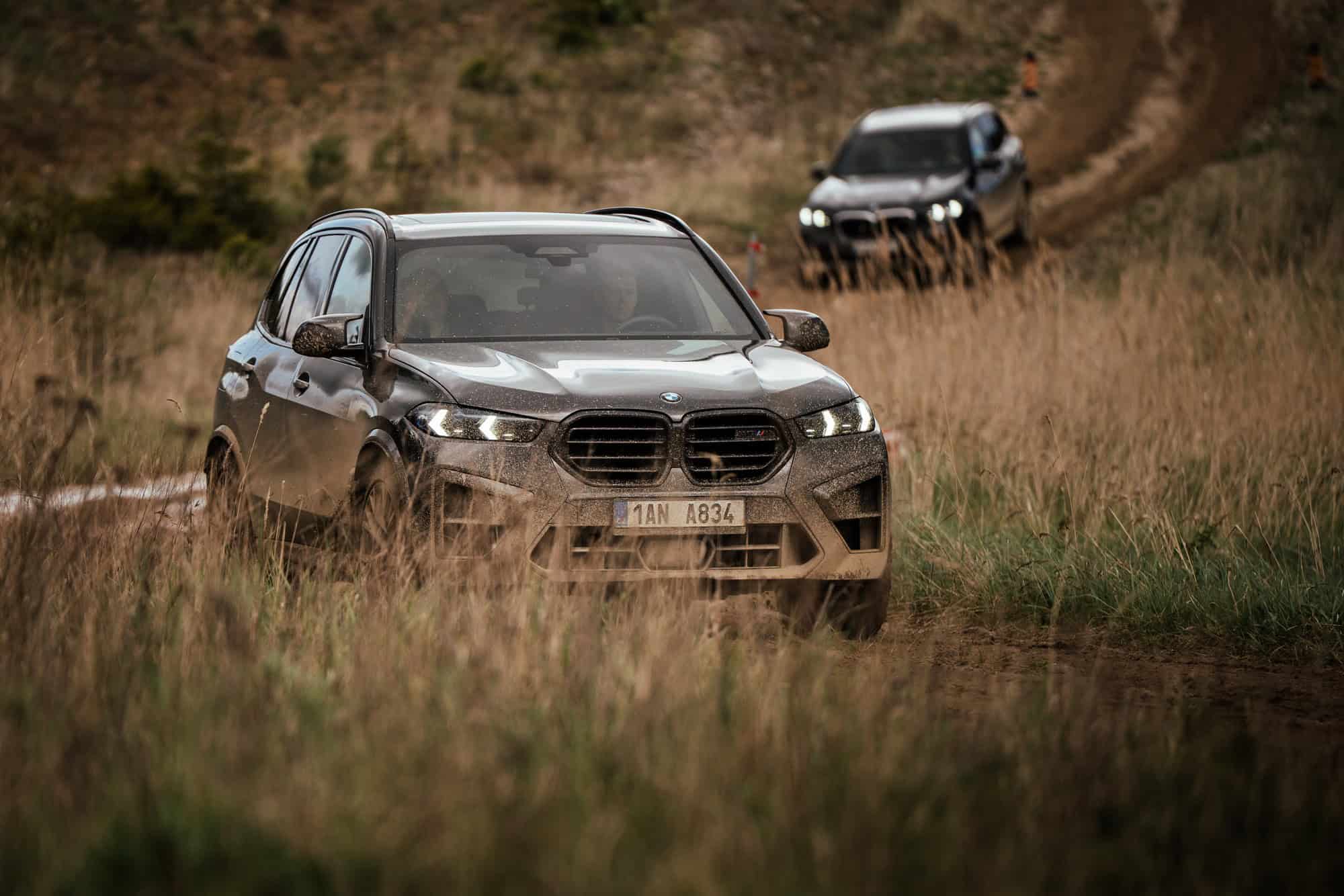
Even the 7 Series Protection sedan exceeds 4,400 kilograms and stretches close to 5.4 meters long. These are not nimble machines by any conventional measure.
Which is precisely why BMW staged the back-to-back comparisons. Standard 740d and 750e sedans sat alongside their armored counterparts. An X5 40d, X5 50e, and X5 M flanked the Protection VR6. The message BMW wanted to land: even buried under layers of ballistic steel, aramid fiber, and polycarbonate glass, these things still drive like BMWs.
Whether they actually do is a question only those 67 people can answer honestly. But the fact that BMW chose a dynamic driving program — curves, emergency stops, off-road reversals — rather than a gentle highway cruise suggests real confidence in the chassis tuning. The Future Mobility Development Center in Sokolov, a $300 million facility BMW opened around 2023, gave them the acreage to prove it.
Two bonus appearances rounded out the event. An M5 Touring kitted out in full Czech police specification and a Motorrad R 1250 RT motorcycle similarly equipped for law enforcement duty. Both served as reminders that BMW’s relationship with security agencies extends well beyond the armored sedan niche.
The pipeline is already filling. BMW has confirmed the 2027 7 Series facelift — internally coded G73 rather than the standard G70 — will get the Protection treatment with both V8 and fully electric powertrains. The next-generation X5 arrives later this summer, but whether it will spawn an armored variant remains unconfirmed.
The armored car market is tiny, deliberately invisible, and enormously profitable per unit. BMW doesn’t disclose pricing, but industry estimates for vehicles at this protection level start north of $300,000 and climb steeply with options. For a company selling millions of cars a year, the Protection division isn’t about volume. It’s about capability — and the kind of brand credibility that no M badge can buy.
Letting 67 potential customers experience that firsthand, mud on the tires and all, is smarter than any brochure ever printed.
Share this Story