
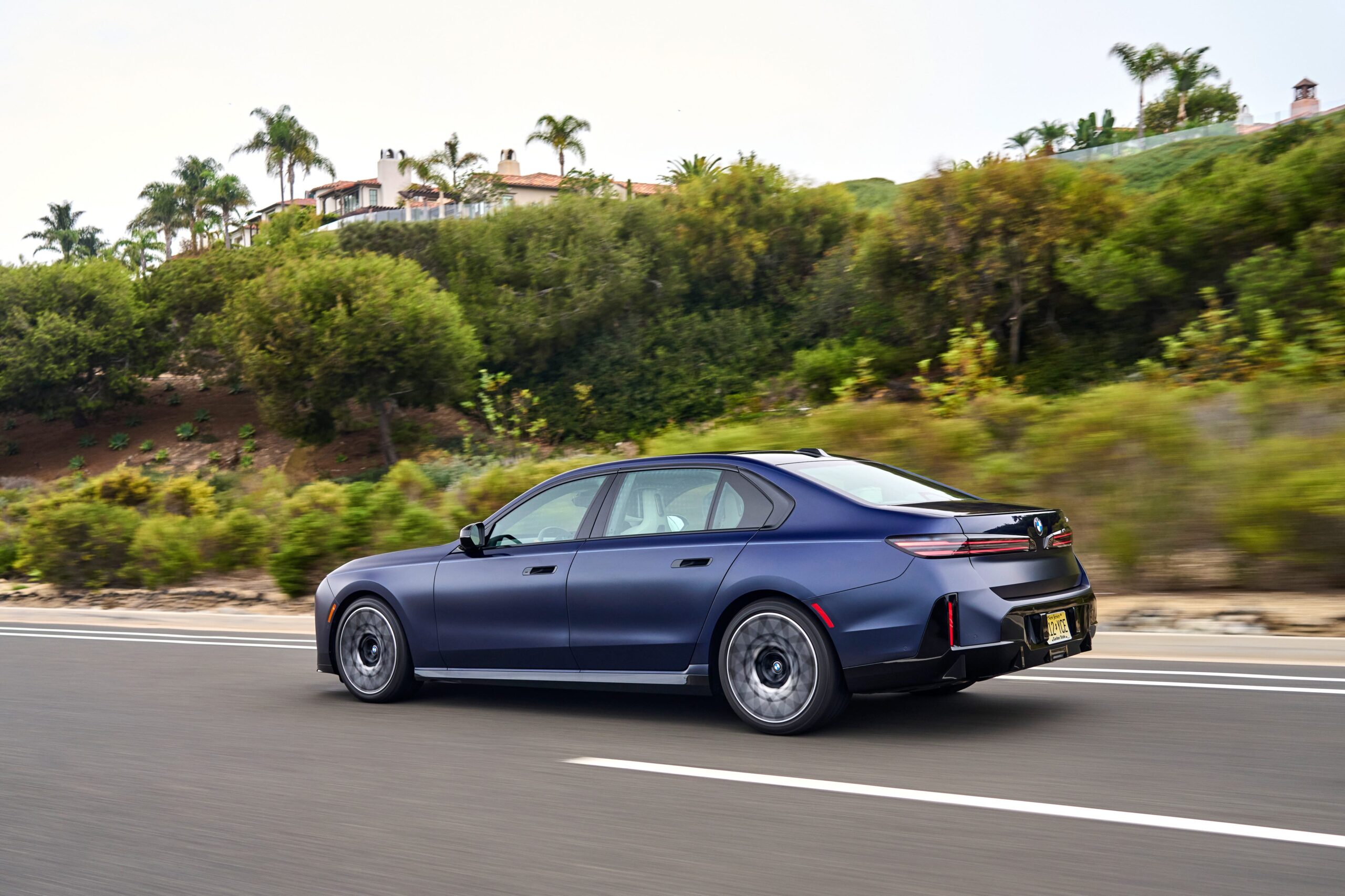


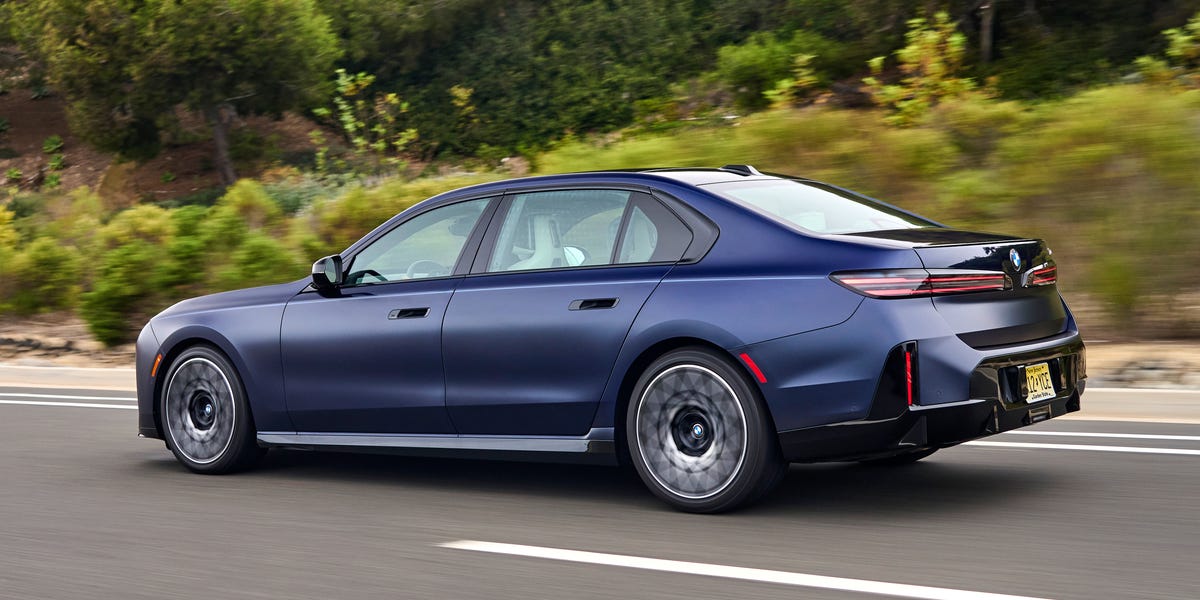
The 2027 BMW 740 pulls away from a stoplight so quietly you’d swear it was the electric i7. It isn’t. The turbocharged inline-six with 48-volt mild hybrid assist is just that smooth, and that’s either a triumph of engineering or a sign that BMW has fully surrendered to the idea that its flagship sedan should feel less like a driver’s car and more like a velvet cocoon on wheels.
BMW has reshaped its seventh-generation 7-series at the midpoint with a dramatic restyle that leans hard into a blocky, high-hooded aesthetic now fashionable across the luxury segment. The twin-bulge hood gives the car the expression of something predatory and irritated. Crystal headlights, an available glowing grille surround, and optional matte and two-tone paints attempt to soften the visual mass, though the car still reads like a building with wheels.
The powertrain menu is almost absurdly deep. The base 740 runs a 394-hp turbo 3.0-liter six. The 750e plug-in hybrid pairs the same engine architecture with an electric motor for 483 hp, while two all-electric i7 variants, the 449-hp i7 50 and 536-hp i7 60, round out the range.
Prices start at $101,350 for the rear-drive 740 and climb to $126,250 for the i7 60 before options turn the number feral. A loaded i7 60 hits $150,700, which puts it squarely in territory BMW once reserved for cars wearing a Spirit of Ecstasy on the hood.
That’s the tension at the heart of this car. BMW is no longer content fighting the Mercedes S-Class. The 7-series now aims at Maybach, Bentley, and Rolls-Royce, and the interior is where the ambition is most visible.
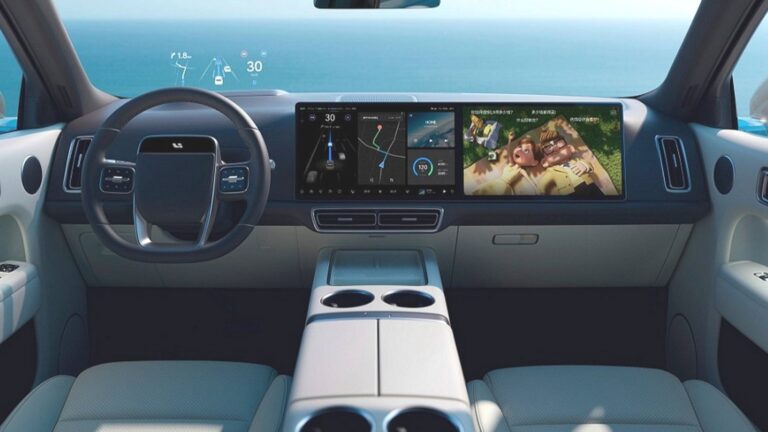
Think cyber-Baroque: quilted leathers, faceted glass controls, backlit translucent plastics, and a crystal shifter that throws rainbows around the cabin. A fold-down theater screen dominates the rear. Reclining seats with footrests and massage are on the options sheet, and the glass roof is embedded with strands of light, as if the actual sky needed a software update.
It is a lot. Multiple screens compete for attention from dash to doors to windshield-projected data. A passenger-side display blacks out when the car’s interior cameras detect the driver glancing at it, and there is so much information flowing from so many surfaces that the car almost demands a co-pilot just to manage the interface.
On the road, both the 740 and the i7 60 ride on standard air suspension with adaptive dampers and rear-wheel steering. The combination makes the roughly 212-inch-long sedan manageable in tight quarters and stable at speed. Braking is solid, with four-piston front calipers, and the i7’s three-setting regenerative system gives it a clear advantage in pedal modulation.
The electric models gained a new cylindrical-cell battery pack with 112.5 kWh of usable energy, up from 101.7, yielding a claimed 350-plus miles of range for the i7 60. DC fast charging from 10 to 80 percent takes a claimed 28 minutes. Those are numbers worth caring about if BMW’s estimates hold under independent testing.
Steering feel remains the perennial complaint, and BMW seems to have stopped caring. The wheel is heavy and predictable but communicates very little about the road surface. For a car built to cosset, that may be an acceptable trade, but for a car wearing a blue-and-white roundel, it feels like a concession.
BMW has built something undeniably comfortable, technologically dense, and visually aggressive. Whether the market for $150,000 sedans draped in crystal and quilted leather needs another entrant from Munich is a fair question. The harder one is whether BMW is simply diluting the prestige of its own Rolls-Royce brand by building something this close to it for less money, and nobody at BMW headquarters seems eager to answer that.

Share this Story