
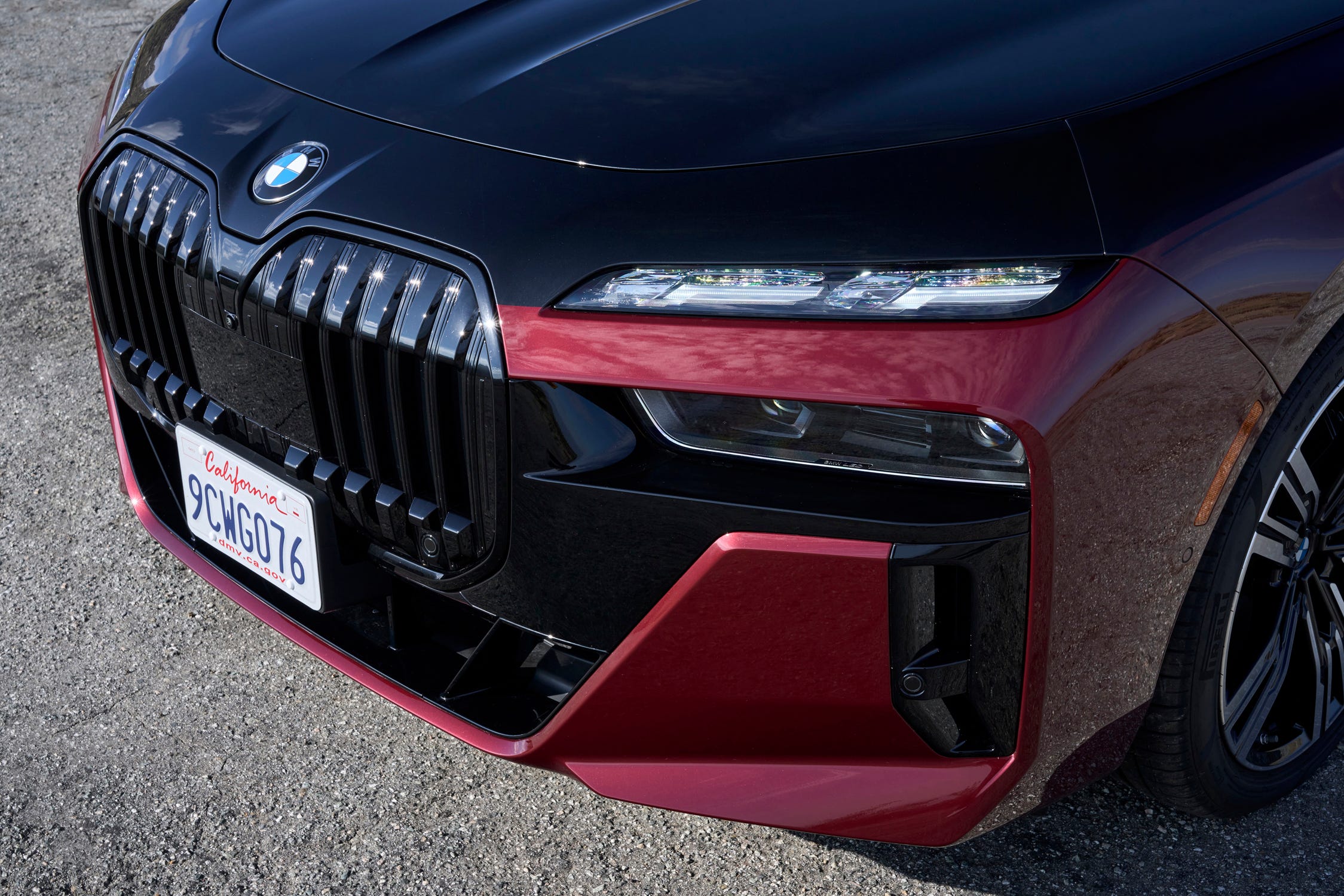


Oliver Zipse stood on stage at BMW’s annual conference Wednesday and called the upcoming 2027 7-Series facelift “an almost completely new vehicle.” That’s a bold claim for what is technically a mid-cycle refresh, not a next-generation model. But the single teaser image BMW dropped — a shadowy shot of illuminated headlights and a glowing kidney grille — suggests the company’s flagship sedan is getting far more than new bumpers and revised taillights.
The full reveal is expected at the Beijing Auto Show, which runs April 24 through May 3, though an online debut could come days earlier. BMW posted the teaser to its Instagram account, showing the G70-generation sedan’s front end emerging from darkness like a concept car at a motor show. The split headlights remain, but they’ve been sharpened, and the massive kidney grille stays too, now with illuminated borders.
What’s familiar on the outside tells only half the story.
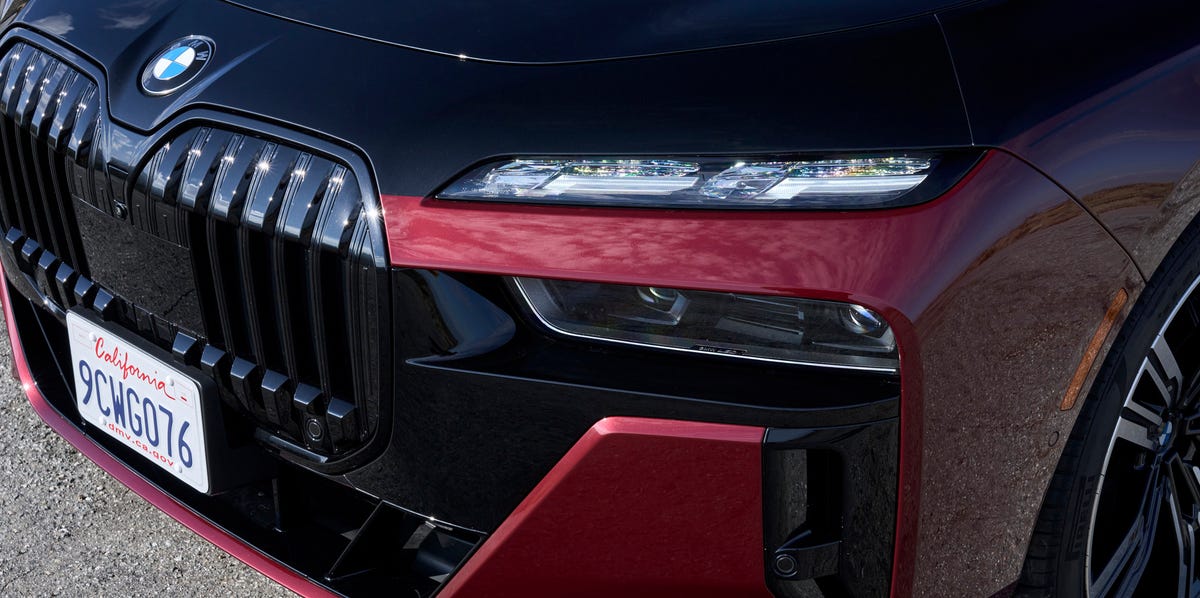
The real transformation is happening inside. BMW plans to gut the current 7-Series interior and install iDrive X, the brand’s latest infotainment architecture. That means a large central touchscreen paired with what BMW calls Panoramic Vision — a pillar-to-pillar projection spanning the base of the windshield.
A passenger-side screen may also be part of the package, though BMW hasn’t confirmed it. If this sounds like the tech going into BMW’s ground-up Neue Klasse models, that’s because it is. The 7-Series will be the first existing BMW to receive it.
That distinction matters. The Neue Klasse platform underpins completely new vehicles like the upcoming iX3, i3 sedan, and next-generation X5. Retrofitting its signature technology into a car that launched in 2023 on a different architecture is an unusual move — and one that speaks to how quickly the competitive landscape in full-size luxury sedans has shifted.
Mercedes refreshed the S-Class. The Lucid Air keeps pushing range and performance boundaries. Standing still was not an option.
Under the hood, changes are coming too. Gasoline and diesel powertrains will be revised to meet the Euro 7 emissions standard, which likely means shuffled power figures across the lineup. The electric i7 is expected to gain a larger battery pack for improved range, and there are persistent reports of a V8-powered M760 variant joining the lineup alongside potential upgrades to the 750e plug-in hybrid.
Then there’s ALPINA. Zipse discussed the brand during his speech but didn’t specifically mention a more luxurious 7-Series variant. Sources indicate the G72 ALPINA model will break cover sometime this year, though production may not begin until mid-2027.
The timing of this reveal, pegged to Beijing rather than Geneva or a standalone European event, tells you where the money is. China remains the world’s largest luxury car market, and a flagship sedan debut there is a calculated move. BMW isn’t just refreshing a car; it’s restaking its claim in a segment where Chinese buyers have more alternatives than ever.
Zipse, who is on his way out as CEO, is leaving behind a 2026 product calendar that borders on overwhelming. The i3 sedan arrives next week, the 7-Series facelift hits in April, and the next-generation X5 is confirmed. Calling it one of the busiest years in BMW history isn’t hyperbole.
Whether the refreshed 7-Series lives up to “almost completely new” depends on how deep the changes go beyond the dashboard. A pillar-to-pillar display and slimmer headlights don’t redefine a car. But if BMW has truly rethought the driving experience, the powertrain strategy, and the technology stack of its most important sedan — all within an existing platform — that’s not a facelift. That’s a statement about how fast the luxury game is moving and how far BMW is willing to stretch to keep up.

Share this Story