
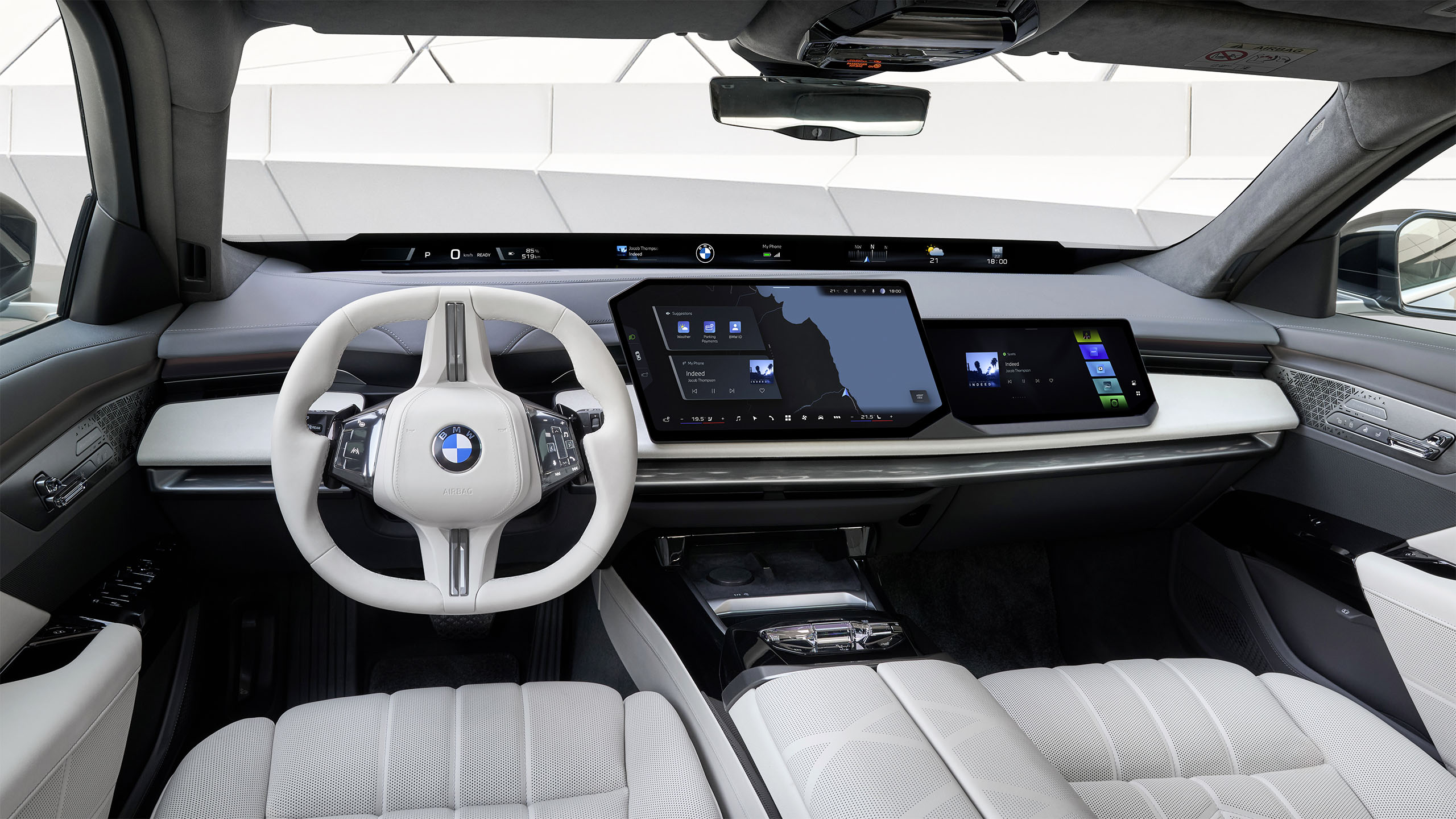


BMW just tore the dashboard out of its flagship sedan and rebuilt it from scratch. The 2027 7 Series, unveiled ahead of its Beijing Auto Show debut, carries the most aggressive mid-cycle update the company has ever attempted. It grafts the controversial Neue Klasse interior wholesale into a four-year-old luxury platform.
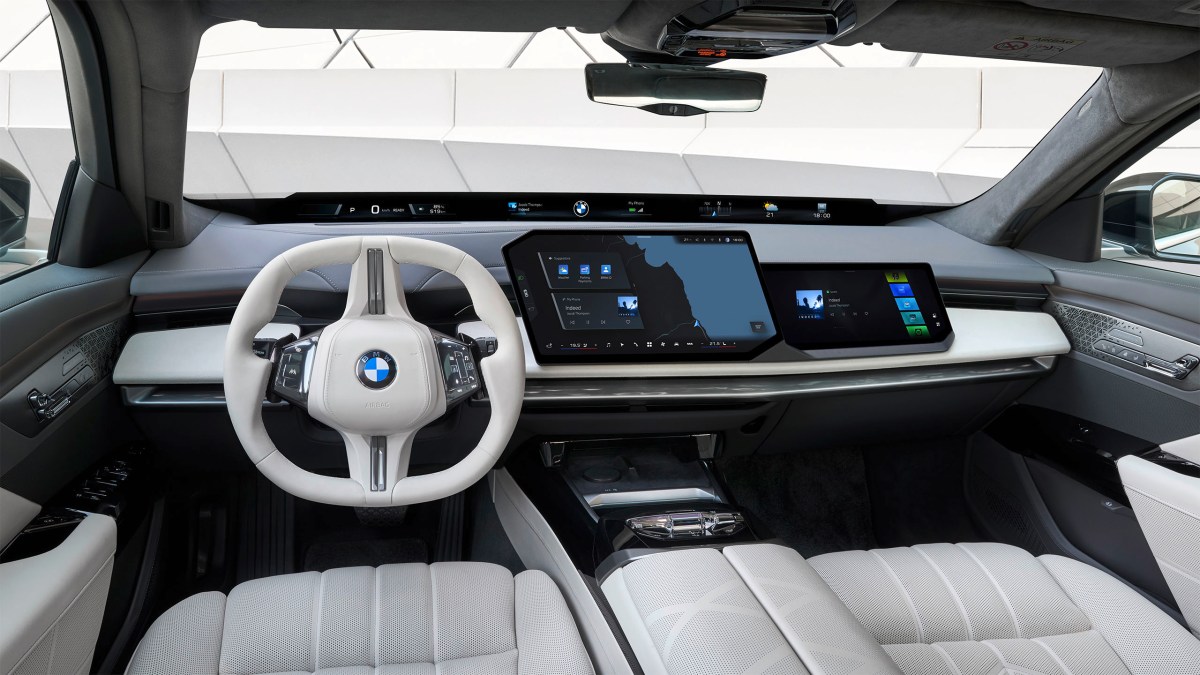
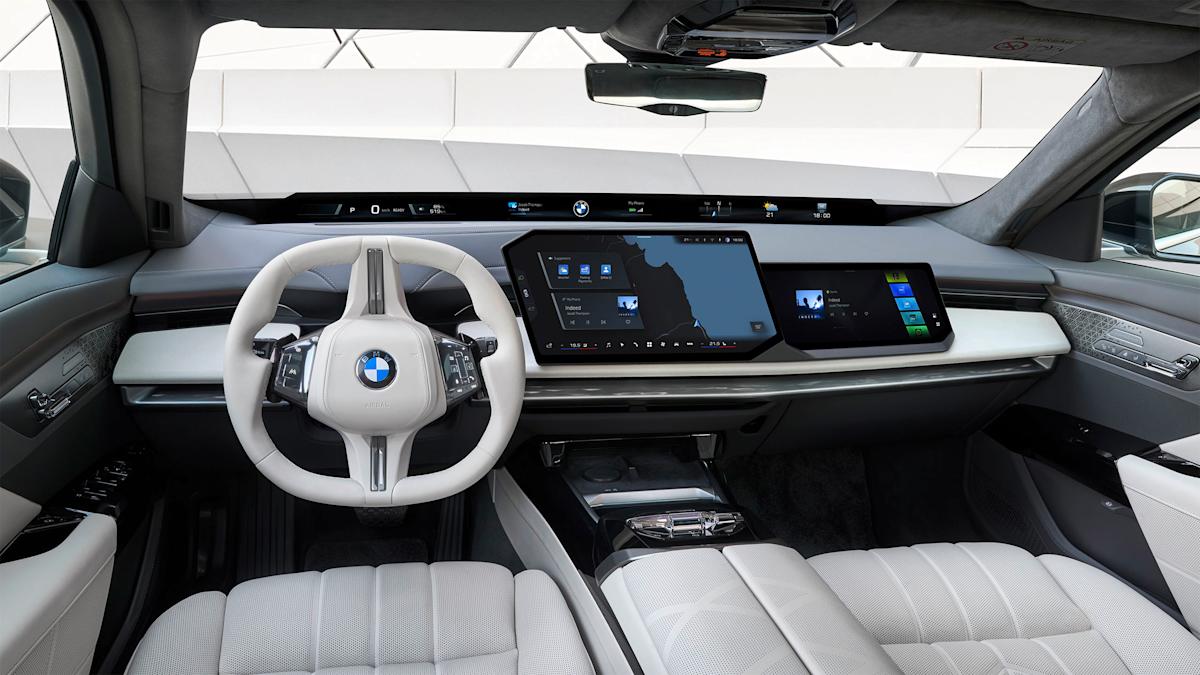
The numbers alone tell the story. A 17.9-inch central touchscreen. A 14.6-inch passenger display, standard on every model. A pillar-to-pillar windshield projection system called Panoramic Vision, a 3D head-up display, and that polarizing vertical two-spoke steering wheel lifted straight from the iX3 and i3.
Gone is the rotary iDrive controller, the physical interface BMW loyalists have defended for two decades. In its place: touch, voice, and gesture. The air vents are hidden, and the instrument cluster is effectively eliminated.
If you sat inside this car blindfolded and someone pulled the cover, you’d swear you were in a Neue Klasse EV. Not a combustion-powered sedan that traces its bones to 2022.
The exterior is less radical but still unusually thorough for a facelift. BMW redesigned the hood — a rarity at mid-cycle — and stretched the taillights dramatically toward the trunk’s center. The kidney grilles are slimmer and more vertical, the headlights reorganized into a stacked layout.
For the first time, 22-inch wheels are available from the factory. A new Dual-Finish paint option requires 75 hours in the paint shop, nearly six times standard.
The real engineering story sits beneath the i7’s floor. BMW partnered with Rimac to integrate Gen6 round battery cells into the existing CLAR architecture, replacing the old prismatic units. The result is a 112.5-kWh pack that pushes the i7 60’s range to 728 kilometers on the WLTP cycle — BMW estimates north of 350 miles on the EPA test.
That’s roughly 75 miles more than the outgoing car. Charging jumps from 195 kW to 250 kW, with a 10-to-80-percent fill in 28 minutes.
The i7 M70 tops the electric range at 671 horsepower, 811 pound-feet, and a 3.8-second sprint to 62 mph. Ten minutes on a fast charger adds 134 miles of WLTP range. Those are flagship EV numbers from a car that doesn’t require a new platform to deliver them.
On the combustion side, the B58 inline-six gets a new turbocharger and Miller-cycle calibration. The 740 xDrive makes 394 horsepower with 48-volt mild-hybrid assist. Plug-in hybrids continue with the 750e at 483 hp and the M760e at 603 hp, though only the 750e is confirmed for the U.S. at launch.
A V8-powered M Performance variant — likely called the M760 — arrives next year. U.S. pricing starts at $99,800 for the rear-drive 740 and $106,200 for the i7 50 xDrive. German order books open May 28.
This is BMW hedging every bet at once. Combustion, plug-in hybrid, and full electric share one body, one interior, one design language — and that design language belongs to the Neue Klasse future, not the G70 past. The company is back-porting its next generation into its current one, testing whether buyers will accept the digital cockpit revolution in a car they already know.
It’s a facelift that admits the original interior was already obsolete. Four years in, BMW looked at its own flagship and decided the whole dashboard needed replacing. That’s not a refresh — that’s a confession.
Production begins in Dingolfing in the coming months, and the sedan debuts publicly in Beijing this week. The 7 Series now carries the future of BMW’s interior design on its shoulders, whether the traditional luxury buyer asked for it or not.
Share this Story