
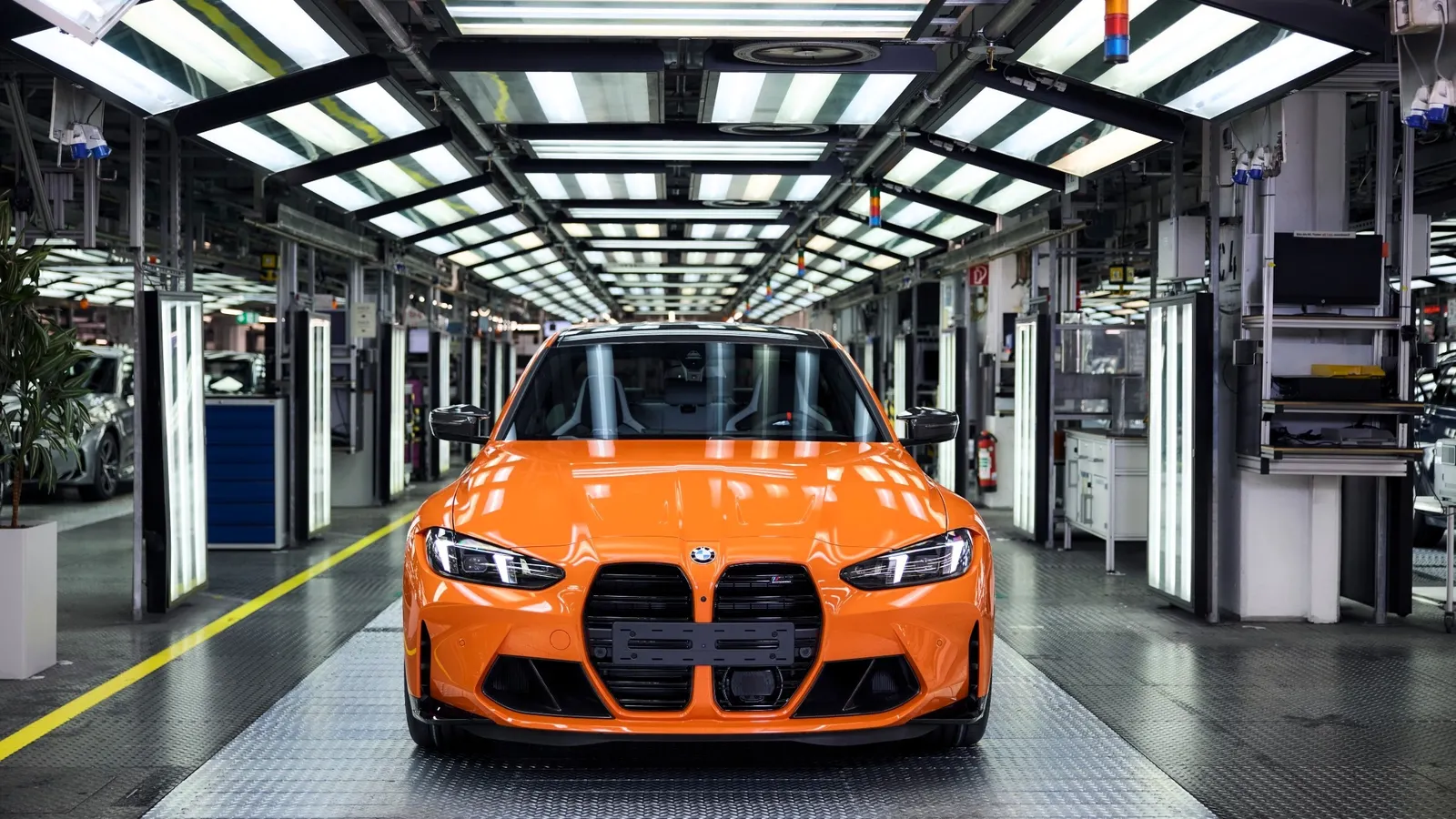


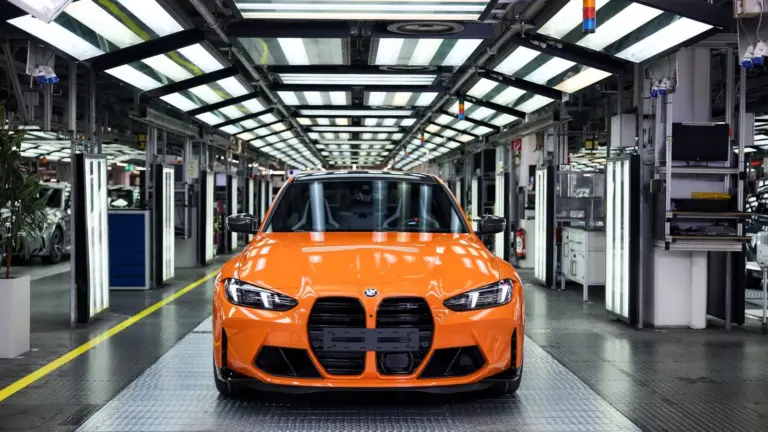
The one-millionth BMW M car rolled off the line at Plant Munich last week. It was an M3 sedan, finished in the traditional way, with a gasoline engine under the hood. The timing is not subtle.
That milestone M3 was built in a factory that will stop making internal combustion vehicles entirely by late 2027. BMW is spending 650 million euros to rip out roughly a third of its 104-year-old Munich facility and rebuild it for electric-only production. New body shop, new assembly line, new logistics.
The first electric M3, a quad-motor sedan riding on an M-specific version of BMW’s Neue Klasse architecture, is scheduled to begin production there next year. Each wheel gets its own motor. The battery pack gets revised cooling and cell chemistry compared to the standard i3 sedan, engineered to handle the kind of peak and sustained power loads that M buyers expect.
So the millionth M car is a goodbye card. BMW dressed it up as a celebration, but the math tells a different story. Forty years of M3 production at Munich ends when the last gasoline model leaves the line.
The combustion M3 itself isn’t dead, BMW says, but it will need to find another factory. Munich won’t have room for it anymore.
The plant opened in 1922 building aircraft engines and motorcycles. Vehicle production started in 1952 with the BMW 501. The 3-Series has called it home since 1975.
More than 170,000 cars came out of Munich in 2025 alone, a mix of 3-Series sedans, Touring wagons, 4-Series Gran Coupes, M derivatives, and the electric i4. That entire gasoline lineup gets evicted within the next 18 months.
BMW hasn’t committed to a specific production date for the electric M3 beyond “next year.” That ambiguity matters when you’re talking about a car that replaces the single most important nameplate in M’s history. The original M3, launched in 1986, built the entire M division’s reputation.
Every generation since has been the yardstick for sport sedans. Handing that job to a battery-electric car with four motors is not a small bet.
The Neue Klasse platform underneath is BMW’s answer to a market that has been moving faster than Munich anticipated. The standard i3 sedan arrived earlier this year and is already in production at the same plant. The electric M3 will share that architecture but diverge where it counts, with a drivetrain and thermal management system tuned for track-capable performance rather than commuter efficiency.
What sits unresolved is the split identity BMW is trying to maintain. The company insists the gasoline M3 lives on, displaced but not discontinued. Meanwhile, its spiritual home gets converted into an EV factory.
Finding another production line for a car whose market is shrinking while pouring three-quarters of a billion euros into electrifying the original one tells you where the priority lies.
The millionth M car is a nice round number. It also happens to be one of the last of its kind to leave the building that started it all.
Share this Story