
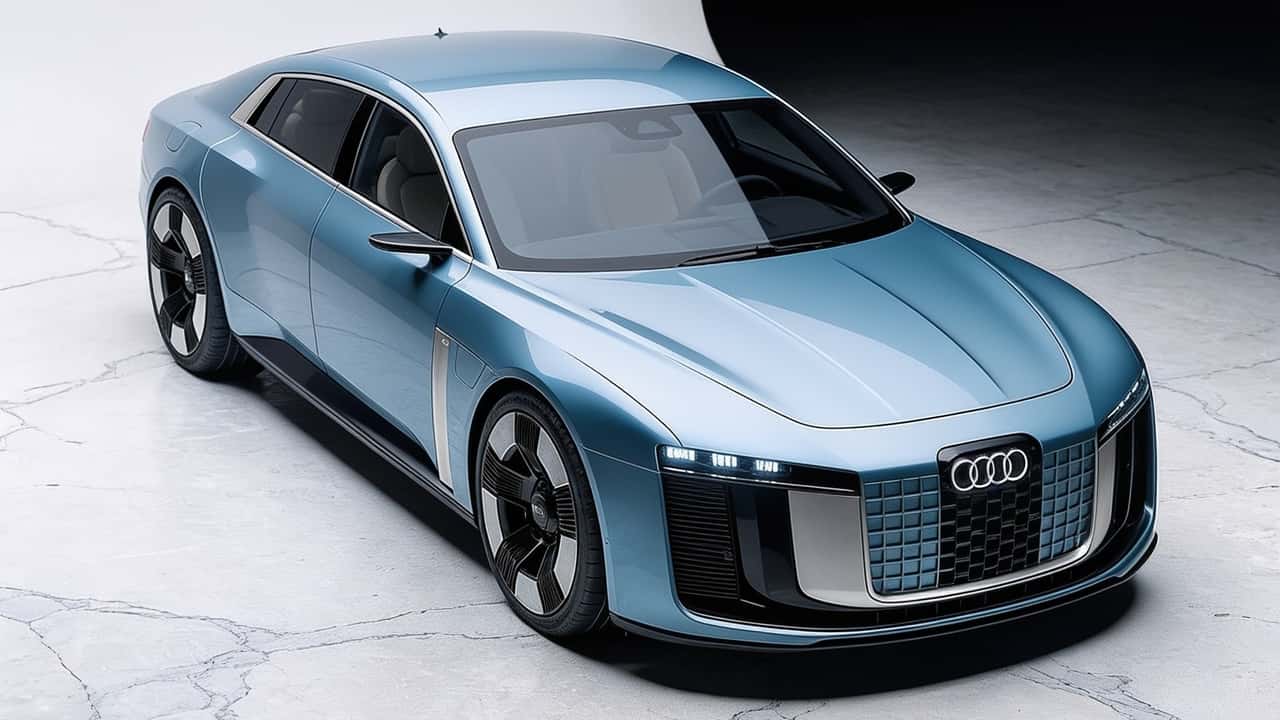


The Audi A8 has no confirmed production plan, no confirmed factory, and no confirmed timeline. What it does have, courtesy of Italian designer Luca Serafini, is a vision sharp enough to make Ingolstadt’s product planners lose sleep.
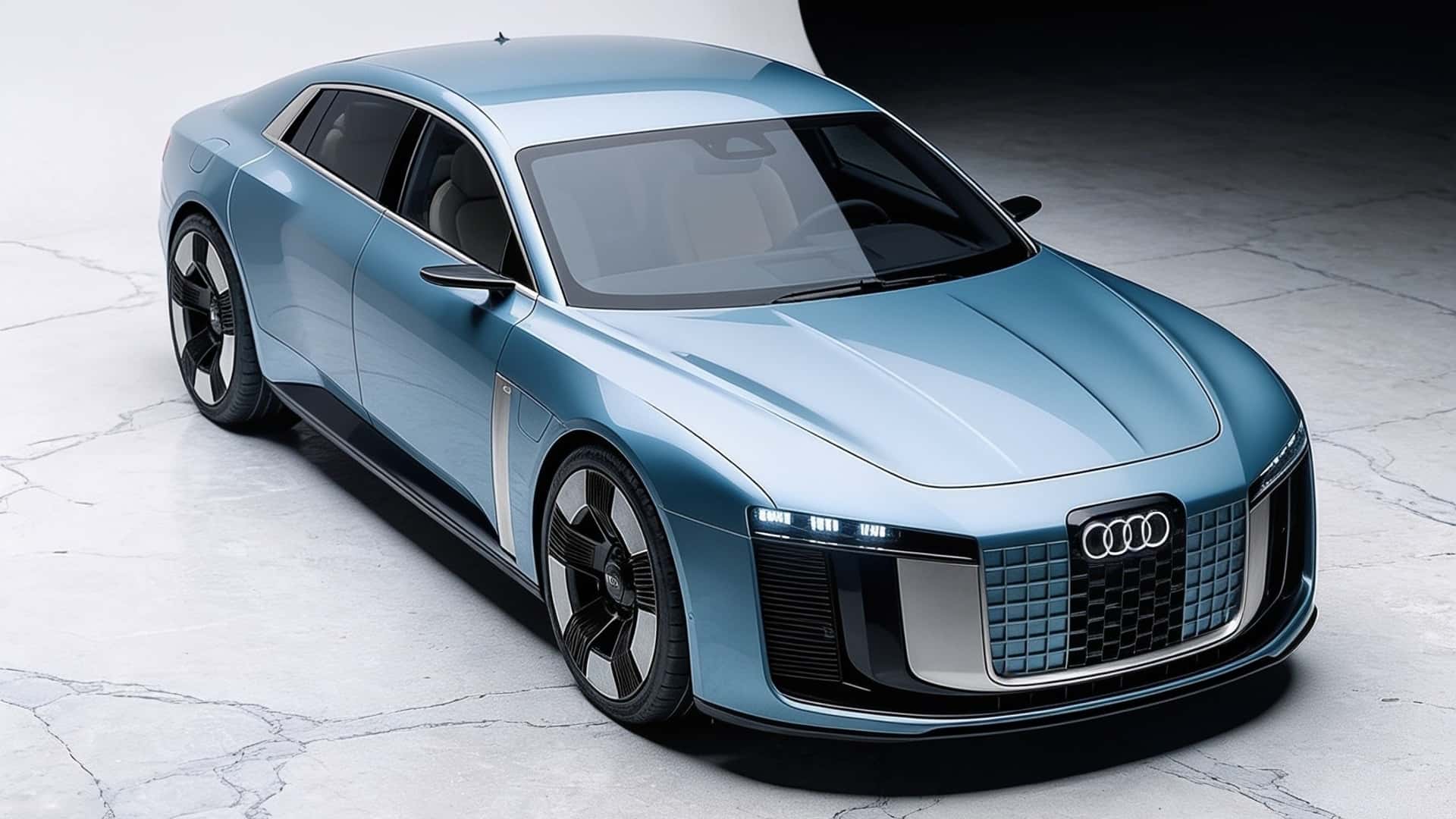
Serafini’s unofficial rendering merges the clean, stripped-back language of Audi’s Concept C show car with the long-wheelbase authority a flagship sedan demands. The result ditches the chrome-heavy formula that luxury automakers have leaned on for decades. In its place: brushed metal accents, a vertical side strake, and a grille treatment that whispers instead of shouts.
“The aim is to transfer luxury and premiumness through unexpected treatments, finishes, and contrasts that surprise the eye instead of relying on traditional chrome and gloss,” Serafini said.
The soft blue paint plays against dark and metallic elements in a way that feels more architectural than automotive. Think Bauhaus restraint crossed with Mid-Century Modernism. Think an Eames Lounge chair on 21-inch wheels.
That this rendering exists at all speaks to the vacuum Audi has created by letting its flagship go dormant. The previous A8 quietly exited without a successor waiting in the wings. The company has been publicly working through what comes next, if anything does.
Reports indicate Audi is in active discussions with Porsche about building a future A8 at the Leipzig plant rather than its traditional home in Neckarsulm. The logic is financial. Sharing the Panamera’s platform and production line would slash development costs and open access to Porsche’s powertrain portfolio, including hybrid and potentially electric options.
Those talks remain unresolved. No timeline has been given. No platform decision has been announced publicly.
The silence is telling. Audi has been willing to invest $4 billion in a new Georgia factory for U.S. production and has confirmed its electric sports car will ride on Porsche’s Boxster and Cayman EV architecture. It is making big, expensive bets across its lineup. The A8, though, sits in a holding pattern that suggests internal debate about whether a traditional flagship sedan still earns its place in the portfolio.
That hesitation is understandable. The full-size luxury sedan segment has been contracting for years, squeezed from above by ultra-luxury brands and from below by large SUVs that print money with far less engineering complexity. BMW still builds a 7 Series. Mercedes still builds an S-Class. But neither company seems entirely confident the segment will sustain the investment it requires five or ten years from now.
Serafini’s rendering makes the counterargument without saying a word. A flagship defines a brand’s ambition. It tells the world what you believe design should look like at its most uncompromised.
The Concept C language, with its rejection of ornamental clutter, could give a new A8 an identity distinct from anything Stuttgart offers. Whether Audi’s executives see it that way is another question entirely. The brand has publicly committed to electrification and crossover-heavy lineups.
A low-volume luxury sedan built on borrowed bones in someone else’s factory is not the kind of project that dominates internal strategy meetings. But flagships have never been about volume. They are about ambition, and right now, Audi’s ambitions for the top of its lineup remain frustratingly undefined.


Share this Story