
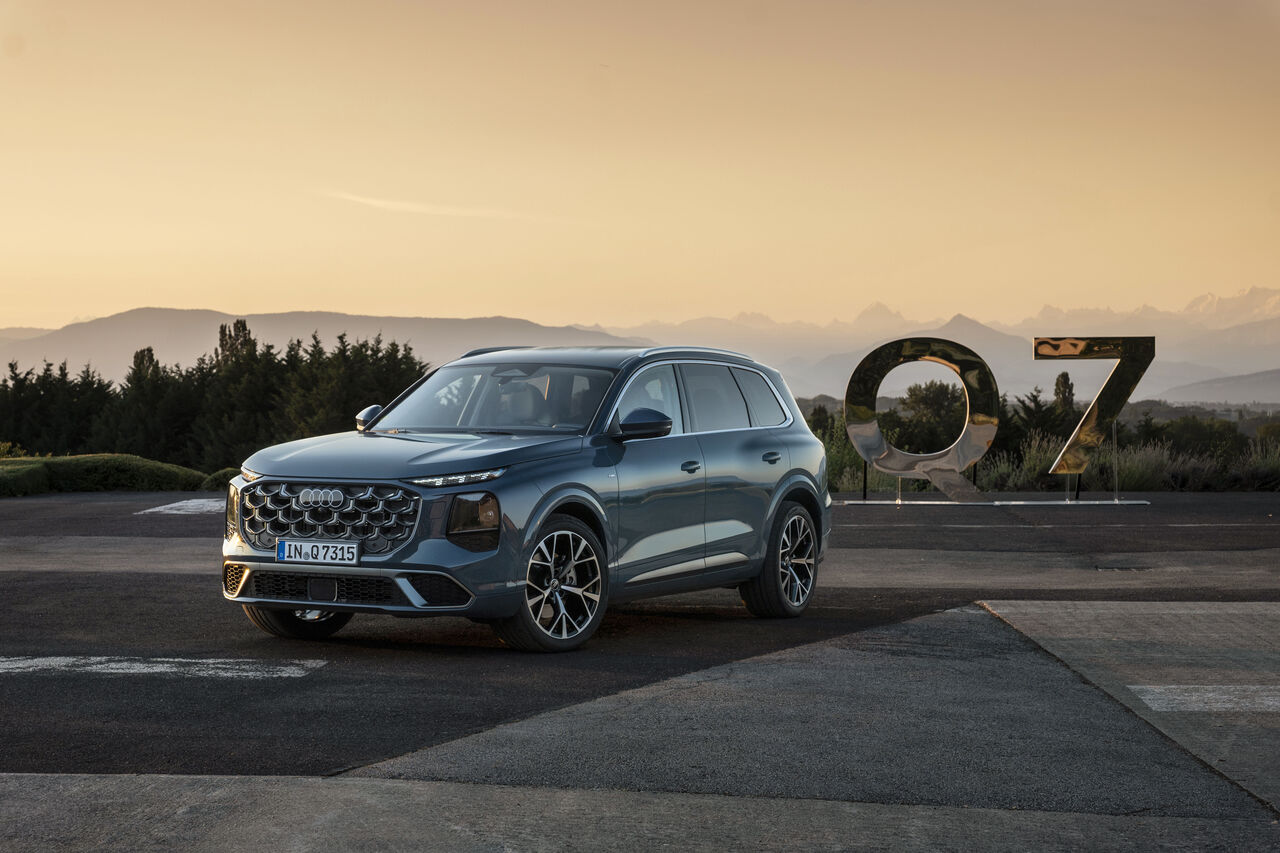


The Audi Q7 just did something no production car has done before. It scored a perfect 100 percent in Euro NCAP’s Post-Crash Safety category, a metric that measures what happens in the minutes after a wreck, not during one.
That distinction matters more than it might first appear. For decades, the safety conversation in this industry has orbited around crumple zones, airbag counts, and crash avoidance tech. What happens after the impact, when occupants are trapped and rescue crews are en route, has been an afterthought.
Euro NCAP started grading it anyway, and until now, nobody had aced it.
The Q7 earned five stars overall, which is expected for a flagship SUV from a premium German brand. But the post-crash result is the real story. Euro NCAP evaluates automatic emergency calling, how well rescue teams can access the vehicle, whether doors unlock and open after a collision, and whether seatbelt buckles remain functional when the electrical system is dead. The Q7 maxed out every sub-category.
Central to that score is Audi connect emergency call, which goes beyond the legally mandated eCall system. When sensors detect a serious collision, the system automatically contacts emergency services and transmits not just basic impact data but also vehicle color, model, and refined location coordinates. It supports multilingual communication and, with consent, routes a callback to a phone paired with the car.
That kind of specificity shaves time off rescue response. In trauma medicine, minutes are measured in survival rates.
Then there’s the multicollision brake. Crash sensors trigger automatic braking after an initial impact, bringing the Q7 to a stop and engaging the parking brake to prevent rollaway. Hazard lights activate, though the driver retains override capability.
The system is designed to prevent pileups, a scenario where a disabled vehicle drifts into traffic or slides into another obstacle.
Audi also supplies detailed rescue data sheets and guides specific to the Q7’s construction. These documents tell firefighters and paramedics exactly where high-voltage lines run, where to cut, and where not to. For a vehicle that can seat up to seven people, including children in a third row, that kind of precision for first responders is not a luxury feature. It’s an engineering obligation.
The broader context here is that Euro NCAP has been steadily expanding what it tests. The organization has pushed automakers beyond passive safety into active driver assistance, pedestrian protection, and now post-crash protocols. Manufacturers that once earned five stars on airbag performance alone now face a far wider evaluation matrix.
Audi’s perfect post-crash score reflects how seriously the brand has taken this expanding rubric. It is also a competitive marker. The A6 e-tron recently picked up top safety ratings in both Europe and the United States.
A pattern is forming. Audi appears to be positioning safety performance, specifically in categories competitors haven’t prioritized, as a brand differentiator.
Whether rival manufacturers follow suit will depend on how much weight consumers and regulators place on what happens after the crash. Euro NCAP clearly thinks it matters enough to score. Audi is the first to prove it can be perfected.


Share this Story