
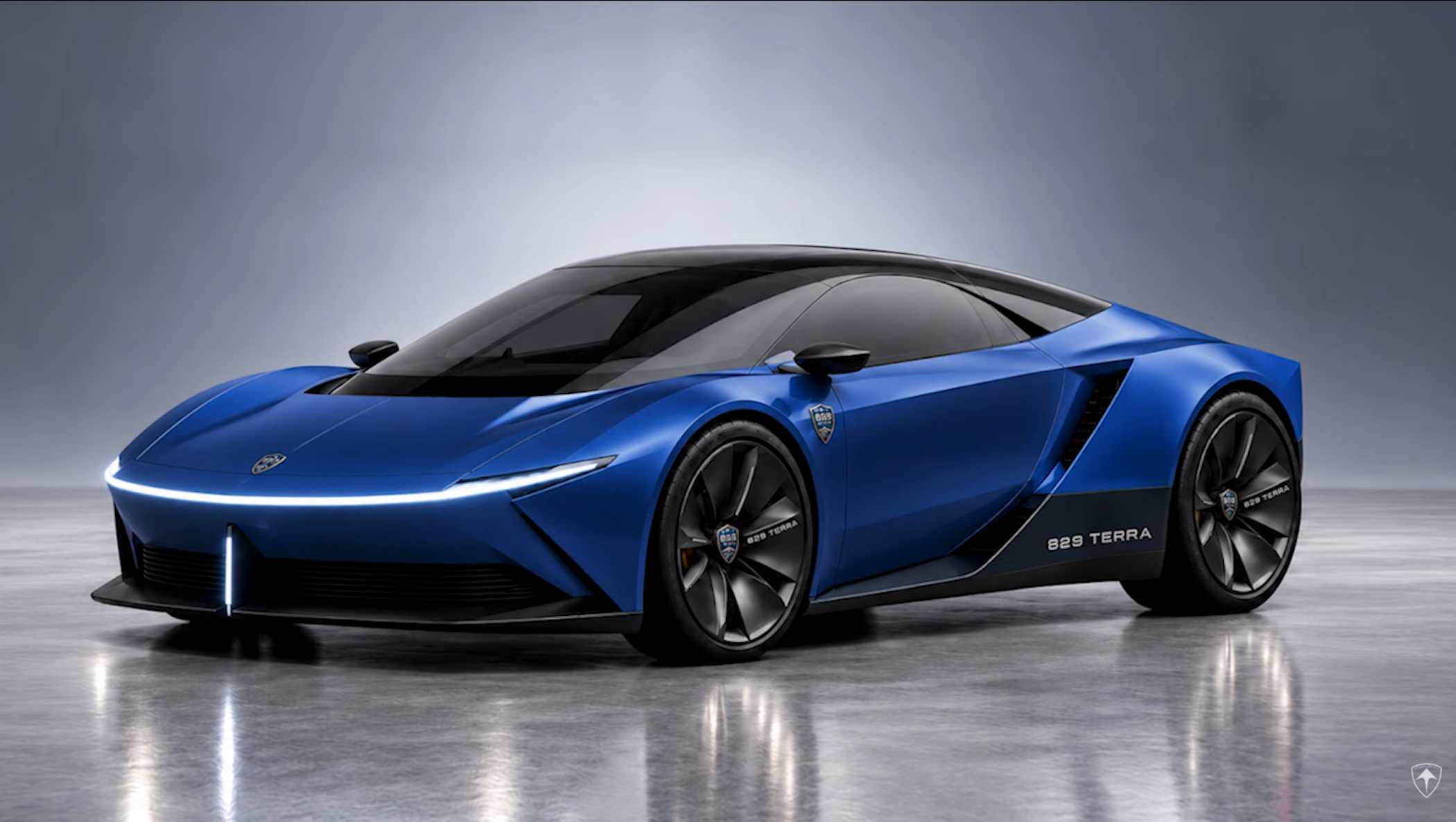


A Rome-based 3-D printing company wants to resurrect the spirit of the Lancia Stratos with a mid-engined, V-6-powered supercar offered in three flavors: street, track, and rally. Angelilli Automobili calls it the Tipo 829, borrowing the internal designation Lancia used for the original Stratos back in 1971. The ambition is enormous, but the production track record is nonexistent.
The Tipo 829 packs a 3.2-liter V-6 making 500 horsepower, sent through all four wheels. Three trims split the car’s personality. Pista is the track weapon, Strada is the street car, and Terra is the rally-inspired variant with the highest ride height, drawing obvious comparisons to the Porsche 911 Dakar and the late Lamborghini Huracán Sterrato.
Terra is also the trim that most directly channels the original Stratos, a car that dominated the World Rally Championship from 1973 to 1975 with a borrowed Ferrari V-6 and a fiberglass body light enough to dance on gravel. Lancia built fewer than 500 of them. Every one is now worth a fortune.
Angelilli claims the Tipo 829 was developed with the late Nicola Materazzi, the engineer behind the Ferrari F40 who also helped transform the Stratos into a turbocharged Group 5 monster. That is a serious pedigree to invoke, and Angelilli leans into it heavily. The company’s earlier projects include a mid-engined reinterpretation of the Porsche 911 and a set of titanium 3-D-printed brake calipers with an organic, almost alien aesthetic.
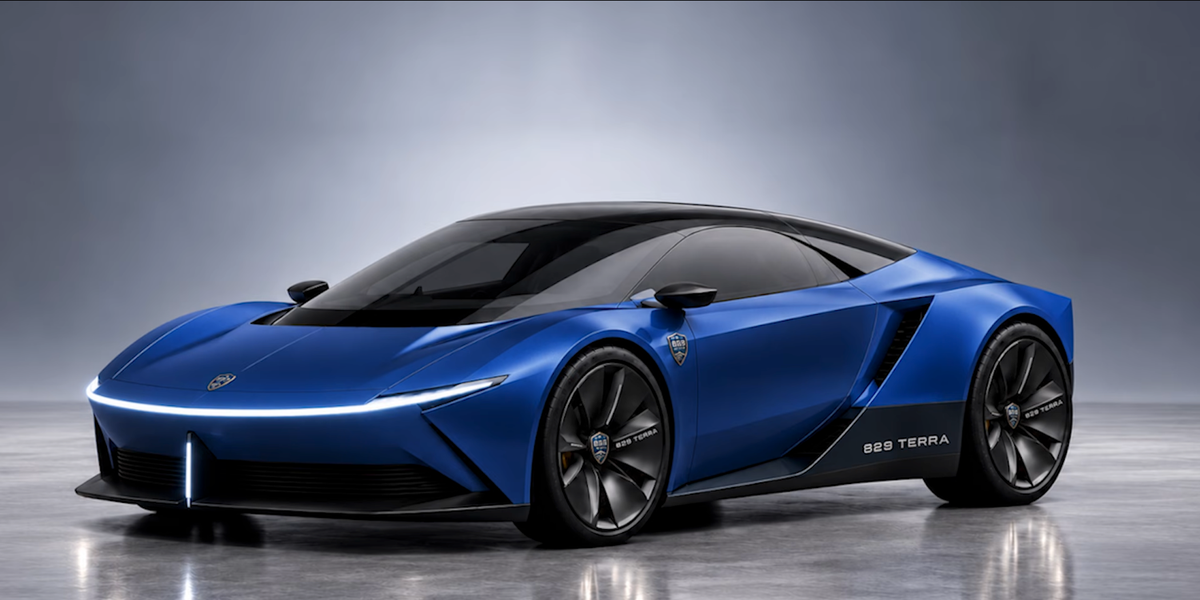
Wild ideas, striking renderings, lots of press coverage. But here is where the story gets complicated. Angelilli has announced three products so far: a reborn Lancia Delta Integrale, a hybridized take on the F40, and now this neo-Stratos, and all three remain in the prototyping phase with not one reaching a customer’s hands.
The automotive world is littered with startups that announced beautiful cars and never shipped them. For every Pagani that clawed its way from sketch to production, a dozen small-volume dreamers burned through investor money and vanished. Angelilli’s 3-D printing expertise could theoretically help keep weight down and speed up prototyping, but titanium brake calipers and carbon renders do not equal a road-legal vehicle with crash testing, emissions compliance, and a supply chain.
The business case for rally-inspired exotics does exist. Porsche proved it with the 911 Dakar, which sold out quickly despite a price north of $220,000. Lamborghini moved every Sterrato it built. Buyers with deep pockets clearly want mid-engined machines that can handle more than manicured tarmac.
Whether Angelilli can feed that appetite is another question entirely. Details on pricing and delivery timelines remain vague. The company calls the Tipo 829 the third chapter of a trilogy, but chapters one and two are still unwritten in any physical sense.
The original Stratos succeeded because Lancia had factory resources, a motorsport program, and Ferrari engines on tap. It was still a nightmare to homologate and barely scraped past the 500-unit production requirement. Building a spiritual successor with a fraction of those resources, no matter how advanced the printing technology, is a different kind of rally stage altogether.
Angelilli says the Terra will be first to market. No date has been given.
Share this Story