


For eight euros — about eleven bucks — you can walk into the Museo Alfa Romeo outside Milan and stand face to face with the 1932 Gran Premio Tipo B that Tazio Nuvolari used to humiliate the Nazi racing teams at the Nürburgring. That alone is worth the taxi fare from the city center.
Car and Driver’s Elana Scherr recently did the full tour, including the weekend-only storage room visit, and came back with more than 200 photos and a story that reads less like a museum review and more like a love letter written by someone who knows exactly what she’s looking at.
The museum is organized into three sections — Timeline, Design, and Racing — but the real education starts before you even reach the cars. Alfa built airplane engines for both world wars, raced speedboats powered by flat-plane V-8s, and started life in 1910 as A.L.F.A., an acronym for Anonima Lombarda Fabbrica Automobili. “Public Lombardy Car Factory.” Not exactly poetry, but honest.
The timeline section walks you through the full arc of the company, from the 1910 24 HP that actually made 42 horsepower to the 1985 Alfa 75, which Scherr’s tour guide described with genuine emotion as “the last of the real Alfas.” That dividing line — 1986, the year Fiat bought the company — still cuts deep for purists. Everything after is viewed with suspicion, no matter how pretty the Pininfarina bodywork or how sweet the V-6.
Between those bookends sits a parade of machines that explain why Alfa Romeo inspires devotion bordering on irrational. The 1925 RL Super Sport with its hand-hammered aluminum body. The 1930s Mille Miglia racers bristling with triple headlights and dual spare tires, carrying no seatbelts or roll bars but equipped with a Medal of Saint Christopher.
The 1955 Giulietta came in a shade of peach so perfectly mid-Fifties it could be a paint chip from a Palm Springs motel. Then there’s the Montreal, Alfa’s gorgeous misfire — a Gandini-designed, dry-sump V-8 muscle car launched directly into the teeth of the 1973 oil crisis. Commercial disaster. Collector gold.
Scherr wonders if Plymouth’s second-gen Road Runner borrowed its strobed rear pillar. It’s a fair question nobody at Chrysler will ever answer.
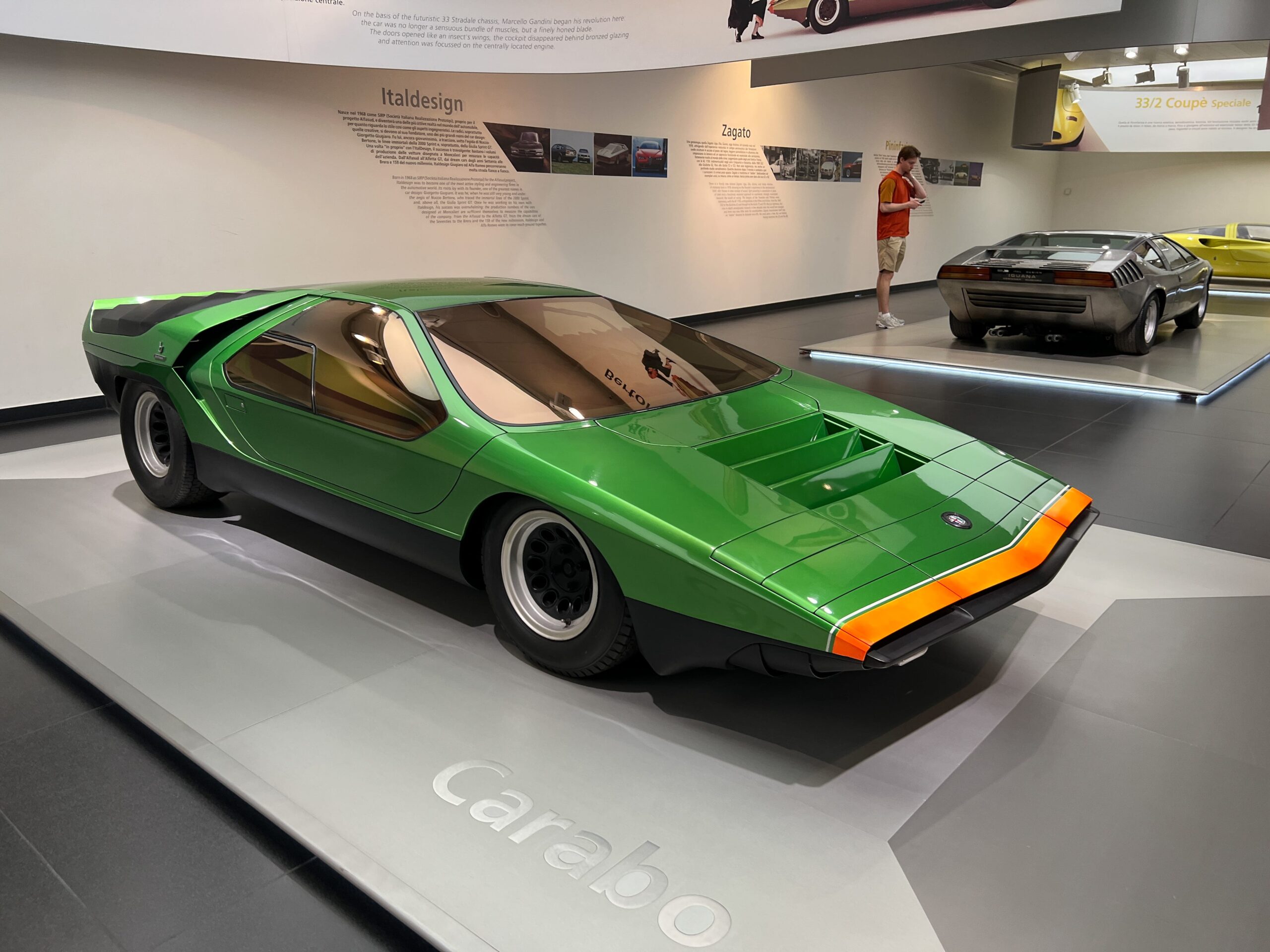
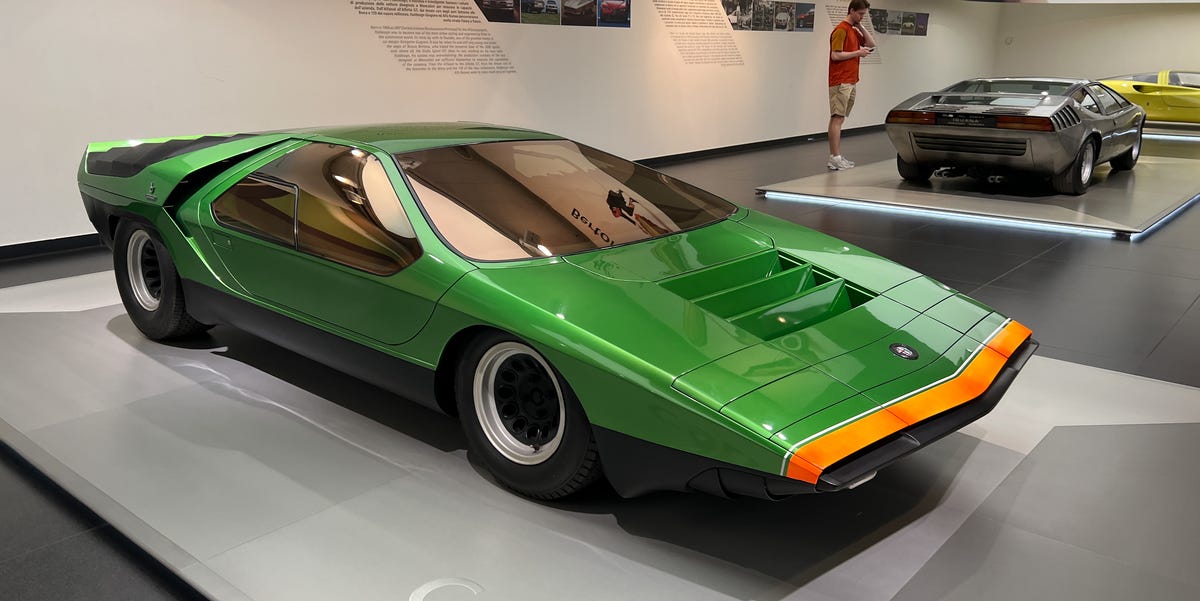
The design section is where the museum stops being informative and becomes visceral. The 1968 Carabo concept — a razor-edged wedge shown at the Paris auto show — sits in a room that reportedly drew an audible gasp from Scherr. Many historians credit it as the car that launched the wedge design trend. Lamborghini’s Countach, every Giugiaro folded-paper fantasy of the 1970s — they all trace a line back to this Alfa.
The 1966 Spider, forever known as the Duetto despite a cookie company’s legal objections, gets a dedicated display for its 60th anniversary in 2026. It’s the car that made Dustin Hoffman look like he belonged behind a steering wheel in The Graduate. Alfa held a public naming contest, and the public delivered “Duetto” — descriptive, elegant, and already trademarked by a snack cake manufacturer.
The name stuck anyway, in the way that good names always do when the lawyers aren’t looking.
What makes this museum different from the corporate showrooms that pass for heritage centers at most automakers is the texture. The badge evolution alone tells a political history of Italy — laurel wreaths added for racing glory, Savoy monarchy knots removed after the republic, “Milano” dropped when production moved south toward Naples. The red cross and the serpent eating a man remain, because Milan keeps its symbols close.
A private tour runs about a hundred dollars. The weekend storage room add-on costs extra. The standard admission is the price of a decent espresso and a cornetto. For what you get — a century of ambition, beauty, mechanical daring, and spectacularly poor business timing — it might be the best deal in Milan.

Share this Story