
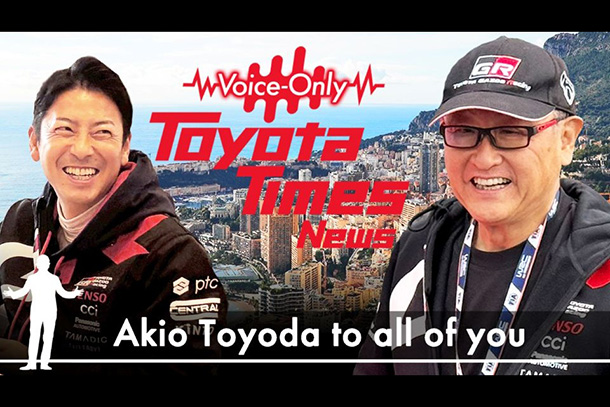


Akio Toyoda hasn’t been invited to Toyota’s entrance ceremony. Nobody asked him to attend the New Year’s address either. The chairman of the world’s largest automaker found out about his own WRC team’s standings secondhand, late at night, from a team president who happened to mention them in passing.
This is the man some employees still accuse of pulling strings from behind the scenes.
Speaking in Monaco during the WRC Rallye Monte-Carlo in late January, Toyoda laid bare a tension that would make most corporate boards squirm. The company he spent fourteen years reshaping as president is drifting back toward the siloed, risk-averse bureaucracy he inherited. And the clock on his ability to stop it is running out.
Toyoda identified three priorities for his remaining time as chairman: developing leaders who prevent Toyota from becoming ordinary, shaping the future of the Toyota Group, and promoting cultural activities. The first consumes him most. He described Toyota’s functional divisions hardening again into fiefdoms where information flows up within each silo but never across, and certainly not to him.
“Don’t interfere with my function, and I won’t interfere with yours” — the old gentlemen’s agreement he dismantled is quietly reassembling itself.
His frustration was specific and unvarnished. Toyota’s training system, he said, produces generalists who perform at sixty or seventy percent across the board — people AI will devour. “Before being replaced by AI, it’s important not to aim for being halfway at everything,” he said, urging employees to sharpen one irreplaceable skill.
“The one thing you can say is, ‘This is where I won’t lose to anyone.’ And I don’t think there’s much time left to do that.”
The WRC provided a convenient contrast. Toyota Gazoo Racing’s rally team swept Monte-Carlo with a driver lineup that includes veterans Sébastien Ogier and Elfyn Evans alongside surging youngster Oliver Solberg. Toyoda pointed to TGR-WRT’s refusal to issue team orders as proof of what a healthy competitive culture looks like.
Three drivers fought for last year’s championship under equal conditions, sharing information despite being rivals. Trust built over years of fairness. That trust is exactly what he sees eroding inside Toyota Motor Corporation.
He was remarkably candid about the isolation of power. Roughly ninety percent of employees, he estimated, still feel hesitant to approach him. He described his European security detail as virtual house arrest, sneaking out for early morning walks just to see Monaco’s streets.
When Executive Vice President Nakajima publicly declared at the Tokyo Auto Salon that many employees want to make great cars “even without Morizo,” Toyoda didn’t bristle. He celebrated it. “If they win Le Mans and say, ‘We can win even without Morizo,’ I’d be glad to hear it.”
That’s not false modesty. It’s succession anxiety wearing the mask of encouragement.
Toyoda proposed renaming February 24 — the anniversary of his 2010 U.S. congressional testimony during Toyota’s unintended acceleration crisis — from “Toyota Restart Day” to “Toyota Culture Day.” The shift signals his belief that institutional memory alone won’t sustain the company. Something deeper, something shared beyond quarterly targets, needs to bind the group together.
He pointed to the Daihatsu subsidiary regaining its spirit after scandal, creating its own commercial without Toyota Motor dictating terms. The Toyota Group, he insisted, should stop treating Toyota Motor as “Toyota-sama.” The honorific reveals a hierarchy he wants dismantled.
His parting message to employees was disarmingly simple and slightly desperate: take risks, fail, learn. Then he caught himself. “This is another problem with Toyota people. They might start thinking, ‘If I fail, I’ll get praised.’ It could turn into a parade of people showing off their failures.”
He laughed. But he wasn’t joking. A 370,000-employee company that can turn even failure into a compliance exercise is precisely the ordinary company he’s trying to prevent. Whether anyone besides Toyoda fully grasps the urgency remains the open question — one he may not be around long enough to answer.
Share this Story