
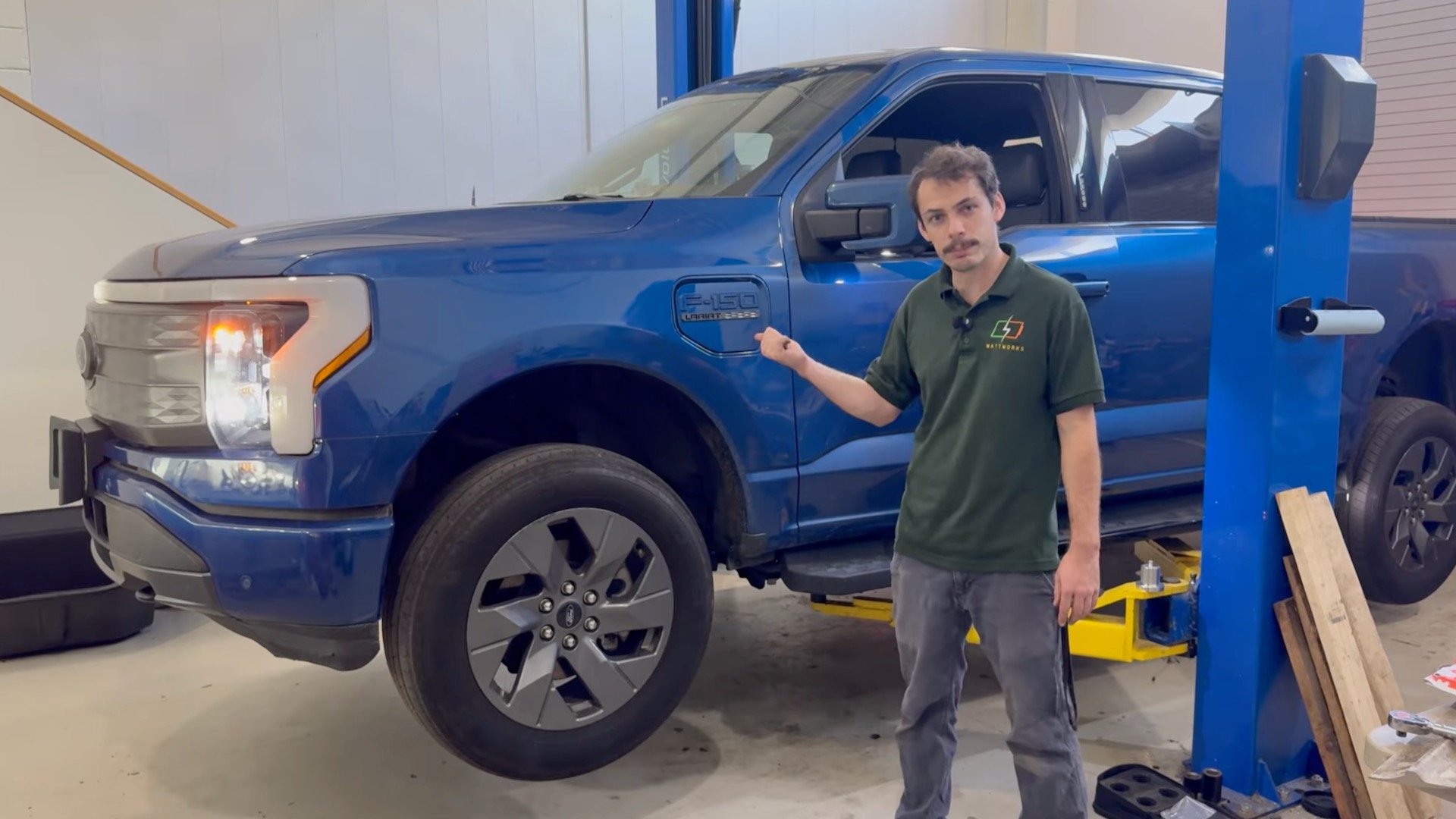


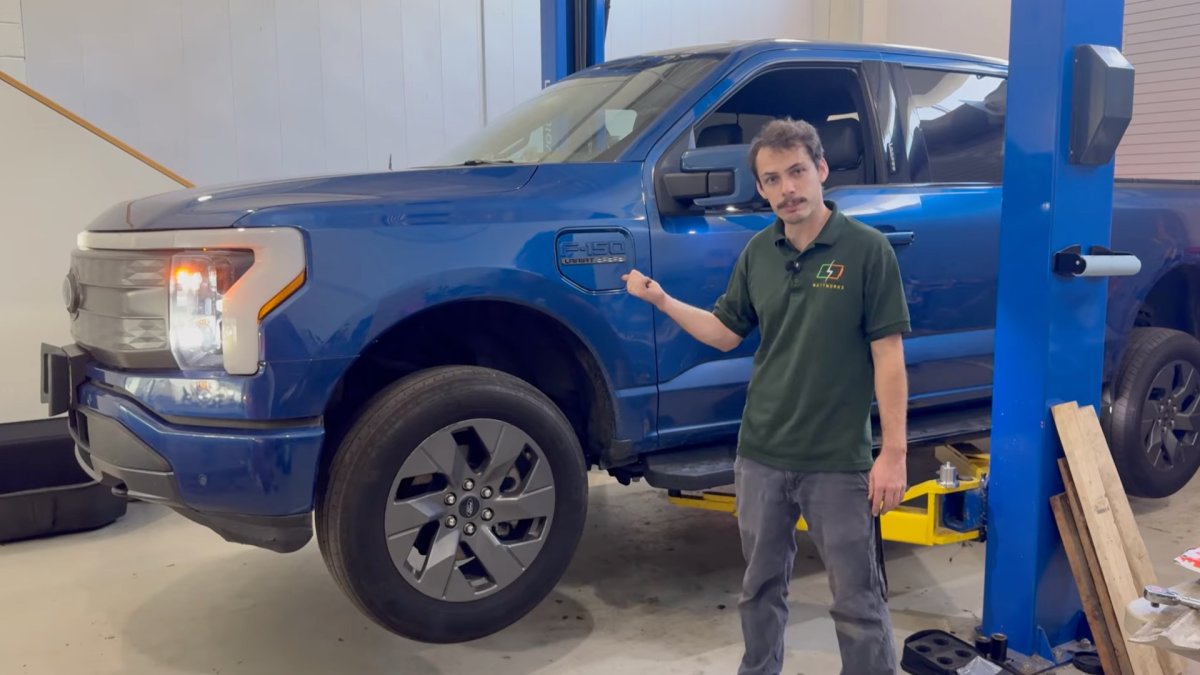
A 2022 Ford F-150 Lightning rolled into the Out of Spec Renew shop with 233,930 miles on the odometer, a busted rear window, a cracked windshield, and enough dents to suggest it had been working for a living. It needed a new battery pack. Not because the whole thing was toast, but because one module out of nine had gone bad.
That single detail tells you more about EV battery durability than any press release or corporate talking point ever could.
The truck is a Lariat Standard Range, equipped with Ford’s 98-kWh pack, which delivered an EPA-rated 230 miles of range when it was new. Nearly a quarter million miles later, the fourth module showed a 317-millivolt imbalance between cells. Some cells were sitting at roughly 60% state of charge while others hovered around 10 to 15%.
Host Alex from Out of Spec Renew suspects a weak internal short, though no formal diagnosis was completed before the swap.
Replacing just the one faulty module would have been the cheaper fix in theory. In practice, finding a used module with a state of health matching the other eight in a truck this well-worn is nearly impossible. Used Lightning packs, on the other hand, are available at reasonable prices. So they went with a full swap.
The job itself was not exotic. Disconnect the 12-volt battery buried behind the front trunk, drop the skid plates and underbody protection, undo eight bolts, and the pack comes out. The replacement pack had some damaged connectors, so the team scavenged good ones from the original.
This truck puts real numbers behind an emerging truth about EV batteries. A recent study cited by Ars Technica found that most electric vehicles retain 90% of their original battery capacity after about 93,000 miles. This Lightning went two and a half times further than that before needing intervention, and the failure was localized to a single module rather than systemic degradation.
The irony is that this kind of real-world evidence arrives just as Ford has pulled the plug on the Lightning. Production ended with the 2025 model year. The all-electric replacement, codenamed T3, was scrapped after CEO Jim Farley once compared it to the Millennium Falcon.
Ford is now pivoting to a full-size pickup with a gasoline range extender and a smaller all-electric truck called the Fathom. So the truck that just proved its battery architecture could handle nearly 234,000 hard miles no longer has a successor in the pipeline.
Ford spent years battling public skepticism about EV longevity, endured wild price swings across the Lightning’s short life, and shuffled trim levels like a deck of cards. Now it has the best possible answer to the “but what about the battery?” question, and the product line that generated it is already dead.
The Out of Spec crew bolted in the replacement pack and the Lightning was ready to keep going. Whether anyone at Ford is paying attention to that fact is a different question entirely.
Share this Story