
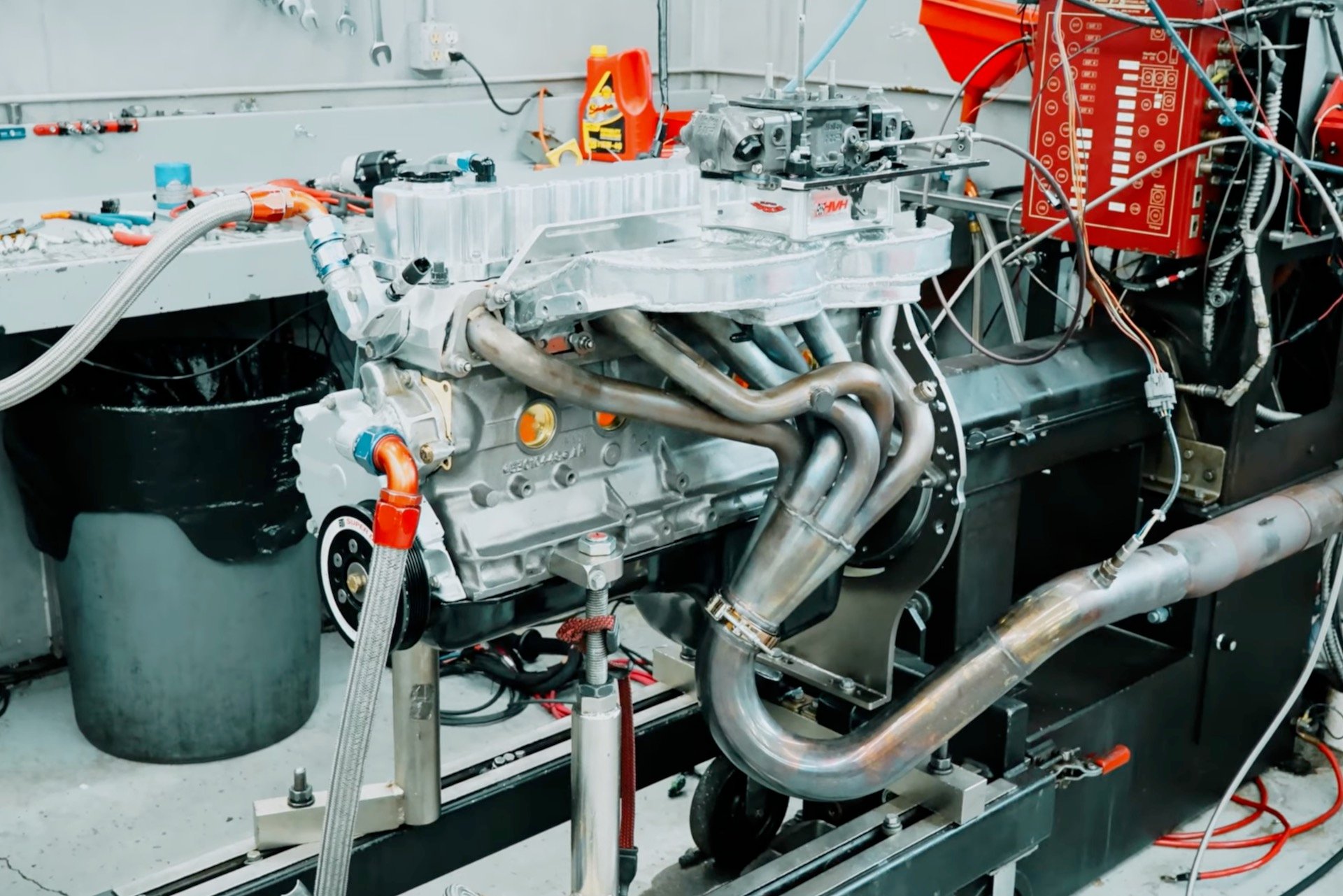


The Jeep 4.0-liter inline-six spent two decades as the most dependable, least exciting engine in any driveway. It made 190 horsepower on a good day, shrugged off abuse, and never once tempted anyone to call it fast. A North Carolina shop just coaxed 434 horsepower out of one without a single turbo or supercharger in sight.
That’s 14 hp more than the standard-output version of Stellantis’ modern Hurricane twin-turbo inline-six, the engine currently powering the Grand Wagoneer. The comparison is absurd, and that’s the point.
Newcomer Racing, based in North Carolina, is the shop responsible. Owner Keith Newcomer bored and stroked the old Jeep six to 5.0 liters of displacement and cranked the compression ratio to 13:1. The engine is naturally aspirated, breathing on its own, making power the hard way.
The build was commissioned by a customer with a 1996 Cherokee destined for mud drags. The brief was specific: a wide, usable power band to keep big tires spinning through muck, with strong torque down low and enough top-end pull to stay in the fight. That’s a trickier ask than just chasing a peak number on a dyno sheet.
Newcomer initially set up the engine with a carburetor and a custom intake manifold, then switched to electronic fuel injection. According to an EngineLabs video documenting the build, both configurations produced similar peak power. The customer also wanted to retain the Cherokee’s stock wiring harness, so Newcomer stripped it down to the essentials, shedding unnecessary weight in the process.
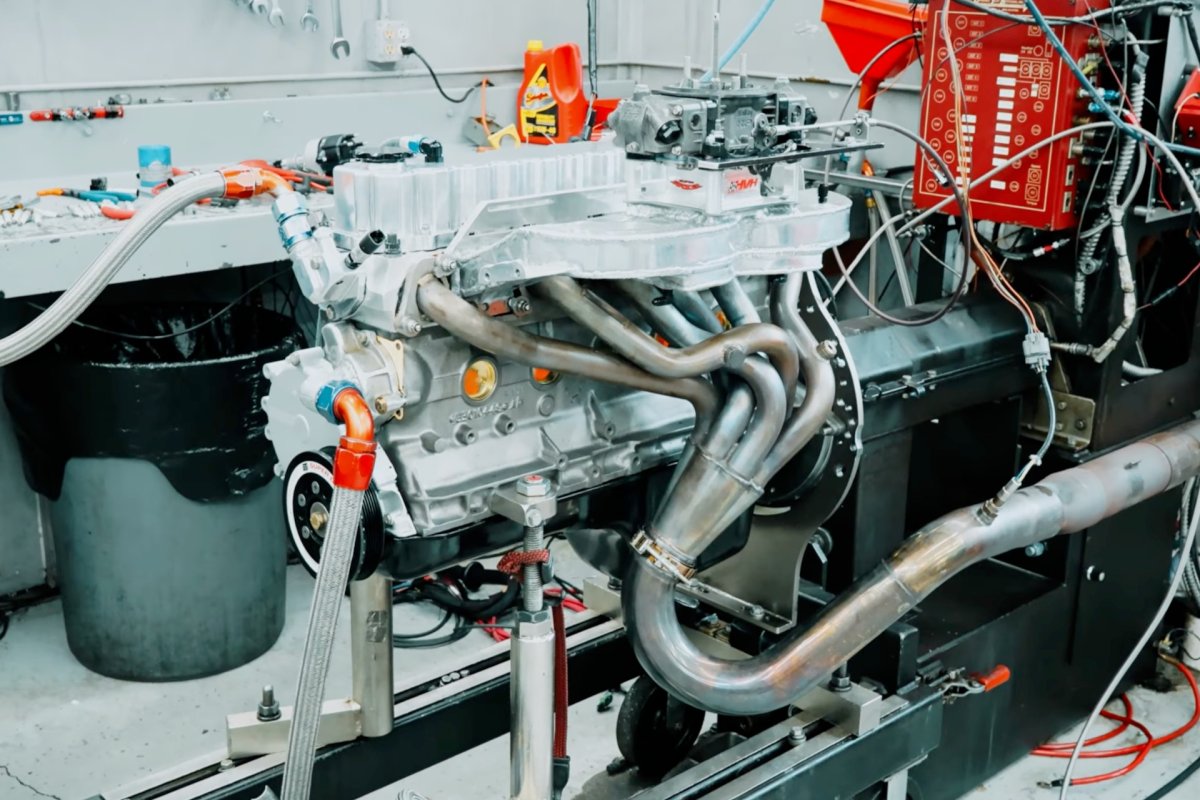
More than doubling an engine’s factory output without bolting on boost requires deep knowledge of the platform. The 4.0 was never designed for this. Jeep manufactured it from 1987 to 2006, dropping it into Cherokees, Wranglers, and Grand Cherokees as a workhorse motor built for longevity and low-rpm pulling power. Nobody at AMC or Chrysler engineering ever imagined someone would push it past 400 hp on atmosphere alone.
But the engine’s reputation for being nearly indestructible is exactly what makes it a candidate for this kind of work. A cast-iron block with generous wall thickness can handle the stress of higher compression and bigger bore dimensions. The architecture is simple, robust, and forgiving. It’s the same reason Newcomer Racing previously pushed a turbocharged, carbureted version of the Jeep six past 1,000 horsepower.
This naturally aspirated build sits in a different camp. There’s no wastegate to tune, no intercooler plumbing to route, no boost threshold to manage. Just displacement, compression, and airflow.
The old formula demands precision in the machine work, the cam profile, the port work, and the tune. There is nowhere to hide when the engine is doing everything on its own.
The fact that a pushrod inline-six designed during the Reagan administration can match a modern twin-turbo engine’s output without forced induction says something about how much untapped potential sat in Jeep engine bays for 20 years. It also says something about Keith Newcomer’s ability with a set of calipers and a dyno.
The 1996 Cherokee that gets this engine will weigh roughly 3,300 pounds before the mud tires go on. With 434 hp and a fat torque curve underneath it, the power-to-weight ratio lands somewhere north of a new Mustang GT. In a mud pit, running a 28-year-old chassis.
Newcomer hasn’t said whether the customer plans to push the naturally aspirated setup further, or whether boost might eventually enter the conversation.


Share this Story