
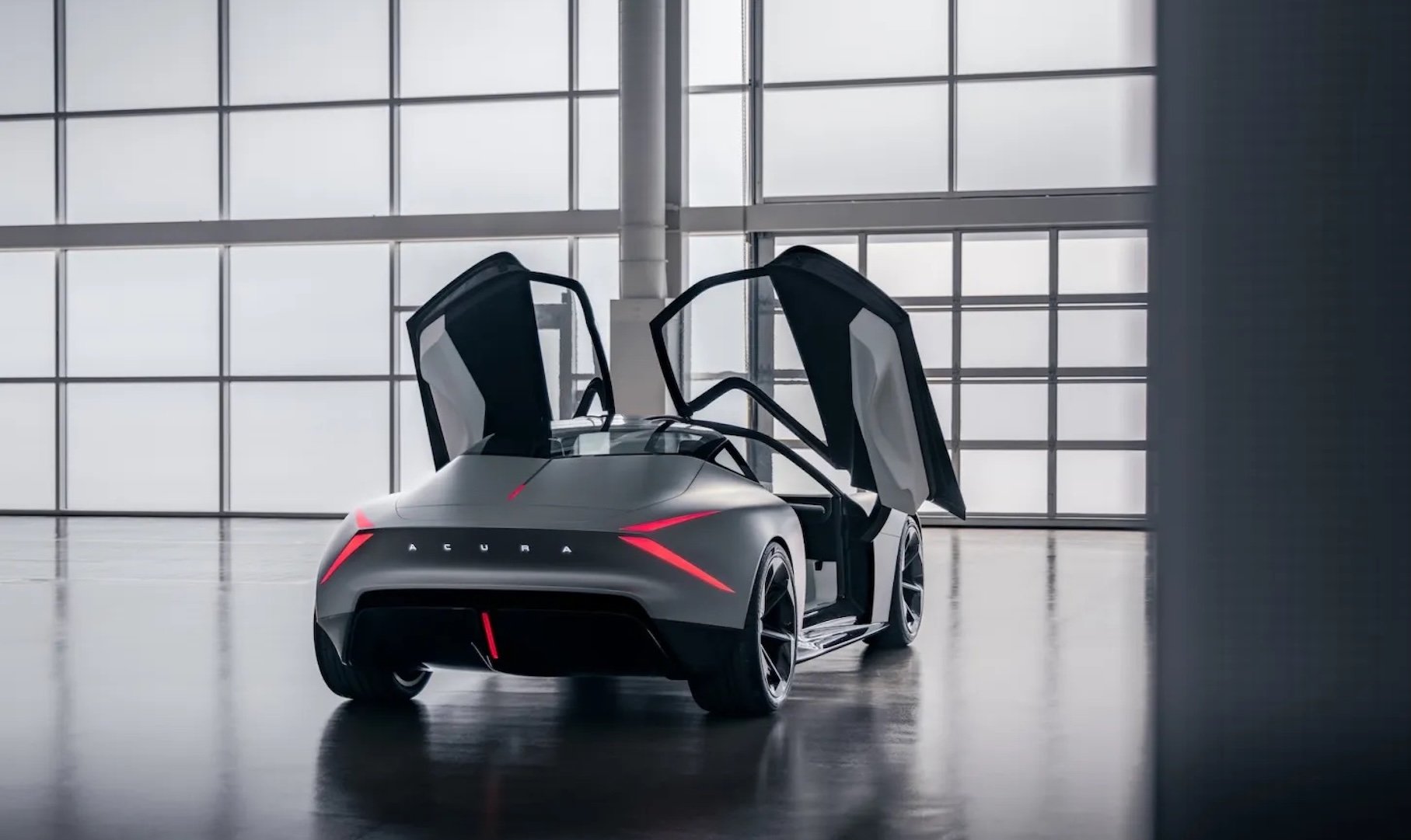


Acura unveiled its Nexera Vision concept yesterday, a butterfly-doored sports car coupe that the company insists is merely a design exercise previewing the next-generation RDX crossover. Read that sentence again and tell me it makes sense.
Yasutake Tsuchida, Acura’s Creative Director and Vice President of Auto Design, sat down after the reveal and held the party line with admirable discipline. The concept exists to “show our vision” and express Acura’s design direction through sporty proportions, he said. Nothing more. Just a mood board with wheels.
But the cracks in that story appeared fast.
Asked whether Acura fans might ever see another sporty coupe in the lineup, Tsuchida’s corporate mask slipped. “Personally, I want the car,” he said. When pressed on what powertrain he’d put in it, he paused, laughed, and offered two words: “Something fast.”
That’s not how you talk about a throwaway styling exercise.
Tsuchida came to Acura after designing the Mazda3 and CX-7, two vehicles that punched well above their weight in terms of visual appeal. He understands how to make production-bound design look inevitable rather than aspirational. The Nexera Vision carries that same energy, a car that feels engineered rather than sketched, with specific production-ready technologies baked into its surfaces.
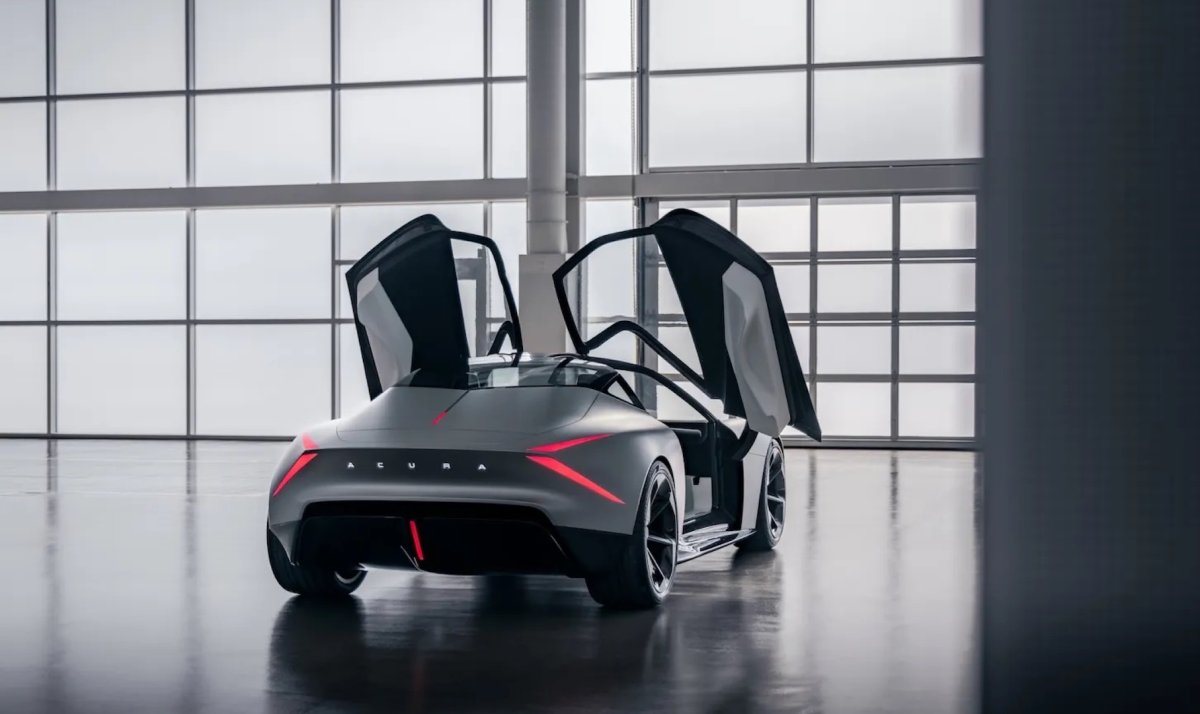
Those technologies tell their own story. Acura highlighted “phantom lighting” for the exterior and a cabin built around sustainable materials including recycled aluminum, Alcantara, certified post-consumer recycled polyester, and something called CircuLeather. These are not pie-in-the-sky material studies. They are supplier-grade choices that require validation timelines and cost analysis. You don’t do that work for a concept that dies on a turntable.
Two years ago, reports surfaced of an “NSX-type” performance EV lurking in Acura’s product pipeline. The timing of this reveal, paired with Acura’s conspicuous silence on the Nexera Vision’s drivetrain, raises an obvious question. Is this that car, or at least its public-facing ancestor?
The EV angle may have shifted. The market has cooled on pure battery-electric performance cars at the price points where Acura competes, and Honda’s broader electrification strategy has been recalibrated more than once. Whatever sits under that concept’s sculpted bodywork, Acura is not ready to discuss it.
What automakers choose to reveal, and what they choose to leave blank, is never accidental. Acura went out of its way to build a fully realized sports car concept with production-plausible materials and forward-looking lighting tech, then attached it to an RDX crossover announcement like a footnote. The mismatch between the vehicle and its stated purpose is so wide you could park an actual RDX in the gap.
Tsuchida and his team know exactly what they built. The question is whether Acura’s business side will let them build it for real, and on what timeline. The design chief wants the car. The materials are real. The drivetrain is a deliberate blank.
That silence is doing a lot of talking.
Share this Story