
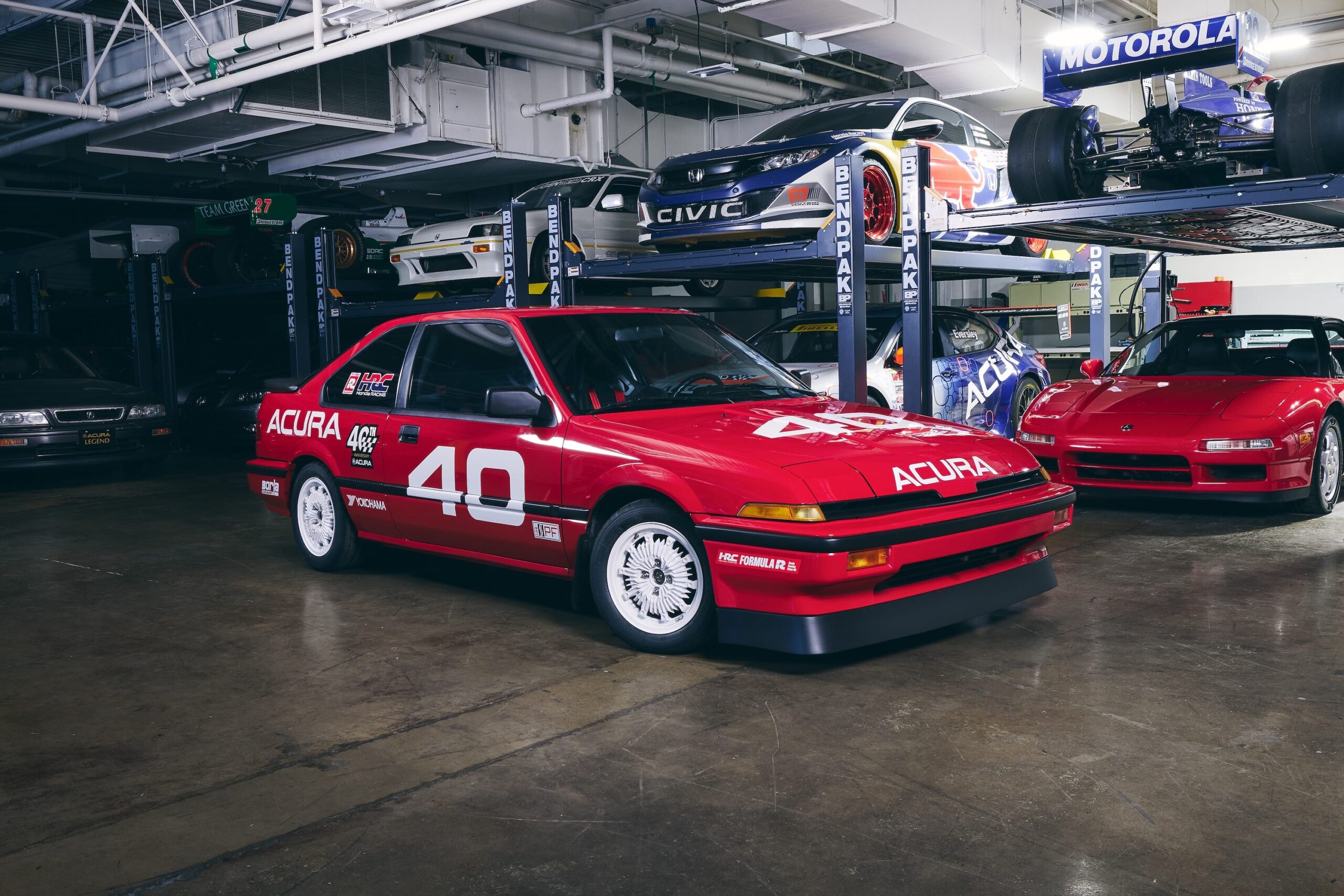


Forty years ago today, Honda rolled the dice on a crazy idea: a Japanese luxury brand. On March 27, 1986, Acura launched with 60 dealers, two cars, and a name derived from the Latin word for “sharp.” The skeptics lined up. They didn’t stay long.
To mark the milestone, Acura didn’t commission a commemorative badge package or a leather-trimmed anniversary edition with gold stitching. It built a race car. A proper one.
The Integra 40 Racer is a first-generation Integra rebuilt from the bones out by Honda Racing Corporation US. It’s a tribute to the Comptech No. 48 Integra that won back-to-back IMSA International Sedan Series manufacturers’ championships in 1987 and 1988, then added a drivers’ title in 1990. The new car wears No. 40 on its flanks and Rio Red Metallic paint on its skin, and it will debut at the 51st Acura Grand Prix of Long Beach.
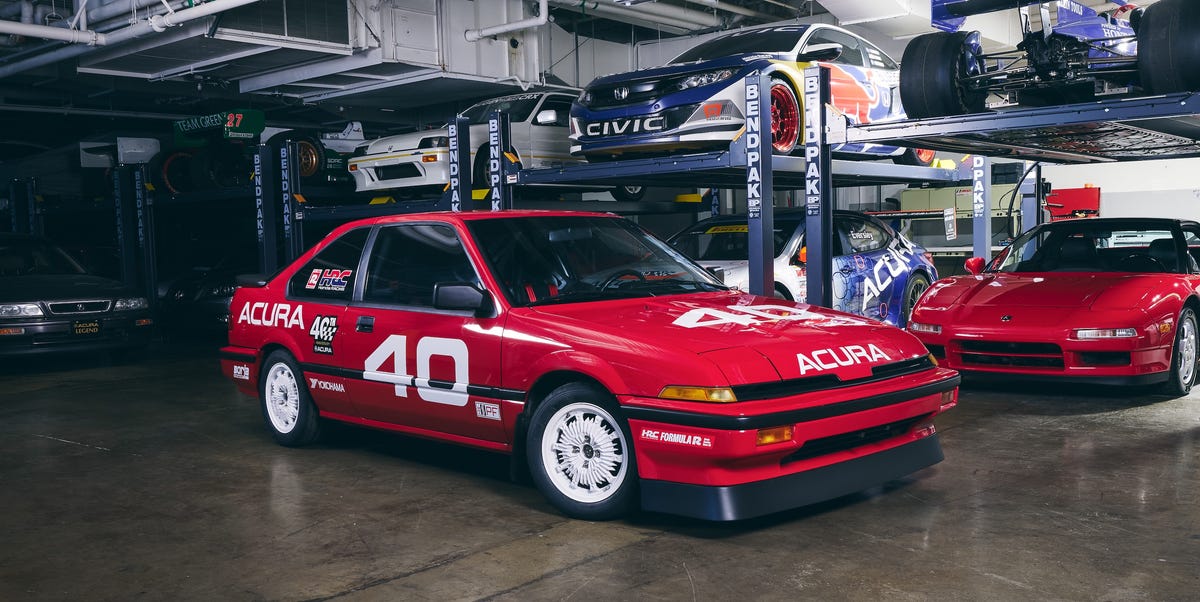
This isn’t a show pony. Under the hood sits a rebuilt D16A1, the original 1.6-liter DOHC four-cylinder, now fitted with a Monsoon ECU, coil-on-plug ignition, stainless 4-2-1 long-tube headers, and a custom Borla exhaust. A five-speed manual feeds a Torsen limited-slip differential.
The Civic-derived chassis gets Tein coilovers, an adjustable panhard bar, and a full conversion to manual steering and manual brakes. Carbotech pads clamp down behind white 14-inch Mugen wheels wrapped in Yokohama ADVAN A050 semi-slicks.
Inside, everything nonessential is gone. No stereo, no carpet, no rear seats, no door panels. What remains: a pair of OMP racing buckets, red six-point Endurance harnesses, a custom Blackbird Fabworx roll cage, and a dashboard that looks like it’s been staring at racetracks since Reagan’s second term.
The timing is deliberate. Acura needs to remind people what it once was, because the brand’s current trajectory looks nothing like its origin story.
When Acura arrived in 1986, it upended everything. Within 12 months it became the best-selling luxury import in America. It topped J.D. Power’s Customer Satisfaction Index for its first four consecutive years.
The 1990 NSX, developed with input from Ayrton Senna, introduced the first mass-produced aluminum monocoque and VTEC to the world. European brands had to recalibrate their entire pricing strategies.
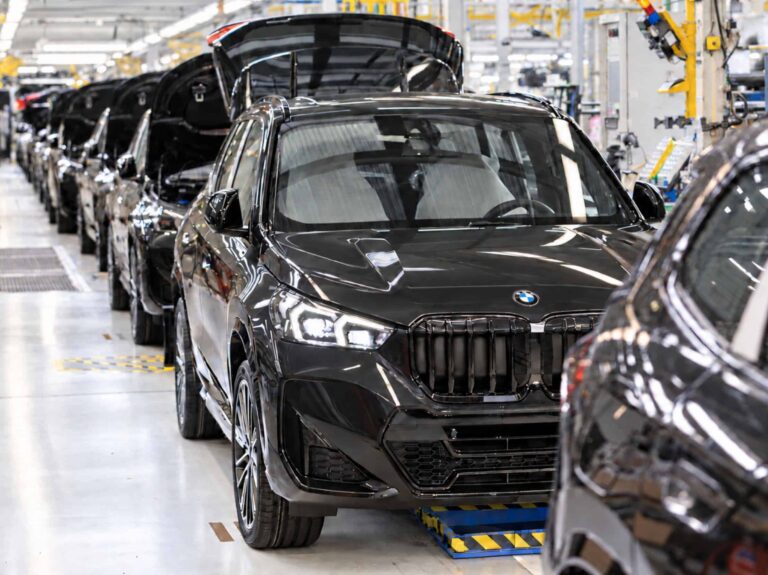
Today the lineup is four vehicles: the Integra sedan and three SUVs. The company recently confirmed a two-motor hybrid powertrain for the next-generation RDX and teased a compact SUV. Every Acura sold in America is now built in North America.
The brand is healthy, but it’s competing in a segment so crowded that Genesis, Lexus, Infiniti, and a half-dozen European players are all fighting over the same slice of affluent buyer. That’s the tension behind the Integra 40 Racer.
Acura’s identity was forged on the racetrack and in the engineering lab. The Comptech Integra and the NSX weren’t marketing exercises. They were statements of technical ambition, and a heritage build like this works only if the brand can channel that same energy forward.
Mike Langel, Acura’s assistant vice president of national sales, delivered the requisite corporate line about “daring innovation” and “Precision Crafted Performance brand DNA.” Fair enough. But DNA without expression is just a molecule.
The Integra 40 Racer is a gorgeous, visceral reminder of what Acura meant when it meant something radical. When a 1.6-liter four-cylinder and a five-speed manual were enough to win championships and change an industry.
Whether Acura’s next 40 years carry that same conviction is an open question. For now, the little red Integra speaks louder than any press release.
Share this Story