
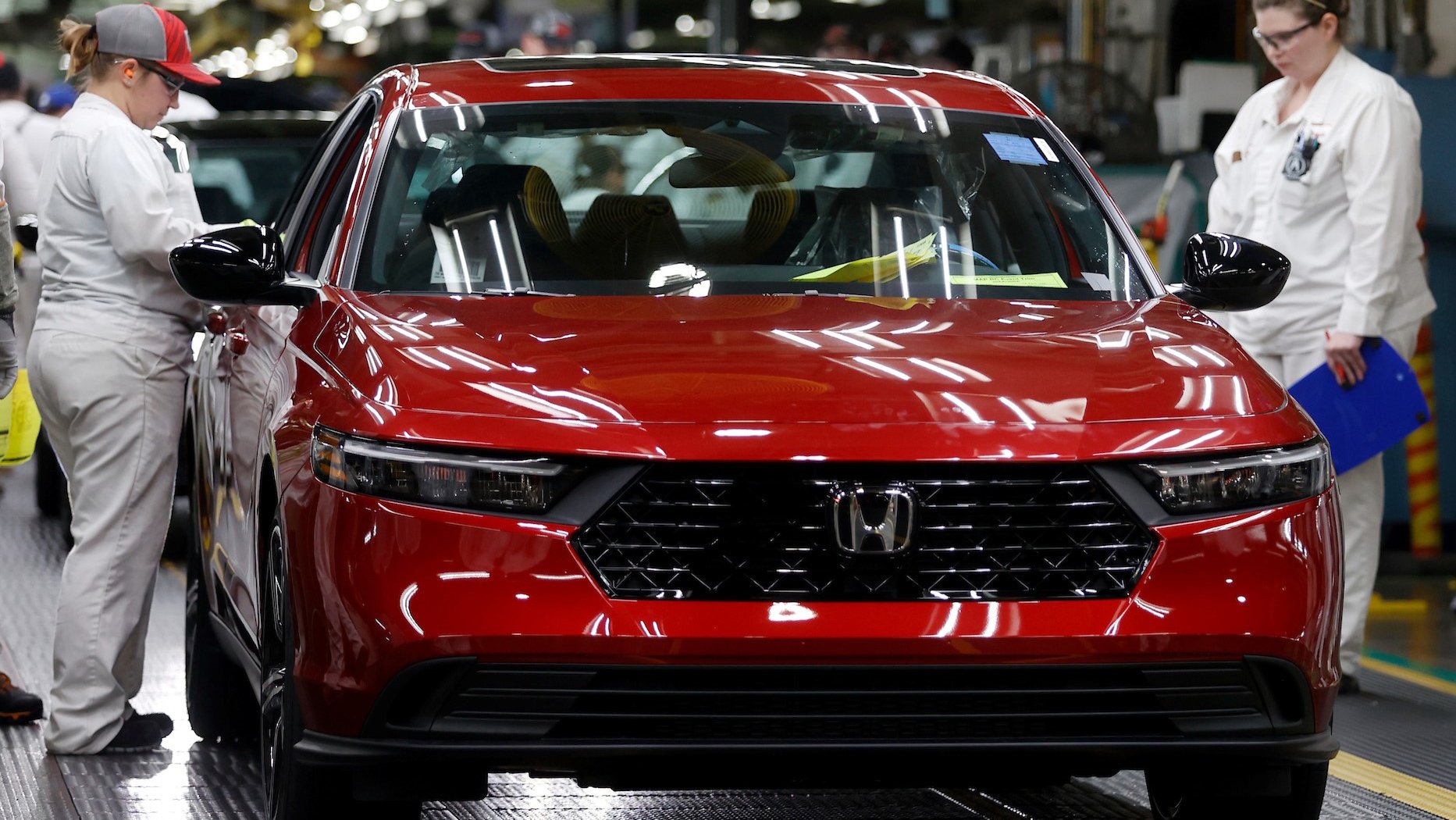


Honda CEO Toshihiro Mibe isn’t being coy about where the money is. North America accounted for roughly 40% of Honda’s global sales last year, and now Mibe wants to pour more concrete to capture even more of it. In an interview with Japan’s Yomiuri Shinbun newspaper, he floated the idea of building an eighth factory on the continent.
I want to increase the number of sales in North America a lot,” Mibe said. “The basic idea is to produce in a place where there is demand.”
That’s a deceptively simple statement from a CEO navigating one of the most volatile periods in global auto manufacturing. Tariffs, supply chain fractures, and shifting EV timelines have forced every major automaker to rethink where they build and what they build. Honda’s answer is refreshingly blunt: go where the buyers are, and build more there.
Honda currently operates seven North American plants — four in the United States, two in Canada, and one in Mexico. Those facilities produce everything from the Civic and CR-V to the Accord and the Prologue electric SUV. Adding an eighth would represent a serious capital commitment at a time when competitors are either retrenching or hedging their bets with flexible production strategies.
The timing matters. Honda has been riding a strong product cycle in North America, with the CR-V and HR-V selling briskly and the Prologue quietly becoming one of the better-received EVs in its segment. The company has also deepened its North American footprint through a joint EV battery plant with LG Energy Solution in Ohio, signaling that its commitment to the region extends well beyond internal combustion.
But wanting another factory and actually building one are separated by billions of dollars and years of planning. Site selection, workforce recruitment, supplier proximity, and state-level incentive packages all factor into decisions of this magnitude. Honda hasn’t disclosed where a potential eighth plant might land, or whether it would focus on EVs, hybrids, or traditional models.
What makes Mibe’s public musing notable is the confidence behind it. Most automaker executives have spent the past two years hedging, issuing carefully lawyered statements about “optionality” and “platform flexibility.” Mibe is essentially saying demand is strong enough to justify expansion, full stop.
Honda’s North American profitability has long been the envy of its Japanese rivals. The company builds what sells in the region, avoids the kind of inventory bloat that plagues some competitors, and has historically maintained tight discipline on incentive spending. An additional factory would test whether Honda can scale that discipline without diluting it.
The broader context is hard to ignore. Toyota has been aggressively expanding its U.S. manufacturing presence. Hyundai opened its Georgia plant. Even newcomers like Scout Motors are building from scratch on American soil, poaching talent from established players.
Honda adding capacity wouldn’t just be about Honda. It would be another data point confirming that North America has become the gravitational center of global auto production investment, regardless of what’s happening in China or Europe.
Mibe hasn’t committed to anything yet. But when a CEO tells a major newspaper he wants to sell a lot more vehicles in a region and believes in building where demand exists, that’s more than idle chatter. That’s a signal to suppliers, dealers, and state economic development offices to start sharpening their pitches.
Honda has earned the right to be aggressive here. Whether it pulls the trigger is the next chapter.
Share this Story