
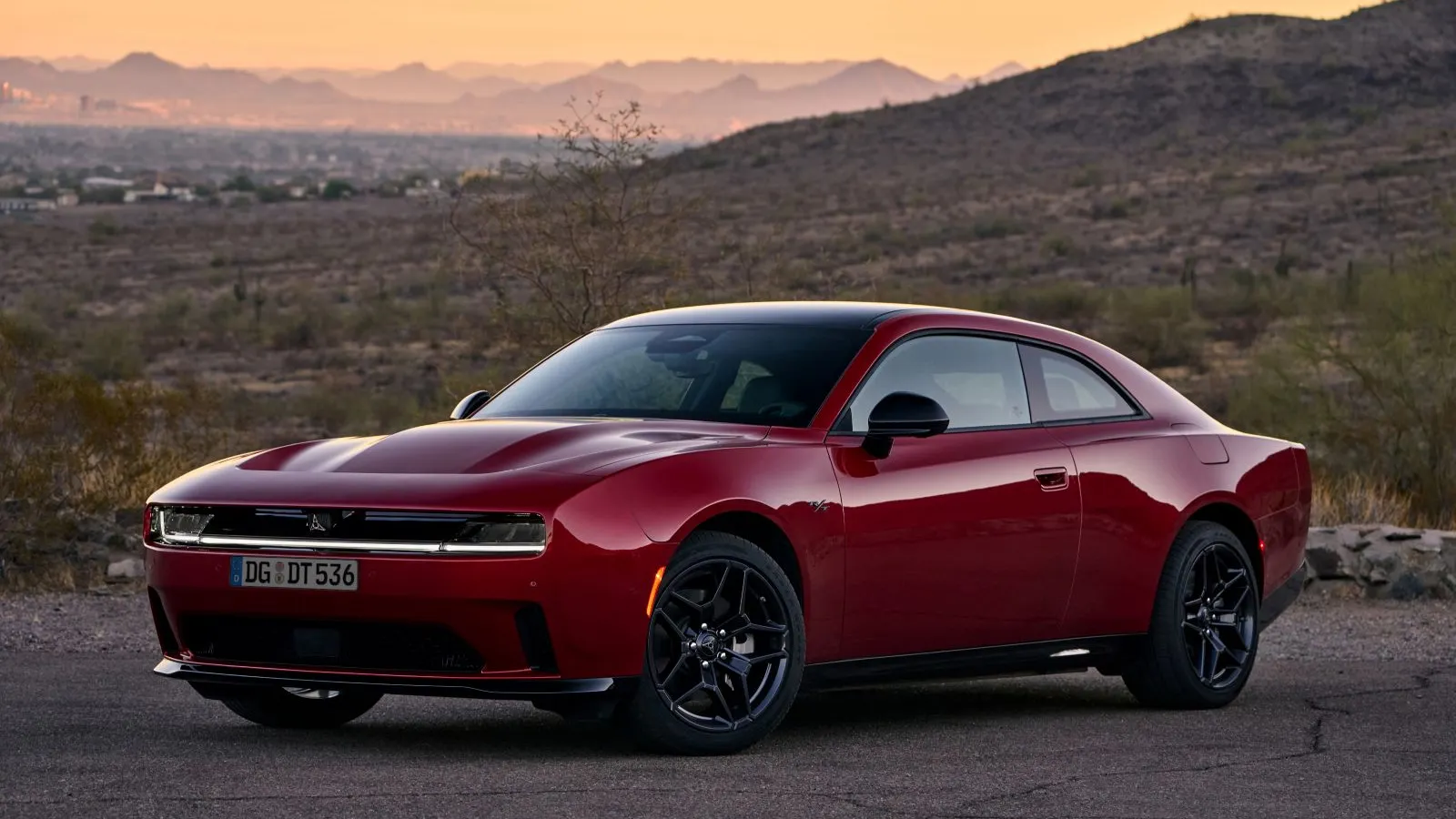


Dodge is shipping the next-generation Charger across the Atlantic, opening order books for European buyers at a starting price of 66,000 euros — roughly $76,206 — with first deliveries slated for September. It’s a bold play for a brand that Stellantis recently demoted to “regional” status under its FaSTLAne 2030 restructuring plan.
The contradiction is hard to miss. Stellantis spent the past year tightening its brand portfolio, narrowing Dodge’s scope, and talking about efficiency and focus. Now the company is pushing Dodge into a European market that has never exactly been hospitable to American muscle cars, and doing it at luxury-car pricing.
Both the all-electric Charger Daytona and the ICE-powered Sixpack Charger will be offered, each available in two-door and four-door body styles with R/T and Scat Pack trims. Every variant rides on the STLA Large platform, Stellantis’s global architecture that underpins the company’s biggest bets.
The electric Daytona Scat Pack leads the charge: 670 horsepower, 3.3 seconds to 60 mph, an 11.5-second quarter-mile. DC fast charging claims 20% to 80% in about 27 minutes. The battery carries an eight-year, 160,000-km warranty.
For those who still want combustion, the Sixpack Charger packs a 3.0-liter Hurricane twin-turbo inline-six making 550 hp in Scat Pack form, good for a 3.9-second sprint and a 12.2-second quarter. All-wheel drive comes standard on both powertrains. The ICE version adds an on-demand rear-wheel-drive mode that routes 100% of torque to the back axle at the push of a button — a nod to the smoky burnout culture Dodge has cultivated for decades.
Distribution runs through KWA, Stellantis’s European importer, and its authorized dealer network. Early EV buyers get subsidized home charger installation through Free2move, Stellantis’s mobility subsidiary. Every new Charger comes with a letter of authenticity signed by Dodge CEO Matt McAlear and a branded welcome kit, the kind of theater that suggests Stellantis knows this isn’t a volume play.
The next-generation Charger brings Dodge muscle into a new era without losing what made it iconic in the first place: attitude, performance and emotional driving,” said Fabio Catone, Dodge’s head of brand in Europe. The quote is polished and predictable. The real question is whether European buyers, steeped in BMW M cars and AMG sedans, will pay north of 66,000 euros for a Dodge.
The timing coincides with the brand’s 60th anniversary, which Stellantis is leaning on heavily for marketing. Nostalgia is a powerful tool, but it works better in markets where the memories exist. Dodge has virtually no heritage footprint in Europe.
The Charger name means something on American highways. In Stuttgart or Milan, it’s a curiosity.
Stellantis committed $70 billion to its five-year strategic plan just weeks ago, and a major product revamp is underway across the group. Launching Dodge in Europe fits the pattern of throwing a wide net, even if the mesh seems oddly sized. A 670-hp electric muscle car priced like a well-optioned Porsche Taycan is not a conquest strategy. It’s a halo exercise dressed up as a market entry.
September will tell whether Europeans are willing to pay luxury money for American attitude. Stellantis is betting that muscle transcends geography. History suggests otherwise, but then again, nobody expected a battery-electric Charger to exist in the first place.
Share this Story