
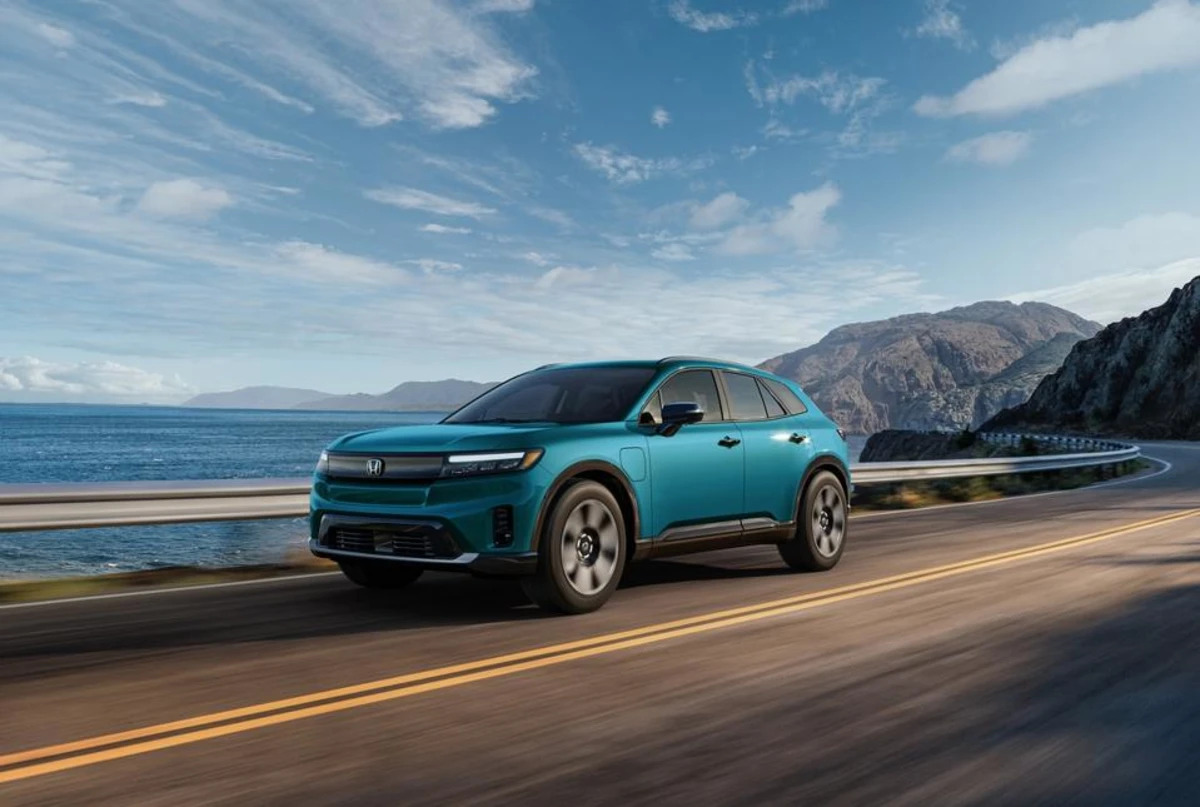


Honda just won every mainstream Kelley Blue Book Consumer Choice Award for 2026. All seven of them. Best Overall Brand, Most Trusted, Best Value, Best Performance, Best Styling, Best In-Vehicle Experience, and the one that should make everyone pause: Best Overall EV/Hybrid Brand.
That last trophy sits in a strange place on the mantle. Honda collected it just weeks after killing its entire EV program.
The 0 Series Saloon, the 0 Series SUV, Acura’s RSX—all dead before a single customer took delivery. The Sony-Honda Afeela collaboration? Also canceled, despite a flashy CES preview in January that promised California deliveries by year’s end.
Honda’s sole battery-electric vehicle, the Prologue, won’t get a 2027 model. It’s finishing out its run like a senior counting down to graduation.
Prologue sales collapsed 65 percent in Q1 2026 compared to the prior year, cratering after the Trump administration axed the $7,500 federal EV tax credit last October. Honda cut the sticker to just under $40,000 to compensate, but the damage was done.
So how does a company with one orphaned EV and a shuttered electrification roadmap win an award for best EV/hybrid brand? Hybrids. Specifically, the Accord Hybrid and CR-V Hybrid, both sitting in KBB’s top-10 list and both selling in enormous volumes. The CR-V and Civic remain Honda’s bread and butter, and hybrid take rates on those models are staggering.
KBB’s Consumer Choice Awards aren’t judged by a panel of journalists or engineers. They’re generated from perception data, pulled from over 12,000 in-market shoppers tracked annually through the Brand Watch study. These are people actively shopping on KBB.com, rating brands across 14 attributes including affordability, reliability, safety, and interior layout.
Honda has now accumulated 44 of these awards over the years, more than any brand in history. That includes 10 Best Overall Brand wins in 13 years and a dozen consecutive Best Value nods.
The sweep is unprecedented. No other mainstream automaker came close. Cox Automotive’s Vanessa Ton called it “an absolute standout,” noting that the data reflects shoppers’ high opinions on everything from trust to styling.
Honda picked up the styling award for the first time, boosted by the Pilot, Passport, and the new Prelude. The performance nod leans heavily on the 315-horsepower Civic Type R. These are gas-burning, mechanically sharp machines that keep Honda’s reputation fed while its electric future evaporates.
On the luxury side, Lexus took Best Overall, Most Trusted, and Best Value. Mercedes-Benz grabbed In-Vehicle Experience and Car Styling. Porsche won Performance, and Ram claimed Best Overall Truck.
But the story is Honda. Nearly 99 percent of its U.S. sales came from North American-built vehicles in 2025, with 60 percent assembled domestically. Its electrified lineup—almost entirely hybrids—accounted for nearly a third of total volume.
The company doesn’t need a battery-electric revolution to win consumer hearts. It needs exactly what it’s always had: reliable, well-priced cars that people actually want to own.
The irony is thick enough to cut. Honda is the most trusted, most valued, most admired mainstream automaker in America, and it just told the market it has no idea how to build an electric car profitably enough to bother trying. Consumers love the Honda they know. The Honda they were promised—the electric one—never showed up.
That gap between perception and trajectory is the real story. Shoppers are voting for a brand built on combustion-era excellence. Whether that goodwill survives a decade without a credible EV strategy is a question these awards can’t answer.
Share this Story