
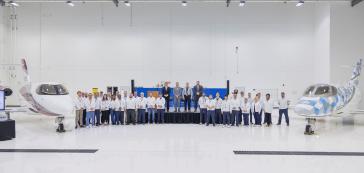


Forty-two maintenance technicians at Honda Aircraft Company’s Greensboro, North Carolina headquarters just pulled off something that sounds simple on paper and is brutally difficult in practice: every single one of them completed at least 12 hours of FAA-approved training last year. Not most. Not 95 percent. All of them.
That perfect compliance earned Honda Aircraft the William (Bill) O’Brien Aviation Maintenance Technician Employer Diamond Award for the fifth consecutive year, the FAA announced on March 26. The Diamond Award is the highest recognition the agency hands to aircraft maintenance employers, and the streak says more about Honda’s operation than any sales brochure could.
The bar is binary. If even one eligible technician misses the mark, the company gets nothing. Five years running with a 100 percent completion rate across a workforce of 42 AMTs is not luck. It is institutional discipline baked into the culture.
David Grubb, director of Honda Aircraft’s Customer Service Division, credited the streak to “the passion and precision our associates bring every day.” Standard corporate praise, sure, but the numbers back it up.
What makes this particular effort notable is the training’s expanding scope. Honda Aircraft has long emphasized human factors education, the kind of situational awareness and team collaboration coursework designed to prevent the small errors that cascade into big maintenance failures. That program originated in the Customer Service Center but has since spread to other departments, suggesting the company sees training investment as a competitive weapon, not a compliance checkbox.
For a company that only passed the 250-unit global delivery milestone in 2024, maintaining this level of technician readiness matters enormously. The light jet market is a knife fight. Embraer’s Phenom 300 series dominates deliveries, and Cessna’s Citation CJ series has decades of brand loyalty.
Honda Aircraft, which didn’t deliver its first HondaJet until 2015, has always had to outperform on quality and service to justify its place at the table.
And Honda is about to raise its own stakes. The company is developing the HondaJet Echelon, an 11-occupant aircraft that will be produced alongside the current Elite II at its North Carolina facility. More airframes mean more customers, more service events, and more pressure on a maintenance workforce that will need to scale without slipping. A five-year Diamond streak is the kind of foundation you want before that ramp begins.
The AMT Award program itself deserves a word. Named for the late Bill O’Brien, a longtime advocate for maintenance technician professionalism, the FAA Diamond Award exists because aviation safety ultimately rests on the people turning wrenches and running inspections. Pilot error dominates headlines, but maintenance failures kill just as efficiently and more quietly. The 12-hour annual minimum is modest by any measure, and the real achievement is organizational commitment to making sure nobody skips it.
Honda Aircraft Company is a wholly owned subsidiary of American Honda Motor Co., and it carries the parent’s manufacturing DNA. That same obsessive process culture made Honda engines the reliability benchmark in Formula One and lawnmowers alike. Applying that ethos to aircraft maintenance is not revolutionary. It is simply Honda being Honda.
Five consecutive years. Forty-two technicians. Zero exceptions. In an industry where the margin for error is measured in lives, Honda Aircraft keeps showing up with a perfect scorecard.




Share this Story