
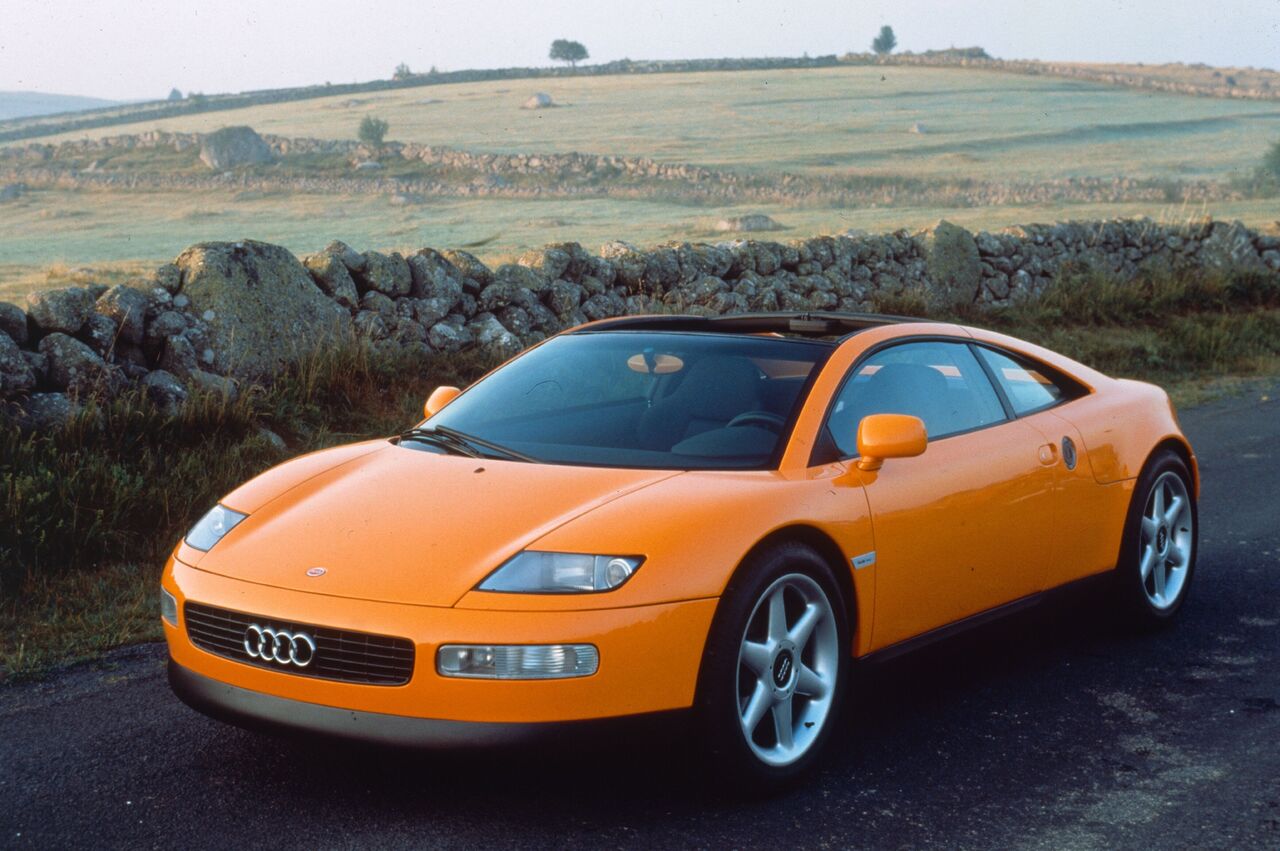


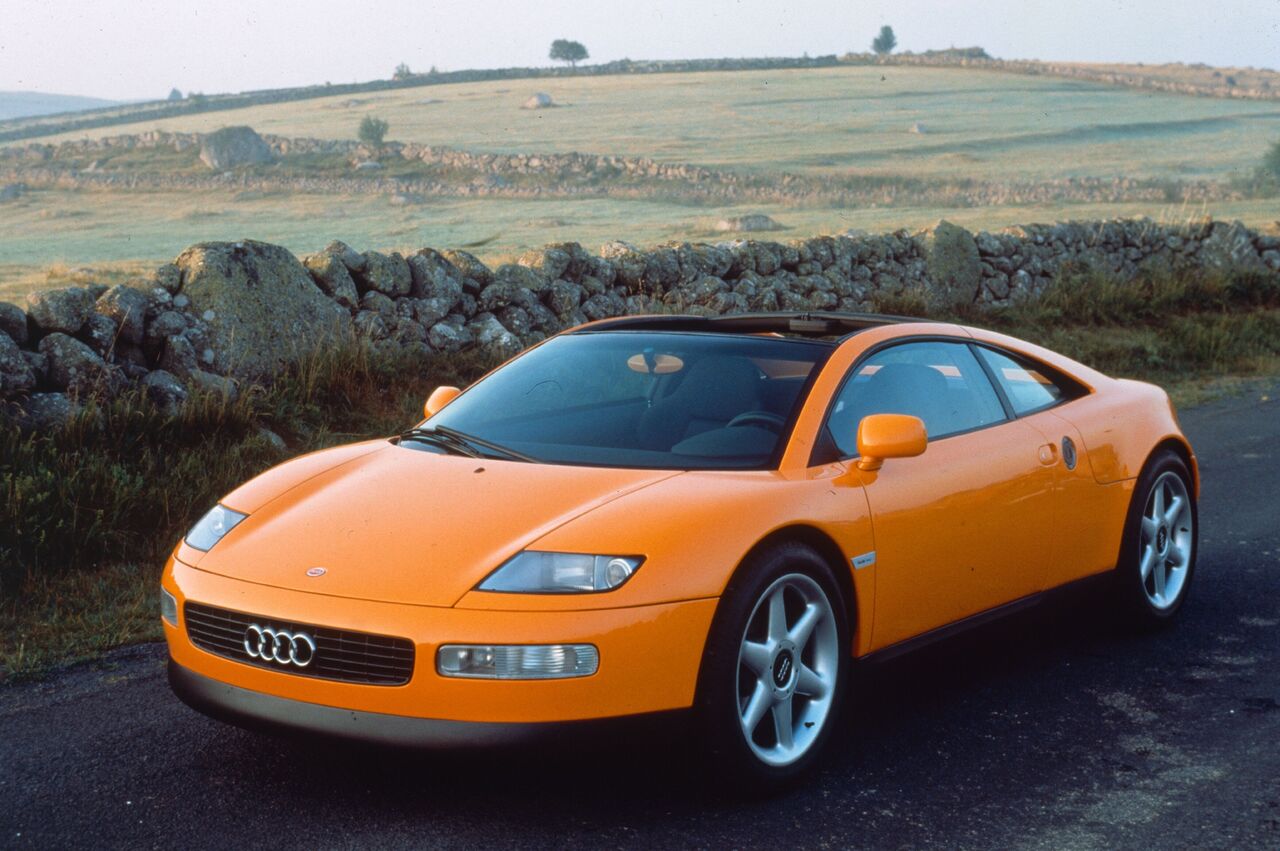
Eleven concept cars spanning five decades are parked inside the Audi museum mobile in Ingolstadt right now, and they won’t be there long. The “Design Legends” exhibition opened March 28 and runs only through July 12, making it the first time in 20 years that the museum has dedicated an entire show to design studies.
That two-decade gap tells you something. Audi has been cautious about revisiting its conceptual past, a past that in many ways outpaced the production cars that followed. The Avus quattro, a polished aluminum wedge from 1991 powered by a W12, promised a supercar Audi never built.
The quattro Spyder from the same year teased a lightweight mid-engine sports car that died in committee. These weren’t just styling exercises. They were declarations of intent that the company repeatedly walked back.
Now they’re back under museum lights alongside less familiar pieces. The 1988 Aztec, a collaborative project with Italdesign that looked like it fell out of a cyberpunk film, makes an appearance. So does the 1997 A8 Coupé concept, a car so gorgeous and so obviously viable that its cancellation still stings among Audi loyalists.
The 2000 Steppenwolf, a rugged crossover concept that predated the segment’s explosion, sits near the 2005 Shooting Brake study, which hinted at design directions Audi would take years to embrace.
The newest entry is the PB 18 e-tron from 2018, a track-focused electric concept with a sliding cockpit that lets the driver sit center for solo use. It was meant to preview Audi’s electric performance ambitions. Seven years later, those ambitions remain largely conceptual.
Curator Stefan Felber framed the exhibition as a response to persistent visitor demand. Concept cars like the Audi quattro Spyder and Audi Avus quattro have returned to our museum, joined by a few studies we’ve never hosted before,” he said. The inclusion of clay models, sketches, and renderings from Audi’s model workshop adds a layer of process to the spectacle, pulling back the curtain on how these shapes moved from napkin to full-scale sculpture.
Audi has also wired the exhibition into its Tradition app, which offers 360-degree interior views and, in some cases, engine sounds. It’s an acknowledgment that a museum rope line doesn’t cut it anymore. Visitors want to climb inside these cars, and since they can’t, a smartphone screen is the compromise.
Admission is bundled with the standard museum ticket — seven euros, five reduced — and no advance booking is required for the special exhibition. The permanent collection, with over 100 cars and motorcycles spanning from 1899 to 2000, continues to run on the upper floors.
The timing feels deliberate. Audi is deep into an electric transition that has been expensive, slow, and plagued by software headaches inherited from parent Volkswagen Group’s troubled Cariad division. The current production lineup on display at the Ingolstadt forum — Q3s, A6 Avants, the RS e-tron GT — is competent but unremarkable by the standards these concept cars once set.
Putting the Avus and the quattro Spyder back on pedestals is a bet that Audi’s design legacy still carries weight, even as the brand struggles to translate that legacy into cars people line up for. These concepts were never just about aerodynamic theory or material science. They were promises.
Some were kept. Most weren’t.
The exhibition runs daily — weekdays 9 to 5, weekends and holidays 10 to 4. If you want to see what Audi might have been, Ingolstadt is the place through mid-July. After that, the cars go back into storage, and the question of whether Audi can match its past ambitions returns to the engineering halls down the road.


Share this Story