
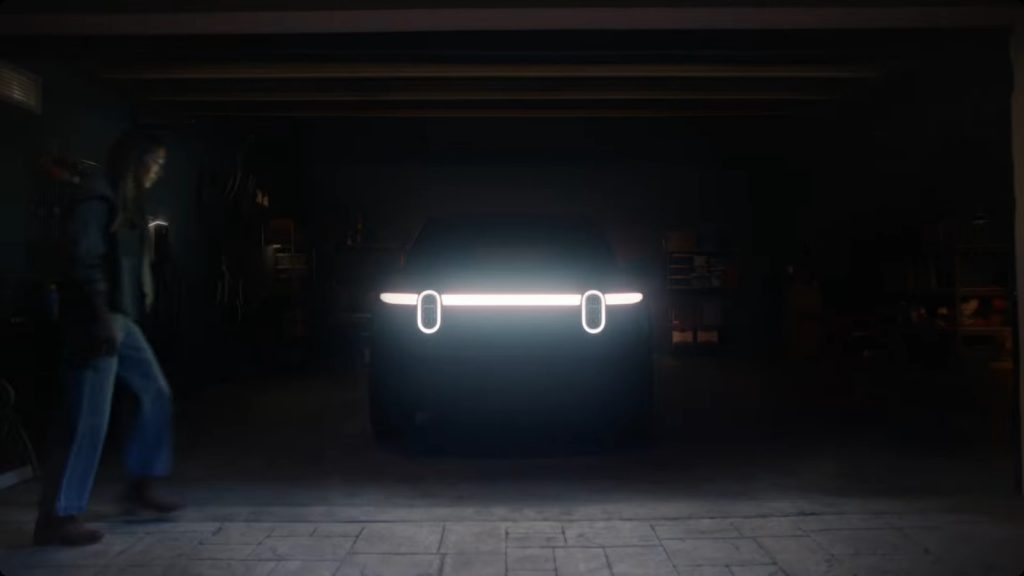


RJ Scaringe pulled in $402.6 million in total compensation for 2025. That’s not a typo. It’s one of the largest annual CEO payouts in the history of the auto industry, and it belongs to the head of a company that still hasn’t turned a sustained profit.
The package, disclosed in Rivian’s latest proxy filing, is overwhelmingly equity: $373.5 million in stock options, $26.6 million in stock awards, and a comparatively quaint $1 million-plus in base salary. Rivian frames it as performance-based, tied to metrics like stock price, operating income, and cash flow. Hit the targets, collect the windfall. Miss them, and the payout shrinks.
At least in theory.
Rivian’s board previously approved a broader compensation plan worth up to $4.6 billion over a decade for Scaringe, replacing a 2021 package that was already looking like a dead letter because its targets had become unreachable. So the board didn’t lower expectations for the company. It restructured the deal so leadership could still get paid.
The obvious comparison is Elon Musk, whose $56 billion Tesla pay package became a courtroom saga in Delaware before being struck down by a judge and then reapproved by shareholders in a second vote. Rivian is clearly borrowing from that playbook — massive equity grants, contingent on ambitious milestones, designed to align the CEO’s fortune with the company’s trajectory. The difference is that when Tesla’s board approved Musk’s package, the company was already scaling toward dominance. Rivian is still trying to prove it can survive.
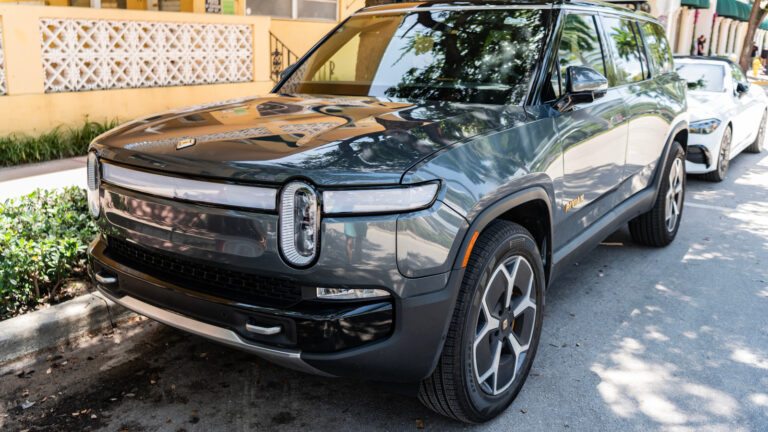
To be fair, there are real signs of progress. Rivian posted its first-ever gross profit in 2025, a genuine milestone built on painful cost cuts and operational discipline. The R2, a smaller and cheaper model aimed at a much broader market than the R1 trucks and SUVs, is the company’s clearest path to volume and margin improvement.
If Rivian executes on R2, the financial picture changes meaningfully. But the stock tells a different story right now. Rivian shares are down roughly 15 percent year-to-date, underperforming the broader market.
Federal EV tax incentives have been rolled back, softening demand across the sector. The competitive landscape is tightening as legacy automakers ramp their own electric lineups and Chinese manufacturers eye the U.S. market from every angle.
Against that backdrop, a $402 million payday lands with a thud. Performance-based pay only works as an alignment tool if the performance bar is genuinely difficult to clear. When the goalposts move — when a package gets restructured because the old one was “unlikely to meet its targets” — you have to ask whose interests are really being served.
Rivian’s board clearly believes Scaringe is the right person to lead the company through its most critical phase. The R2 launch, the march toward sustained profitability, the navigation of a hostile policy environment — all of it rests on execution. Boards routinely argue that you have to pay top dollar to retain top talent in a sector burning through cash and credibility at alarming rates.
Maybe so. But paying a CEO four hundred million dollars while the stock drops and incentives evaporate doesn’t signal confidence. It signals anxiety dressed up in a spreadsheet.
The real test isn’t whether Scaringe earned the package on paper. It’s whether Rivian earns it in the market. That answer is still years away, and the R2 hasn’t delivered a single unit yet.
Share this Story