
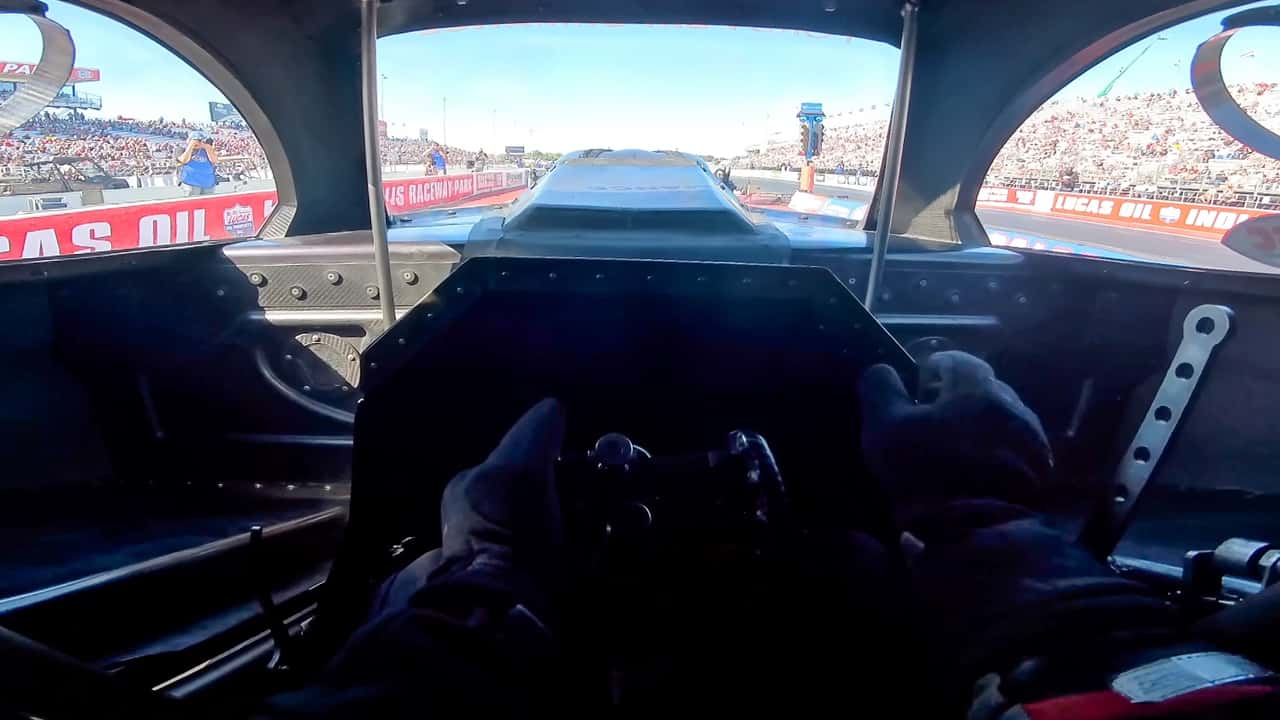


Chad Green straps into a machine that makes 12,000 horsepower, covers 1,000 feet in just over three seconds, and tops 330 mph before he even has time to blink twice. His team just released a detailed POV video showing exactly what that looks like from behind the wheel. It’s the most visceral piece of drag racing footage to surface in years.
A Nitro Funny Car defies casual understanding. The engine is a 5.0-liter V8 loosely descended from the Chrysler 426 Hemi, force-fed nitromethane until it produces the kind of power output that makes hypercar numbers look quaint. The fuel itself is so caustic it burns your eyes and sears your throat if you’re standing anywhere near the starting line without protection.
Green’s video isn’t a quick highlight reel. It’s long, granular, and obsessively detailed in a way that respects the craft. You see the post-run engine teardowns, where the crew rips apart and rebuilds the entire powerplant between passes because these motors are essentially disposable after each run.
You hear Green talk through lane choice strategy, a decision that might seem trivial when two cars are covering a quarter mile in three seconds flat. But it can make the difference between a win and a loss, or between a clean pass and a wall.
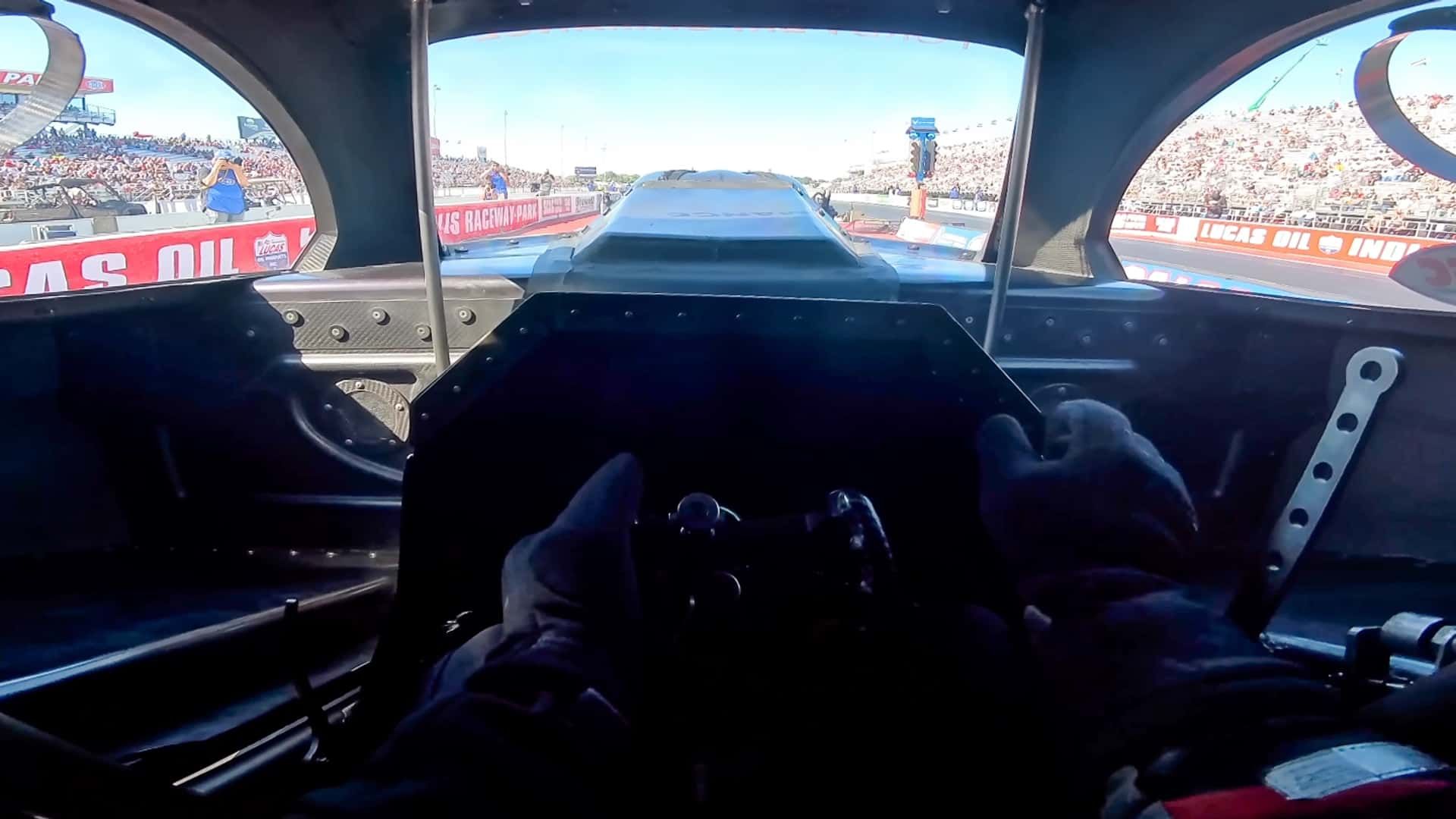
The distinction between fast and quick matters here more than anywhere else in motorsport. Quick is how violently the car launches. Fast is the 330-mph trap speed at the finish.
A Nitro Funny Car is both, simultaneously, in a window of time so compressed that human reaction becomes almost secondary to preparation and muscle memory. Green’s footage makes that compression tangible. You watch him go from idle to incomprehensible velocity, and the whole thing is over before your brain fully registers that it started.
What separates this from the usual drag racing fare is transparency. Funny car teams have historically been guarded about their operations. The mechanical tolerances, the tuning decisions, the sheer logistical chaos of keeping one of these cars alive for a full race weekend — none of it is simple, and most teams don’t volunteer the details.
There’s a reason NHRA events still pack grandstands in an era of shrinking live motorsport attendance across most other series. The concussive force of two nitro cars leaving the line rattles your ribcage and trips something primal in your nervous system. No amount of high-resolution video captures what nitromethane vapor does to your sinuses at 50 feet.
But Green’s video gets closer than most. It strips away the broadcast polish and puts you in the seat, surrounded by the cage, staring down a strip that will be behind you before your next heartbeat. The teardown sequences are almost more compelling than the passes themselves — watching a crew disassemble an engine that just survived three seconds of producing more power than a locomotive, knowing they’ll build it back up and do it again in a few hours.
Drag racing doesn’t get the cultural cachet of Formula 1 or endurance racing. It doesn’t have the glamour or the international footprint. What it has is an absolute commitment to extremity that no other form of motorsport can match. Twelve thousand horsepower. Three seconds. 330 miles per hour. And one driver who decided to show the world what that actually feels like from the inside.





Share this Story